
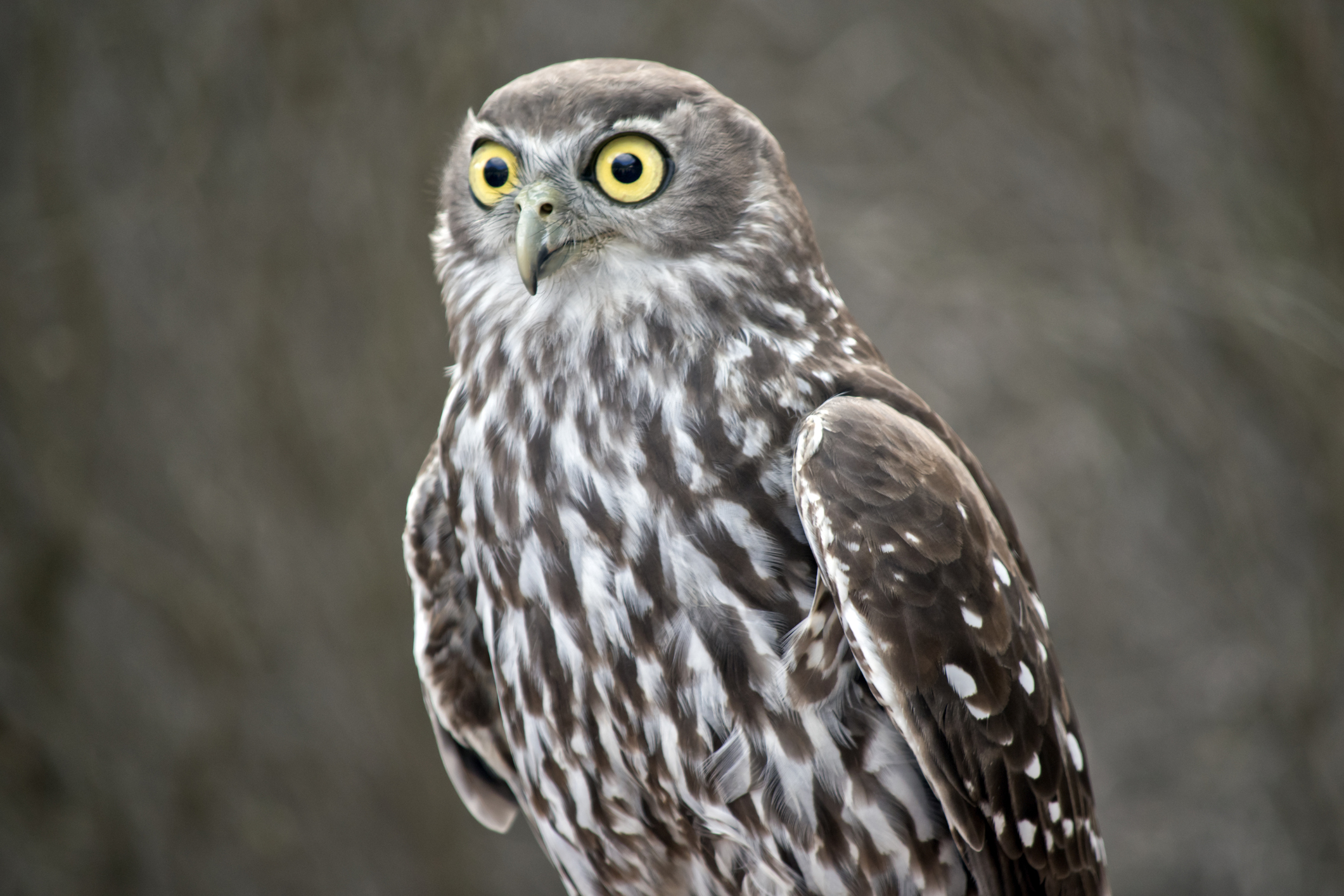
The barking owl is a striking-looking hunter found in Australia’s woodlands. Compact, powerful and yellow-eyed, it spends the day roosting in foliage before emerging to hunt mammals, birds, reptiles and insects as the light fades.
It is often heard before it is seen: alongside its dog-like bark, this owl can produce an eerie, wavering scream that has helped make it one of the country’s most memorable birds.
- 10 of the weirdest, strangest owls on the planet, including a lookalike imposter…
- "It has a lethally large inner toe tipped by a deadly dagger-like claw..." 15 weirdest, strangest birds on the planet, including one that reeks of fresh cow manure
Where does the barking owl live?
The barking owl lives across much of mainland Australia, though it is largely absent from the arid centre. It is also found in New Guinea and the Moluccas (an archipelago in the eastern part of Indonesia).
In Australia, it is most common in open woodland but frequents riverine woodland, too. It is a bird of edges and openings as much as trees. In some regions, it may settle around rural towns and suburbs, provided there are mature trees, suitable hunting spaces and hollows for nesting.
Why is it called the barking owl?
The name comes from its sharp, dog-like call. It is often described as a double note, sounding like ‘wook-wook’ or ‘woof-woof’, and may be given repeatedly by males and females calling in duet.
Its other, more rarely heard call is very different: a long, wavering scream with an eerily human quality. This is the source of the barking owl’s more dramatic nickname, the ‘screaming-woman bird’. For anyone hearing it unexpectedly in the dark, it is not difficult to understand how folklore could gather around it.
What does the barking owl look like?
The barking owl is a medium-sized hawk-owl, usually around 35-45cm long. It does not have a distinct heart-shaped facial disc, like some other more familiar owls such as the barn owl. Instead, it has a rounded grey-brown head, large yellow eyes and a direct, rather fierce stare. Its upperparts are grey-brown, with white spotting on the wings. Below, it is pale and heavily streaked. Its strong yellow talons are well suited to seizing prey.
- What is the smallest owl in the world? Meet a tiny cutie
- What's the biggest owl? Here's a clue – it has a colossal 2 metre wingspan
What does the barking owl eat?
The barking owl is a versatile carnivore. Its diet includes small to medium-sized mammals, such as squirrel gliders and common ringtail possums, as well as birds, reptiles and insects. It usually hunts by making a quick attack from an exposed perch, though it can also catch prey, such as moths, from the air.
- How do owls hunt at night?
- Fierce, majestic – and built to kill – The world's biggest and mightiest birds of prey
When is it most active?
The barking owl is mainly nocturnal, but it is not as strictly night-bound as some owls. It roosts by day in leafy trees, often near watercourses, then hunts from late afternoon into the night, and then for several hours before dawn. They are occasionally even seen hunting during the day.
How does it breed?
The barking owl usually raises one brood in a season, though it may not breed every year. Breeding takes place in winter and spring, with timing varying by region. The nest is a hollow in a tree trunk or large limb, sometimes high above the ground. The female lays two to three eggs and does most of the incubation, while the male brings food. Once hatched, the young remain in the nest for around 45 days and continue to depend on the adults for several months, remaining with their family until shortly before the next breeding season.
Does the barking owl mate for life?
It appears to form long-term pairs. Mated birds often call together and may return to the same nesting hollow year after year. A pair’s territory can be large, sometimes more than 100ha, because the bird sits high in the food chain and needs enough prey across the landscape to sustain itself and its young. This reliance on mature hollow-bearing trees and large established territories makes the species particularly vulnerable when old woodland is cleared or degraded.
Is the barking owl under threat?
Globally, the barking owl is listed as Least Concern, but this broad status hides a more complicated picture. In northern Australia it can be relatively common, while in parts of southern and eastern Australia it has declined.
The main problem is habitat loss and degradation. Clearing woodland for agriculture and development removes hunting habitat and the old hollow-bearing trees the barking owl needs for nesting. Fire can add to this pressure where it is too frequent or severe, damaging woodland structure and reducing the logs, understorey and hollow-bearing trees used by the owl and its prey.
Other threats are more indirect. Foxes and feral cats may compete with the barking owl for prey, while feral honey bees can occupy large tree hollows. Rodenticide poisoning is also a concern: if the owl eats poisoned rodents, or prey that has accumulated poison, it may be exposed to toxic chemicals. Because the bird has large territories and a low reproduction rate, local populations can struggle to recover once suitable habitat is lost.
- Is this the world's biggest owl gathering? During winter nearly 1,000 owls descend onto a tiny Serbian town centre – and at night it's party time
- They strike with clenched talons at 200mph, crush skulls, shred prey, and can inflict deep head wounds on humans – 10 deadliest birds of prey on the planet


