
While scientists have long known that birds transport nutrients across ecosystems, the scale of their role hasn’t been fully understood. Now, a review of nearly 400 scientific papers has revealed that birds play a vital and under-appreciated role in shaping ‘biogeochemical cycling’ – the way essential elements and nutrients continuously move throughout Earth.
An international team of researchers reviewed the published papers to examine how birds transport nutrients from land and water through their waste and bodies. They note that current knowledge of this is “poorly synthesised”, limiting understanding of the broader consequences of biodiversity loss as bird populations decline.
“You can think of animals – and especially birds – as highly efficient and important nutrient transporters or nutrient processing machines, concentrating nutrients in their waste and then depositing them into ecosystems that become valuable resources for all sorts of plants and living organisms,” says lead author Ethan Duvall and Ph.D. candidate at Cornell University, USA.
Birds are particularly effective nutrient transporters as they can cover vast distances and traverse geographical barriers (such as oceans and mountains) that would be inaccessible to terrestrial animals. They’re also very efficient at processing and recycling nutrients – according to Duvall, their food consumption rates are approximately 30 per cent higher than similar-sized mammals. This means they can eat and release nutrients at elevated rates.
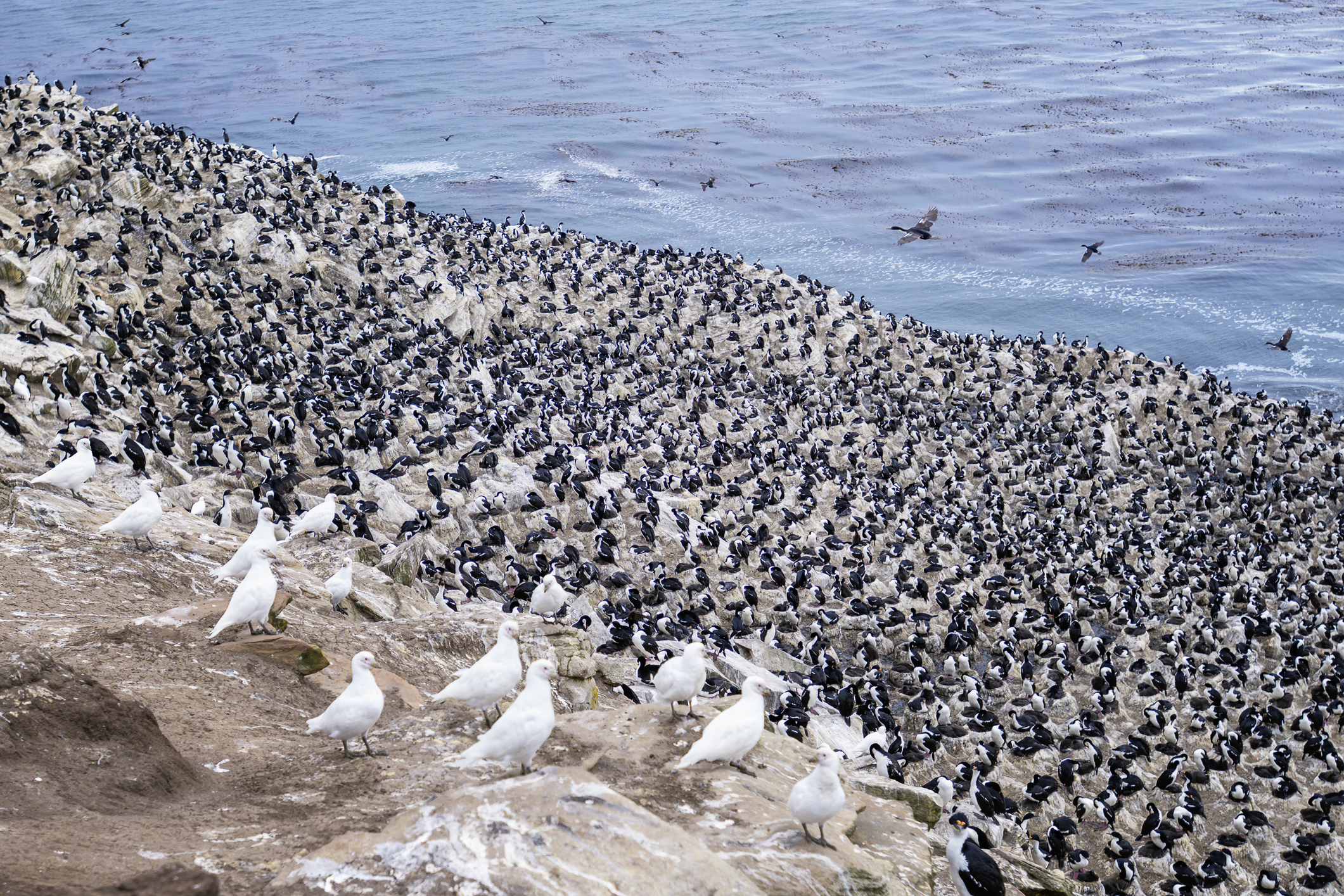
The researchers’ review (which is published in the journal Current Biology) found that birds have a substantial impact on diverse environments and locally restructure plant, microbial and animal communities. They discovered that when birds (such as seabirds) congregate at nesting or roosting sites, they deposit high concentrations of nutrients in small areas. This provides plants and other organisms with key resources.
“It can drive higher amounts of plant and algae growth, but it can also help consumers of those plants, like insects and other vertebrates, maintain a more nutrient-rich diet. So these ‘islands of fertility’ can have cascading effects,” says Duvall.
While excessive nutrients caused by human activity can be harmful, natural nutrient flows wash into nearby waters, benefiting organisms that depend on these habitats – such as coral reefs and fish communities.
One of these places is the Salomon Atoll, which lies in the remote Chagos Archipelago in the central Indian Ocean. A 2024 study referenced in the review found that two types of coral colonies close to an island with high seabird densities had higher rates of linear extension rates (how fast a coral skeleton grows in length), planar area and coral calcification (where reef-building corals extract elements from seawater to build their hard skeletons), than those close to an island with low seabird densities.
In places where seabird colonies have disappeared, nutrient levels have declined – reducing plant and algae productivity and coral reefs’ resilience to environmental stress. Bird waste can also help restore plant communities.
“We see a lot of potential for harnessing birds’ capacity to transport recycled nutrients to aid restoration,” said Duvall. The review highlights a study where researchers installed seabird perches within seagrass restoration sites in Florida Keys. These attracted birds that deposited large amounts of phosphorus, which helped the seagrass recover with increased density and cover than sites without guano.
Overall, the researchers’ findings present a mixed picture. The biogeochemical cycling of birds can boost soil fertility, nutrient recycling, plant productivity and carbon storage – but herbivory (when an organism feeds on plants, algae or photosynthesising bacteria), for example, can increase methane emissions in wetland areas.
“While ecologists have long known that birds transport nutrients, our review establishes the magnitude and geographic scale of that role,” said Amanda Rodewald, one of the study’s co-authors and senior director of the Center for Avian Population Studies at the Cornell Lab of Ornithology.
They also found that as birds vary so much in their diet, size and behaviour, declines in bird diversity (as research in the UK, USA and Canada has revealed) can cause uneven and cascading ecosystem effects. The researchers warn that this decline could cause ecosystems could become less fertile and therefore less productive.
“You actually see these really strong, cascading ecological responses when you sever that consistent deposit of nutrients that birds supply,” Duvall explains.
Read the full findings here.
Credit: Vicki Jauron, Babylon and Beyond Photography/Getty Images
Top image: a hawksbill sea turtle on a coral reef in the Chagos Archipelago. Credit: Foreign and Commonwealth Office, OGL v1.0OGL v1.0, via Wikimedia Commons


