There has been a great deal of research in recent years demonstrating that humans get a great sense of wellbeing from bird song, but until now it hasn’t been clear which birds they enjoy listening to.
Now at least we do – for citizens of Germany, anyway.
Scientists played the songs of 123 birds found throughout the country to 84 people and asked for an attractiveness rating from one to five.
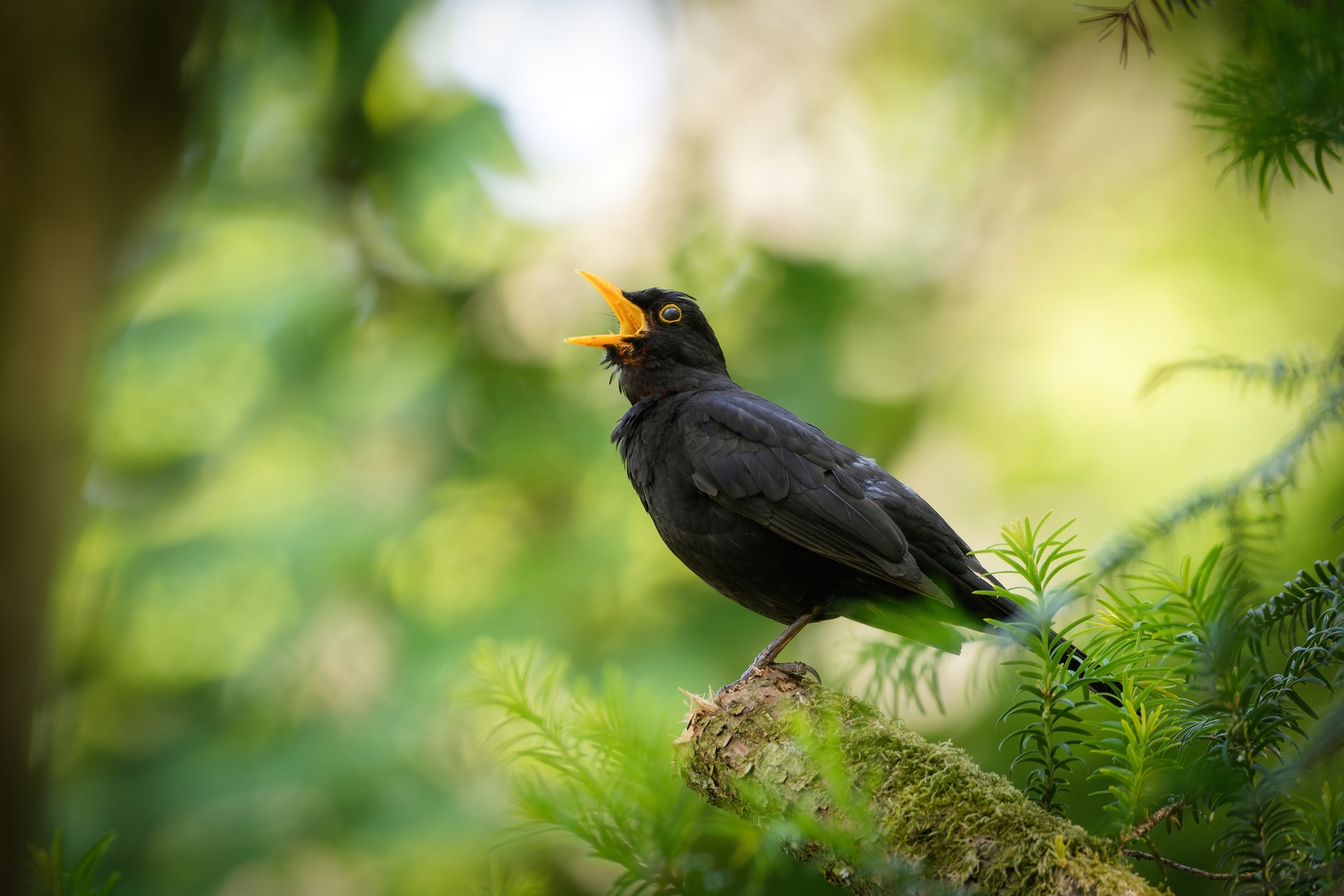
Blackbirds came out on top, followed by willow warblers, blackcaps and mistle thrushes, while barn owls fared the worst, with Egyptian geese, grey herons and peregrine falcons sitting in the next lowest positions.
The scientists then analysed the songs and concluded that the participants enjoyed those that are relatively complex, high-pitched and not too loud.
In a way, it seems obvious that we are going to prefer the fluty song of a blackbird to the slightly menacing screechy sound of a barn owl – it’s just prettier, right? – but there surely has to be more to it than that.
Christoph Randler, of the University of Tübingen and senior author of the research which is published in Frontiers in Bird Science, says there are two aspects of why we might find bird song attractive.
“Culturally, bird song may be perceived as pleasant when it signals a healthy habitat,” he says. “In evolutionary terms, bird song signals the absence of predators. When birds switch to alarm calls, these are usually quite different, and humans are able to recognise this, though probably unconsciously.”
Still, there are many unanswered questions. For example, this study involved people in Germany listening to birds found in the country, but what would they make of species from African savannahs or tropical rainforests?
“That is the age-old question of universalism versus culture,” says Randler. “Some traits maybe similar for all humans but others may depend on culture.
Randler says he personally loves the bird songs of sub-Saharan African which he describes as “fluid” and “liquid” – a common perception of people who have been to that part of the world.
One issue the research has settled is that you don’t have to be a bird expert to find their songs beautiful. “Being able to recognise birds by their appearance or song did not affect how people rated calls,” says lead author Nadine Kelb, also of the University of Tübingen.
That, at least, is good news for large sections of the population, in the UK, Germany and indeed probably large parts of the world.
Top image: blackcap male singing. Credit: taviphoto/Getty Images
More bird stories from around the world
- When complete darkness fell on Antarctica, researchers used satellites to spy on one of its most secretive animals
- Coyote finds vulture nest in Texas. What it does next has never been caught on camera before
- Oregon’s biggest city was drowning in crow poop. Then a new predator came to town
- Birdwatchers spotted a black vulture nesting on the roadside. What it was sitting on amazed them all