Raptor and bird of prey – the two terms are used interchangeably to mean large feathered species that kill and eat smaller living creatures. But why do they refer to birds such as eagles and owls and not to penguins that kill and eat fish, or herons that will also consume rodents along a riverbank? No one suggests calling those species raptors or birds of prey.
The difference boils down to the physical characteristics of each type of bird – the tools they use to catch and kill their meals, and it all goes back to the Romans. The word raptor means ‘snatcher’ or ‘abductor’ from the Latin rapere, to seize or take by force. It denotes a bird with exceptional eyesight that uses its sharp, curved talons at the end of short- to medium-length legs to grab and hold its prey while it dispatches it with a razor-like hooked beak.
- 10 fastest birds of prey in the world – able to reach speeds of almost 200 MPH, these deadly aerial predators strike in a blink of an eye
- It's the fastest animal in the world and its deadly claws can catch prey mid-air: Meet one of the world's most incredible birds of prey
The term bird of prey dates back to the 14th century translation of the Old French oiseaux de proie (birds of prey) which came from the Latin avis praedae (birds that seize in front of themselves). Old English constructions included the use of the word ‘of’ to mean something that is closely associated with the second word in the phrase, having the quality of it rather than belonging to it as we would use ‘of’ today.
For example, in the same way we have beast of burden, man of honour, walk of shame or skies of blue, although mostly these are used poetically rather than in everyday speech. Bird of prey stands out as a phrase still very commonly in use, perhaps because it has a gentler tone to it than raptor, which conjures images of tearing flesh and Jurassic Park dinosaurs.
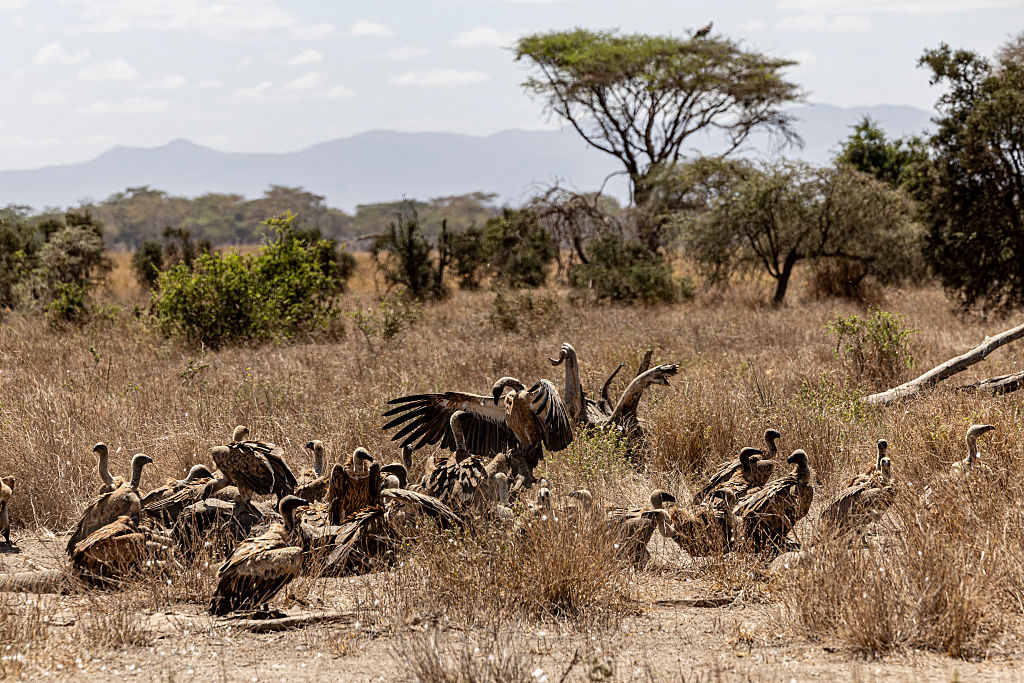
Penguins, herons, storks, crows, kingfishers, gulls, robins, shrikes and the like, that are predators of fish, small mammals, snakes, worms and caterpillars don’t have the same killing apparatus and so are not considered birds of prey. Curiously, though, some scavenger birds are. Vultures, for instance, do fall into the category of raptors or bird of prey. Although they don’t actually kill their food, they possess similar equipment just not configured to be efficient at slaughter. It goes to show that there’s nothing so consistent as inconsistency in nature!
Partly, these curiosities have come about because of changes in science and scientific approach over the centuries. The famous 18th century Swedish biologist and physician, Carl Linnaeus, was the first person to attempt to group animals into families, species and subspecies.
He divided birds of prey into four sections – Vultur (vultures), Falco (eagles, hawks, falcons), Strix (owls), and Lanius (shrikes) – all under the umbrella of Accipitres. Later ornithologists further refined the groups and definitions but stuck to basing the classifications on specific visible characteristics.
It was only in the 1970s, when scientists began using DNA testing to establish the relationships between species, that it was discovered that a number of birds had been placed in the wrong groupings. Vultures are a good example. The birds found in Europe and Africa (known as Old World Vultures) have been found to be genetically related to eagles and hawks, as you might imagine, while the New World Vultures (from North and South America) are surprisingly closer cousins to storks and cranes.
- Are there vultures in Europe?
- Feared and wildly misunderstood – the dark truth behind nature’s most vilified bird and its chilling reputation as a harbinger of death
Where does that leave the naming of raptors and birds of prey? Currently, everything still hinges on the physical look of beaks, legs and feet. But secretary birds have the curved beaks and sharp talons of a classic raptor, and are considered as such, but they have legs as long as a stork’s. When it comes to the animal kingdom, nothing is clear cut…