
Until recently, the gentoo penguin (Pygoscelis papua) was thought to be a single, wide-spread species, but researchers now have evidence that it consists of four separate species, one of them previously unknown to science.
- When complete darkness fell on Antarctica, researchers used satellites to spy on one of its most secretive animals
- Ginormous king penguin colony filmed on remote Atlantic island. The sound of it is ear-splitting
This is the first new penguin species described in more than 100 years – the Northern rockhopper penguin (Eudyptes moseleyi) was named in 1921.
The discovery was made by an international team of penguin experts led by scientists from University of California, Berkeley (UC Berkeley) and several institutions from Chile. The findings were published in the journal Communications Biology in April 2026.
The newly recognised species, Pygoscelis kerguelensis, resides in one of the most isolated places on Earth – Kerguelen Islands (also known as Desolation Islands), located in the southern Indian Ocean, 450km from the closest land. It looks virtually identical to any other gentoo, but exhibits slight differences in size and vocalisation, and is clearly genetically different.
The researchers also concluded that three previously recognised subspecies of gentoo penguins are genetically distinct enough to be elevated to species status:
- Eastern lineage Pygoscelis taeniata, residing on the Crozet, Marion and Macquarie Islands
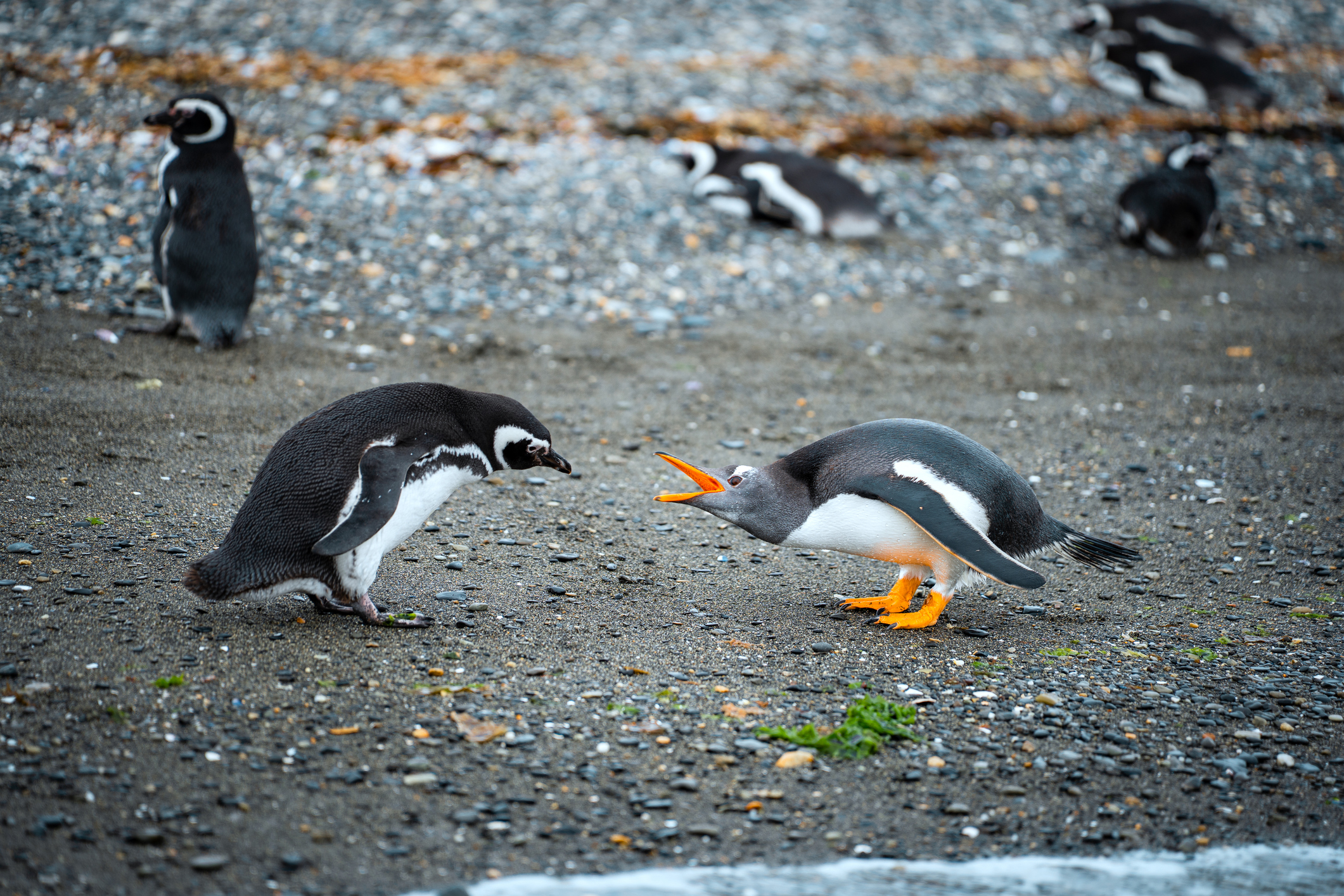
- Northern lineage Pygoscelis papua, restricted to the Falkland/Malvinas and Martillo Islands in South America
- And the most populous, southern lineage Pygoscelis ellsworthi, which thrives on the Antactic Peninsula, coastal Antarctica and South Georgia Island
Under threat
This discovery comes at an uncertain time for three of these species, with global warming affecting the Antarctic and sub-Antarctic regions these penguins call home. Only the southern gentoo, the only one out of the four to reside in Antarctica, is predicted to be minimally affected – or possibly even advantaged because of an expanded distributional range.
“In Antarctica, of course, other species, not the gentoo, are threatened by climate change. But the gentoo is of most concern in the sub-Antarctic region,” said Juliana Vianna, one of the paper’s senior authors and a professor at Andres Bello National University in Santiago, Chile.
The sub-Antarctic region is an area of widely separated islands north of Antarctica, governed by numerous countries, including Chile, South Africa, France, the Netherlands, Australia and New Zealand.
“It’s very important that conservation institutions in all the different countries involved recognise and take appropriate action to save these three gentoo penguin species,” added Vianna.
The researchers used climate prediction models to assess how the gentoo penguins will adapt to climate change. They determined that, under a moderate climate change scenario, all the island-inhabiting sub-Antarctic species will find their current homes uninhabitable by 2050. There will be few to no nearby suitable islands for them to move to.
“In terms of climate change, island species that have really low population sizes could be compared with the sub-Antarctic gentoo penguins,” said Vianna.
“Galapagos and other island penguin species, because they’re endemic to these islands, will find no place to go after a change in their environment. Those islands are very isolated, and these penguins cannot adapt easily to colonise any other region.”
Years in the making
The gentoo penguin species has been debated in the scientific community for decades – the new research finally represents a consensus, based on new whole genome sequences of 64 individuals from 10 breeding colonies. It’s the first one to span nearly the entire geographical range of the gentoo penguin.
“There’s probably no species of penguin where the taxonomy has been more debated than the gentoo penguin,” said Rauri Bowie, professor at UC Berkeley and curator in the university’s Museum of Vertebrate Zoology.
“For over 100 years, it’s been controversial as to how many species or how many subspecies there are. What this paper does is try to address that question using cutting-edge integrative approaches.”
Gentoos differ from other penguin species mostly in diet, which is much more generalised – they’ll eat essentially anything they can chase down in the water. This puts them at an advantage, as penguins with more specific diets, like emperors and Adelies, struggle to find food.
Scientists argue that it’s this generalised diet that led to the evolution of the new species – because the birds are happy to eat what’s in front of them, whether it be fish, krill, squid or cuttlefish, they don’t travel far from their breeding colony and they nest in the same place year after year. This results in isolated populations developing adaptations to their specific regions.
According to the researchers, the different species developed during the past 300,000 to 500,000 years, aided by their isolation and by the Antarctic Polar Front, a temperature and salinity barrier in the Southern Ocean that also acts as a barrier to animal movement.
Different adaptations
The genomic analysis, led by the paper’s lead author, University of Chile graduate student Daly Noll, showed exactly how these differing species evolved to adapt to their habitats. For example, the southern gentoo has more genes related to heat generation, fat and lipid storage and light perception – all adaptations specific to extreme polar environments, since this species thrives in Antarctica.
The eastern gentoo has an increased number of genes linked to energy-efficient carbohydrate metabolism and enhanced diving capacity – supporting prolonged underwater activity in low-productivity oceans.
The northern gentoo showed gene enrichment that support sustained foraging activity in the water – digestion-related processes and pathways involved in cardiac contraction and muscle excitation.
Researchers note that the amount and variety of data acquired for this study will have other uses, namely research into avian influenza, which is currently greatly affecting penguin, bird and mammal populations worldwide.
Read the full findings here.
Top image: Gentoo penguin transporting a small stone in its beak, walking across rocky terrain at Neko Harbor, Antarctica. Credit: Eloi_Omella/Getty Images


