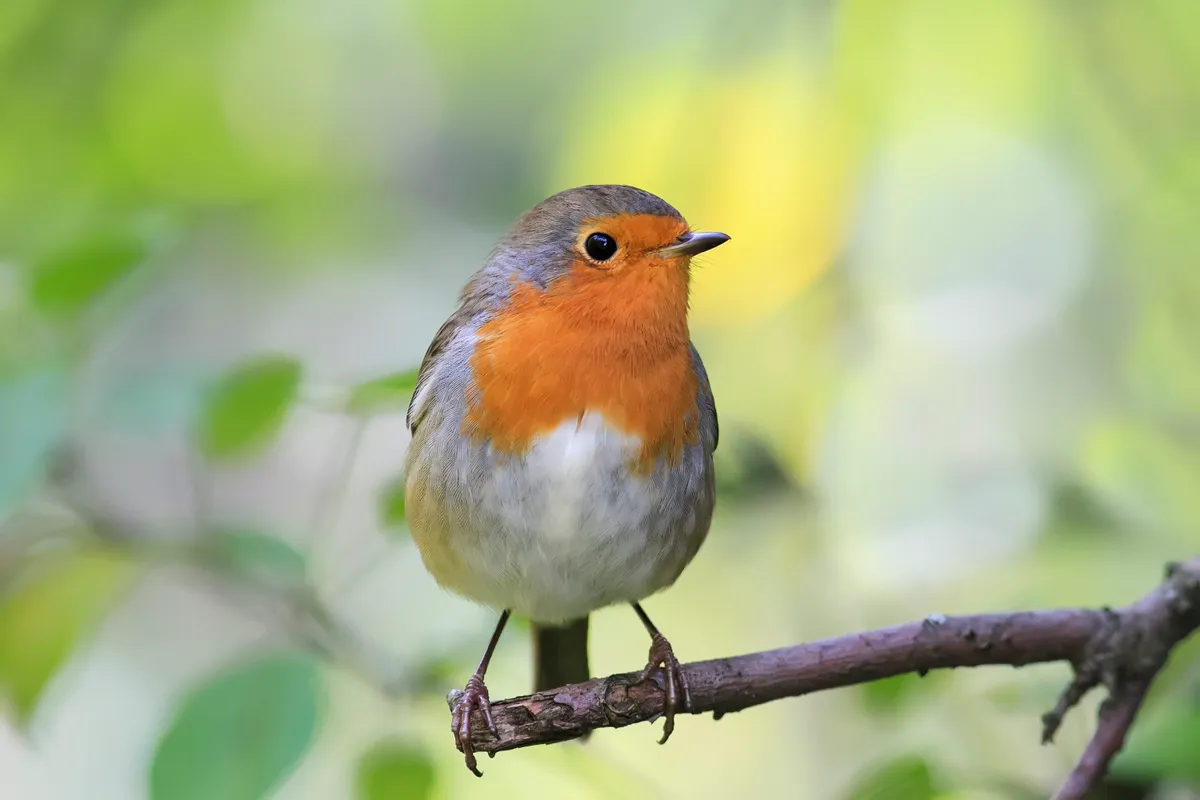
Many species around the world are named after Christmas Day, whether that's because of their bright and colourful appearance or where they are found.
So while you may associate robins and reindeer with the festive season, it's time to discover some lesser-known Christmas creatures.
- The 12 birds of Christmas? Discover the birds hiding in the famous carol and their surprising stories
- How reindeer became a key part of Christmas
Festive animals
Christmas Island red crab
The Christmas Island red crab is famed for its traffic-stopping annual migration, which occurs at the start of the rainy season each year.
Despite its bright red appearance, this crab is named after the island it was discovered on – which was named after the day on which it was first sighted by Europeans.
The island was also home to the Christmas Island shrew, Christmas Island pipistrelle and the Christmas Island whiptail-skink but all three are now classified as extinct.
- Up to 100 million crabs swarm and begin marching on a remote Australian island every year – and nothing will stop them from finding a mate
- Watch ingenious 'crab-safe' car drive through millions-strong red crab migration on Christmas Island
Christmas tree worm

Christmas tree worms (Spirobranchus giganteus) are small invertebrates that make burrows inside corals, where they can hide from predators.
They’re so-called because of their tree-shaped ‘crowns’ that act as specialised mouths. Each spiral is made up of feather-like tentacles which cause any trapped prey to be transported to the worm’s mouth.
- It looks like a Christmas tree: Watch this tiny, secretive creature burst into life like an underwater Cinderella
- This marine worm has eyes 20 times heavier than the rest of its head. Why? Sex, apparently
Peppermint shrimp

If you look closely enough, it’s easy to see where peppermint shrimp get their common name from: they have candy cane-like stripes across their body.
Lysmata wurdemanni is a saltwalter shrimp which can be found along the Atlantic seaboard of the US and along the Gulf of Mexico.
And in another festive twist, its eggs are bright green.
Christmas wrasse

So-called because of its red and green colouring, the Christmas wrasse is a species of ray-finned fish found across the Indo-Pacific.
Many wrasses are brightly coloured and many species are capable of changing sex.
Snowflake moray eel

Snowflake moray eels have black and white mottled colourings, with are thought to give them the appearance of a snowflake or a cloud.
Their mottled appearance allows them to blend in among seagrass beds with rocky shallows.
While they have poor eyesight, moray eels have a heightened sense of smell. They also have a second set of jaws located in the pharynx.
Christmas darter

This species of fish is typically found in South Carolina and Georgia, USA. Described as a new species in 1945, its common name is the Christmas darter due to its red and green stripes.
Some consider the Christmas darter to consist of two subspecies: E. h. hopkinsi (the Christmas darter) and E. h. binotatum (the Christmas Eve or Hannukah darter). However, this is not fully agreed upon.