
Most fish swim but some oddballs turn their fins into a makeshift suction cup to hang onto rocks. The rocksucker – a type of clingfish – is the latter sort.
Living in rockpools, where tides and waves can sometimes be rough, this adaptation stops them from getting battered around or washed away by the elements.
What is a rocksucker?
Rocksuckers (Chorisochismus dentex) are a type of clingfish that live in tidepools and shallow waters off the coast of South Africa and Namibia.
Their most famous attribute is the ‘sucking disc’ under their bellies that allows them to grab rocks or hard surfaces and hold on tight to keep them in once place despite pummelling waves. This trick is particularly handy when they’re hunting as they sit and wait for limpets to release themselves from the rock and start moving to forage – when they do, the rocksucker leaps forward and swallows them whole.
How big are rocksuckers?
They are up to 30cm long and weight up to around 300g
What do they look like?
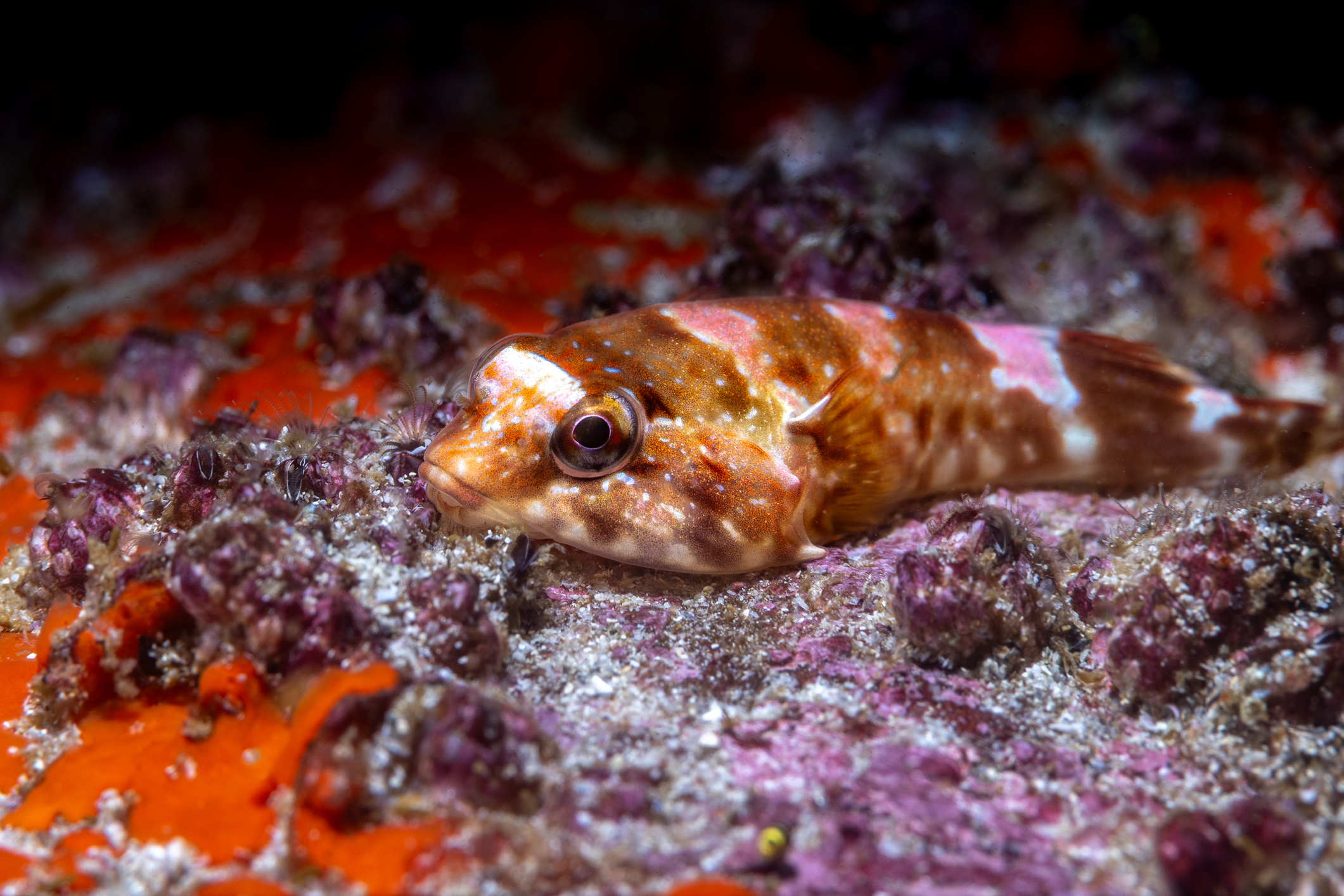
Their body shape makes them look a bit like a giant tadpole. They have a wide head that tapered into a narrow tail. They come in a variety of colours and their mottled reds, purples, greens and browns help them camouflage with their surroundings.
Although you might not be able to see it clearly, underneath the fish’s body its pelvic fins have transformed into a special suction disk covered in tiny hairs (setae) to help it grip tightly onto the rock.
A little like the much misunderstood blobfish, rocksuckers can look very different above the ways giving them a bit of an unfair reputation for being freakishly ugly.
One hideous specimen was found washed up in South Africa, its taught red, leathery skin revealing a hideous gob of protruding teeth. Underwater, the rocksucker actually has quite a sweet little face but this poor individual had dried out in the sun causing its scaleless skin to pull back and reveal its large pearly whites in something of a monstrous grin.
Where do rocksuckers live?
These funny fish are found in shallow waters and tidepools around the coast of southern Africa, from Namibia to KwaZulu-Natal, South Africa.
What do they eat?
Juveniles eat small crustaceans and fish but adult rocksuckers love to eat limpets and sea urchins.
How do they hunt?
Known for their ability to cling desperately onto rocks and not let go, limpets aren’t the most obvious choice of prey. To get around this obstacle, rocksuckers have huge fang-like canines to pry their victim from the rock.
First, they look out for their target, using their sucker to stick themselves to rocks so they aren’t thrown around too much by any waves or currents. The ideal limpet is one that’s about to start moving (these molluscs do sometimes let go of the rocks and ramble around grazing on algae).
As soon as the limpet makes a move, the rocksucker pounces; using its huge teeth to grasp around the shell and lever its prey off the rock in one fell swoop. They don’t bother to chew and swallow their prey whole, later regurgitating the entire shell if it was too big to pass through their gut. These hard shells must feel rather uncomfortable in their tummy so the rocksucker encases them in mucus to protect its insides – especially important when sharp sea urchin spines are coming back up again.
How do they reproduce?
Females lay several hundred eggs in the shallows for the males to come and fertilise. To stop them getting washed away, she sticks them to hard surfaces such as rocks or shells.
Are they dangerous to humans?
No. Their massive teeth might look a bit scary but they’re designed to prize limpets off the rock, not taking a bite out of any humans.
Are they under threat?
Although the IUCN Red List categorises rocksuckers as a species of least concern, they note that coastal development can pose a threat if it impinges on their nearshore habitat. An oil spill in 1994 is also thought to have impacted the population.
- How long can a fish live out of water? Meet one weird fish that can survive two months on dry land...
- "It doesn't come much weirder than having a see-through head!" 16 strangest, weirdest fish in the world, including one that can incredibly live out of water
- "Capable of striking fear into the heart of divers everywhere, it's as dangerous as it is beautiful..." 10 deadliest, most dangerous fish on the planet


