
The New World screwworm has now returned to the United States, threatening livestock, wildlife, pets – and potentially people.
To halt the spread, researchers at the University of California San Diego (UCSD) and the County of San Diego Health and Human Services Agency (HHSA) Public Health Services developed a tool to better track the threat.
- It lurches from the sand like a coiled spring, snapping its jaws so ferociously they can slice prey in half… 6 terrifying, spine-chilling worms
- "What’s grosser than gross? A parasite that eats your tongue – and then lives in your mouth as your tongue." 7 most disturbing, creepiest parasites in the world...
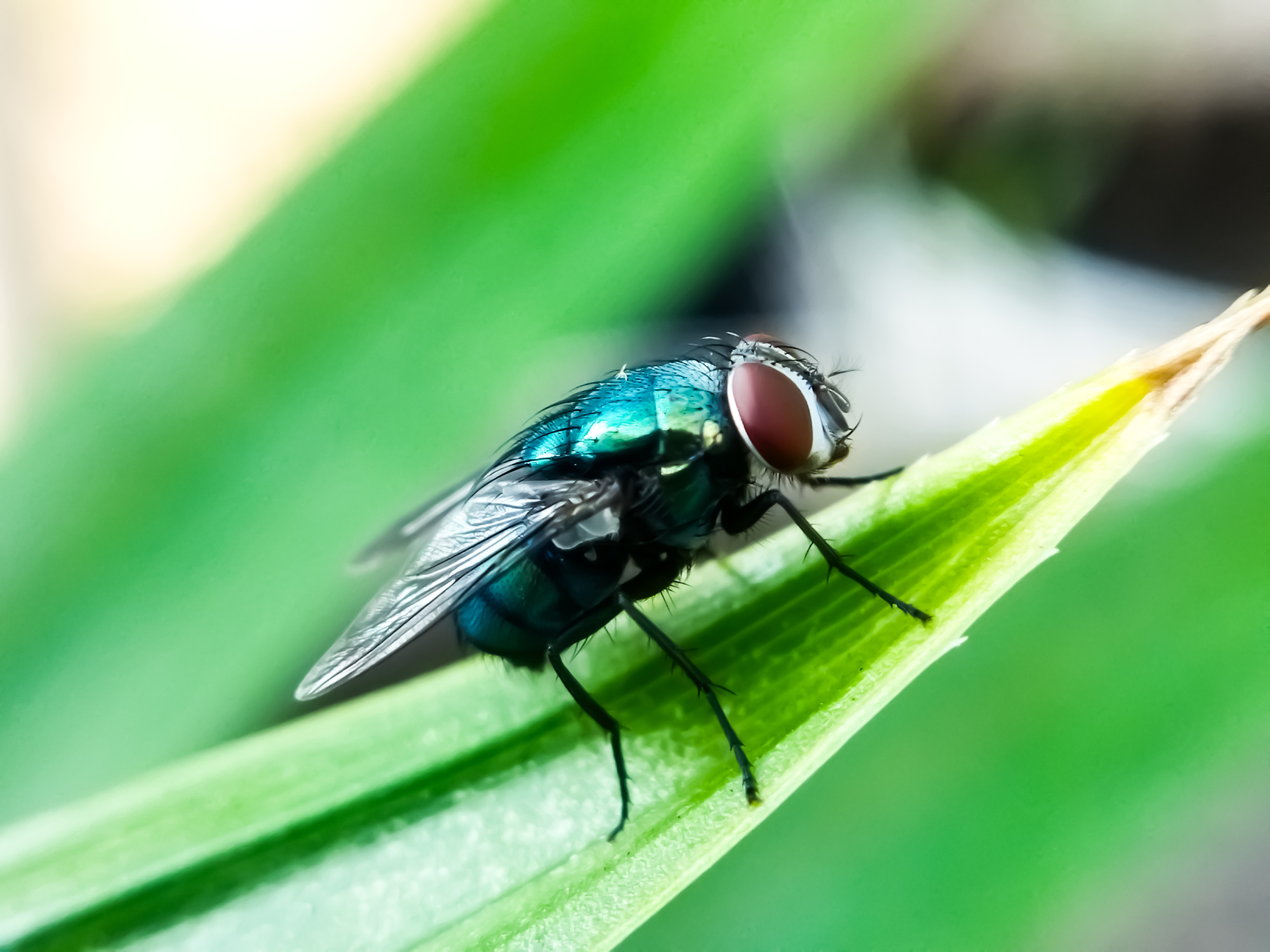
The New World screwworm is the larval (or maggot) stage of a blowfly known as Cochliomyia hominivorax. It might look like any other ordinary species of fly – but it’s a highly destructive parasite that feeds on the tissue of warm-blooded animals, including humans (although the risk to humans is low).
This sets it apart from most fly larvae. Normally, maggots consume dead or decomposing material – but this screwworm favours healthy, living flesh. Female flies burrow their way in a spiral (or screw, hence the name) pattern into open wounds and bodily openings such as the ears, nose and mouth, laying hundreds of eggs.
After hatching, the larvae burrow into the tissue and begin feeding – as they do, the wounds can deepen, which in turn increases the risk of secondary infections. Without treatment, infestations pose a serious risk to livestock and wildlife.
Tracking the screwworm
The successful eradication in the 1950s pushed the screwworm’s range south, eliminating it from the US. Now, the flesh-eating pest is moving north again and has reached Texas and New Mexico.
When alerted to the need for better situational awareness in relation to the New World screwworm, scientists built a dashboard that can generate regional risk profiles, based on a model previously known to be successful in the Tijuana River Valey Sewage Crisis.
The dashboard estimates screwworm risk for individual counties across the US, bringing together several types of information: confirmed detections, environmental conditions and news media reports.
“Traditional reporting mechanisms for public health are often delayed,” said Seema Shah, medical director of the Epidemiology and Immunization Services Branch for the County of San Diego’s Public Health Services Department.
“Lab confirmation can take days or weeks. By incorporating media reports, we can identify potential threats sooner and stay one step ahead.”
- What happens when a fly lands on your food? It’s not so much about the fly as where it's been... (poop!)
- Californian researchers are preparing for the return of a parasitic flesh-eating maggot – that has been confirmed in humans
Access to the dashboard is currently limited to public health officials and others involved in the project, but a version accessible to the public is something the researchers hope to provide in the future.
“The tool gives you a sense of where you might expect to see cases next,” said Mark Beatty, the assistant medical director for the County’s Epidemiology and Immunization Services Branch.
“That’s helpful in determining how we should be preparing. Is the threat imminent, or do we have six months? We’re in a very concerning phase right now and the tool backs that up.”
The pest spreads in several ways: adult flies can travel miles in search of a host; and infected livestock, pets and wildlife can help carry the parasite into new areas.
“We knew in 2023 that New World screwworm was going to move northward, but I wasn’t expecting it to move as fast as it has,” said Beatty. “Although the source of the infections in the US is still under investigation, the fact that it’s in the US is 100% clear.
“Once it entered Texas, we quickly saw an increase in detections. It’s in a place where it used to live, so it’s not surprising it’s taking a hold again.”
The eradication
In the 1950s, New World screwworm infestations wreaked havoc on US livestock producers. In the Southwest alone, they caused an estimated $50-100 million in damage each year.
In response, officials carried out one of the most successful pest-eradication campaigns in history using a method called sterile insect technique. It involved sterilising millions of male flies with radiation and releasing them into the wild. When wild females mated with those flies, they produced no viable offspring – which gradually eradicated the population.
While this method played a central role in the campaign, its success also depended on surveillance networks, livestock treatment programs, animal movement restrictions and population monitoring. A similar approach is being taken now.
- Google wants to release millions of mosquitoes across the US. Here’s why
- "It causes confusion, comas, and extreme daytime sleepiness and without treatment, it is generally fatal" 10 deadliest, most terrifying parasites on the planet
The latest eradication campaign, led by U.S. Department of Agriculture (USDA), combines releases of sterile insects with pesticides and quarantines limiting animal movement.
Officials are also seeking approval from the U.S. Environmental Protection Agency for a genetically modified all-male strain of the screwworm, which is currently being tested in the field. At the same time, UCSD researchers are developing next-generation genetic technologies to help with future efforts to eradicate the worm.
“We are working closely with the California Department of Food and Agriculture to connect local veterinarians with screwworm resources for surveillance in our region,” said Emily Trumbull, veterinarian and lead for the Epidemiology Unit’s One Health Program.
“The flies can affect any warm-blooded animal, so working together with veterinarians serving livestock, pets and wildlife is critical for identifying suspect cases and preventing cases in people.”
Find out more about the efforts to eradicate the New World screwworm here.
Top image: New World screwworm larva. Credit: John Kucharski, Public domain, via Wikimedia Commons


