
Looking for the most impressive jaw in the animal kingdom? The mandible of a trap-jaw ant is without doubt a contender for this accolade.
Found in hot, humid forests or rubber plantations around the world, the trap jaw ant (Odontomachus) has one of the most surprising and strongest jaws around.
What is the trap-jaw ant?
Trap-jaw ants are a species of ant that have remarkably long and strong jaws, or mandibles. The Odontomachus genus of trap-jaw ants are found in many places throughout the world, with Odontomachus bauri found in places including Costa Rica, South America, the West Indies and the Galapagos.
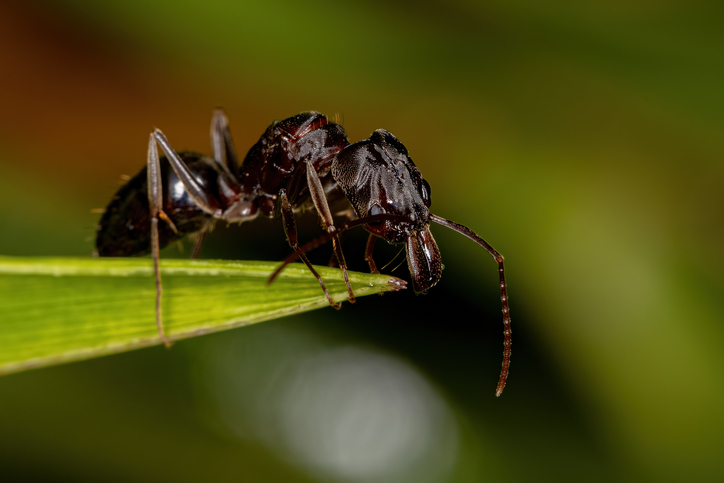
These tiny brown insects can measure anything from 9mm to 16 mm for queen ants. The Odontomachus bauri has a head that measures around 3 mm, with a jaw that has a catch mechanism which can open up to 180 degrees. Their jaws are the second-fastest moving predatory appendages in the animal kingdom - beaten only by the dracula ant.
- 66 million years ago the dinosaurs died, but ants survived - here's why
- "It delivers the most painful sting in the world, leaving victims in pain for 24 hours." World's 6 deadliest ants, including one that's killed people
When opened, the jaws can be locked in place, before snapping shut on prey when hairs on the side of the mandibles are touched. The ant waits for its prey and as soon as the prey rubs against its mandibles, they are snapped inside it. Mandible speeds recorded are around 137 kmh - a speed only reached by birds of prey such as the golden eagle, with jaws closing within 0.13 miliseconds - 2,300 times faster than the blink of an eye.
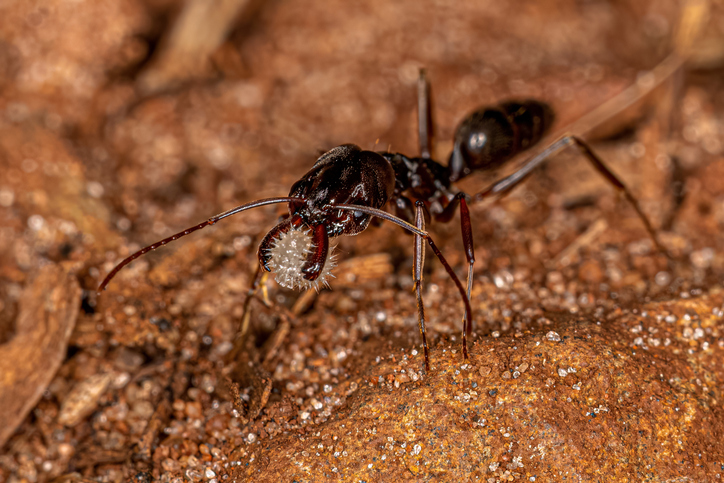
Researchers at the University of California who discovered the speeds in 2006 noted that although the speed of the jaw is impressive, it is the acceleration that is most astounding. The ant's jaws go from 0-137 km/h using their latch jaw system and energy from within their own body.
The trap-jaw ant's amazing catapulting abilities
Not only is the trap-jaw ant's mandibles great at catching prey, some trap-jaw ants use them for getting out of difficulty. By angling their jaws towards the ground, the ants are then able to strike the floor and propel themselves into the air, thereby getting out of a harm's way quickly and efficiently. Scientists found that the ants were able to jump around 8.3cm high. When this happens in a high concentration of ants, it also acts as a way of surprising, or startling their enemy.


