When it comes to occupations, ants have more roles than an artisan baker. These famously social insects live in organised colonies, where different individuals perform different jobs to keep the whole operation running. You’ve probably heard about queen, worker and soldier ants, but what about undertakers, doors and surgical staples? Here are ten of the more unusual ant jobs on offer.
10 unusual ant jobs
Undertaker
Dead bodies can be a disease hazard, so when ants die, some living ants become undertakers. Researchers brought colonies of the common red ant (Myrmica rubra) into the lab and presented them with ant corpses. Regular foragers stopped what they were doing to carry the bodies away from the nest. The same ants spent most of their time outside the nest, or congregating near the entrance when resting inside. It’s thought this is done to minimise the risk of the undertakers passing germs from the bodies to the vulnerable eggs and larvae.
- Do ants use toilets?
- "As with humans, their greatest enemies are the same species. At the frontier they detect friend or foe by smell and interlopers are repulsed…"
Childminder
Worker ants do many of the routine jobs in a colony, including finding food, making nest repairs and caring for youngsters. But in some species, the child-minding role is very specific. In pharaoh ant colonies (Monomorium pharaonis), some childminders specialise in caring for older larvae, while others specialise in looking after younger larvae. Different ages have different nutritional needs, so their respective nurses provide them with different foods. Young larvae are fed liquid food, while older larvae receive both liquid food and solid protein.
Paramedic
Some ants work as paramedics. When termite-hunting ants (Megaponera analis) are injured during raids, their nestmates carry them back to the nest, where they lick and tend to their wounds. In a 2023 study, researchers found that ants can distinguish between infected and non-infected wounds, and apply antimicrobial secretions from glands on their bodies to treat the infected ones. This reduces mortality from infection by 90 per cent. Many of the rescued ants recover and return to the fray.
- "They actually perform amputations. Those that injure their legs above the femur have their whole leg lopped off..."
- They look like ants, they act like ants – but these destructive, house-wrecking little terrors are no ants
Surgeons
Instead of carrying injured individuals home and slathering them in antimicrobial saliva, Florida carpenter ants perform amputations.
In 2017, myrmecologist Erik T. Frank Frank noticed injured ants were willing participants in such procedures, actively presenting their injured legs to other ants that would then proceed to bite them off.
There’s a method to this procedure too. Those that injured their legs above the femur had their whole legs lopped off, while those with lower-leg injuries had their wounds groomed, likely in an effort to remove pathogens that could cause potentially fatal infections.
Raft builder
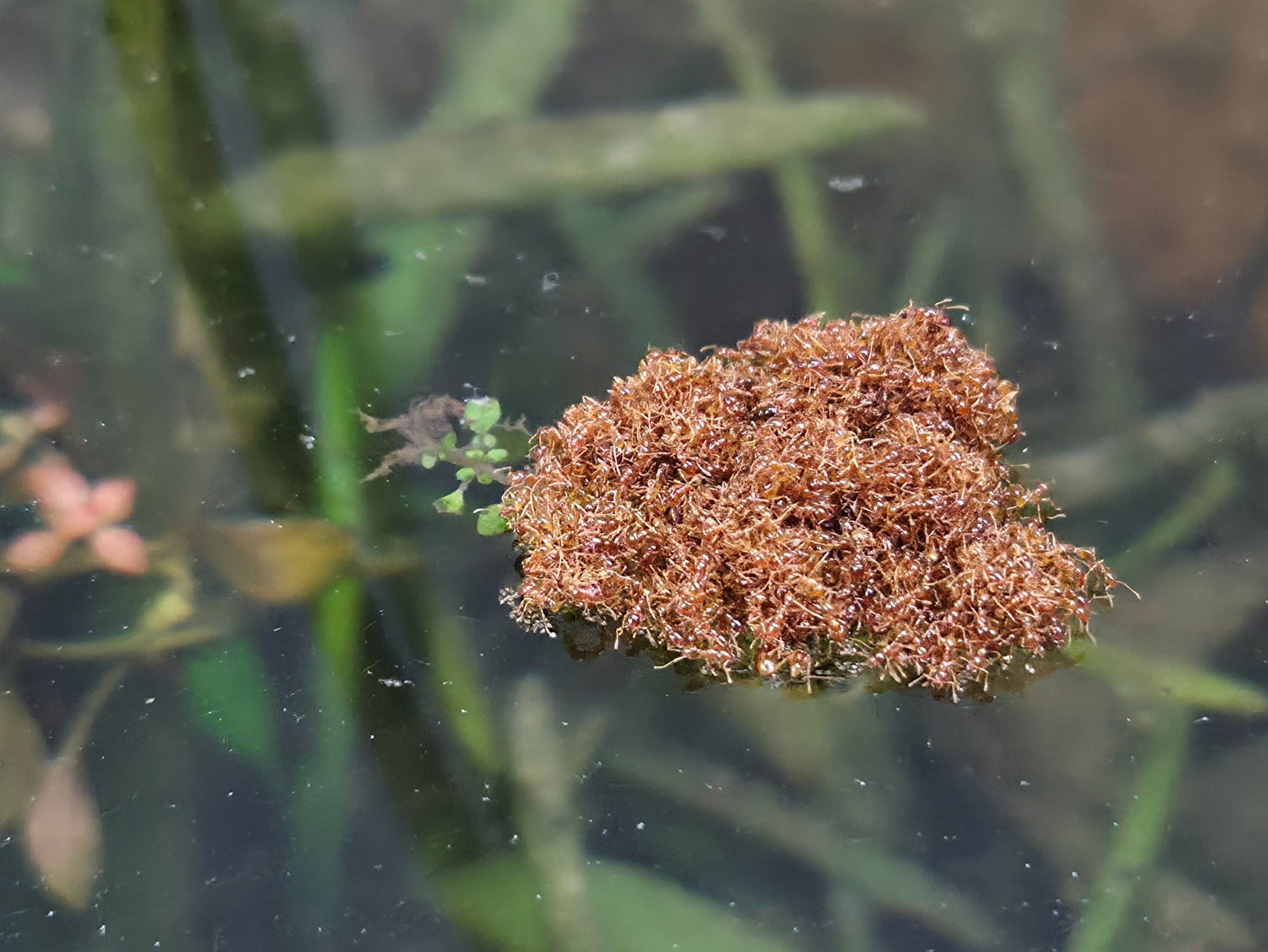
In 2017, when Houston was hammered by Hurricane Harvey, pancake-shaped clusters of ants were seen floating through the floodwaters. To avoid drowning, the ants joined together to form a living raft. Ants are naturally water repellent, and the air trapped between their bodies helps to keep the insect lifeboat afloat. Large rafts can contain tens of thousands of ants. Workers form the bulk of the raft, and the queen rides on top. Eggs and larvae are placed at the bottom of the structure, which may seem harsh, but their fat-rich bodies provide extra buoyancy, and they survive the ordeal well.
Civil engineer
Ant engineering skills don’t stop at making rafts. They’re also very good at building towers. To avoid rising waters, some ants will cling to the base of a tall object, such as a blade of grass or a plant stem. Others climb onto their backs. And others climb onto their backs, creating a bell-shaped structure, a bit like the Eiffel Tower. The queen, eggs and larvae are kept safe inside a protected, inner cavity, while the surrounding ‘wall’ of worker ants is constantly moving. As the tower slowly sinks under its own weight, ants from the bottom scramble to the top, creating a conveyor belt of moving insects.
Door
Turtle ants, which are native to the Americas, live in cavities in trees. If dislodged from the canopy, they use their flat bodies and legs to ‘parachute’ towards the base of the tree. This helps prevent them from going AWOL, but their cool tricks don’t stop there. Some soldier turtle ants guard the nest entrance. They have large, armoured, disk-shaped heads that can fit snugly over the opening. When threatened, soldiers use their heads to plug the doorway, a behaviour known as phragmosis. The turtle ant becomes a living door.
Fungus farmer
Ants began farming around 66 million years ago, long before humans got in on the act. More than 200 species of ants farm fungi. Leafcutter ants are one of them. Foragers cut and collect bits of leaves, which are then chewed into a paste and mixed with a few drops of faecal fluid. The ants then apply this mulch to their underground fungal gardens. This nourishes the fungi, which go on to produce specialised, nutrient-rich structures, called gongylidia, which the ants harvest and eat. Some leafcutter ants also cultivate antibiotic-producing bacteria on their bodies, which help protect their fungal gardens from infection.
- It’s the size of a small apartment, contains hundreds of rooms growing crops, and is home to more than a million farmers
- Dynamite whales, exploding toads, suicide ants, bomb rats: 10 most explosive animals on the planet (and yes they make a mess)
‘Binman’
Some ants have jobs in waste management. In leafcutter colonies (Atta colombica), specialised workers collect rubbish from the nest and carry it to dedicated dumps. Others manage these waste heaps, keeping potentially disease-ridden waste away from the colony’s precious fungus gardens. To minimise the risk of cross-contamination, some waste-heap workers remain on the rubbish dump rather than returning to the nest, effectively becoming the colony’s permanent waste-management team.
‘Dairy’ farmer
Some ants farm and ‘milk’ aphids. Aphids suck sap from plants and excrete a sugary liquid called honeydew. This is so valuable to some ants that they herd and tend aphids, much like human dairy farmers tend cattle. The ants protect the aphids from predators, move them around to the juiciest parts of plants, and carry them inside their nests to overwinter. In return, the ants get to ‘milk’ the aphids, gently stroking them with their antennae so the aphids release their honeydew, which is then gobbled up.
- How long do ants live? Some survive only days, while others can reach a staggering 7 years – yes really...
- "It delivers the most painful sting in the world, leaving victims in pain for 24 hours." World's 6 deadliest ants, including one that's killed people
Staple
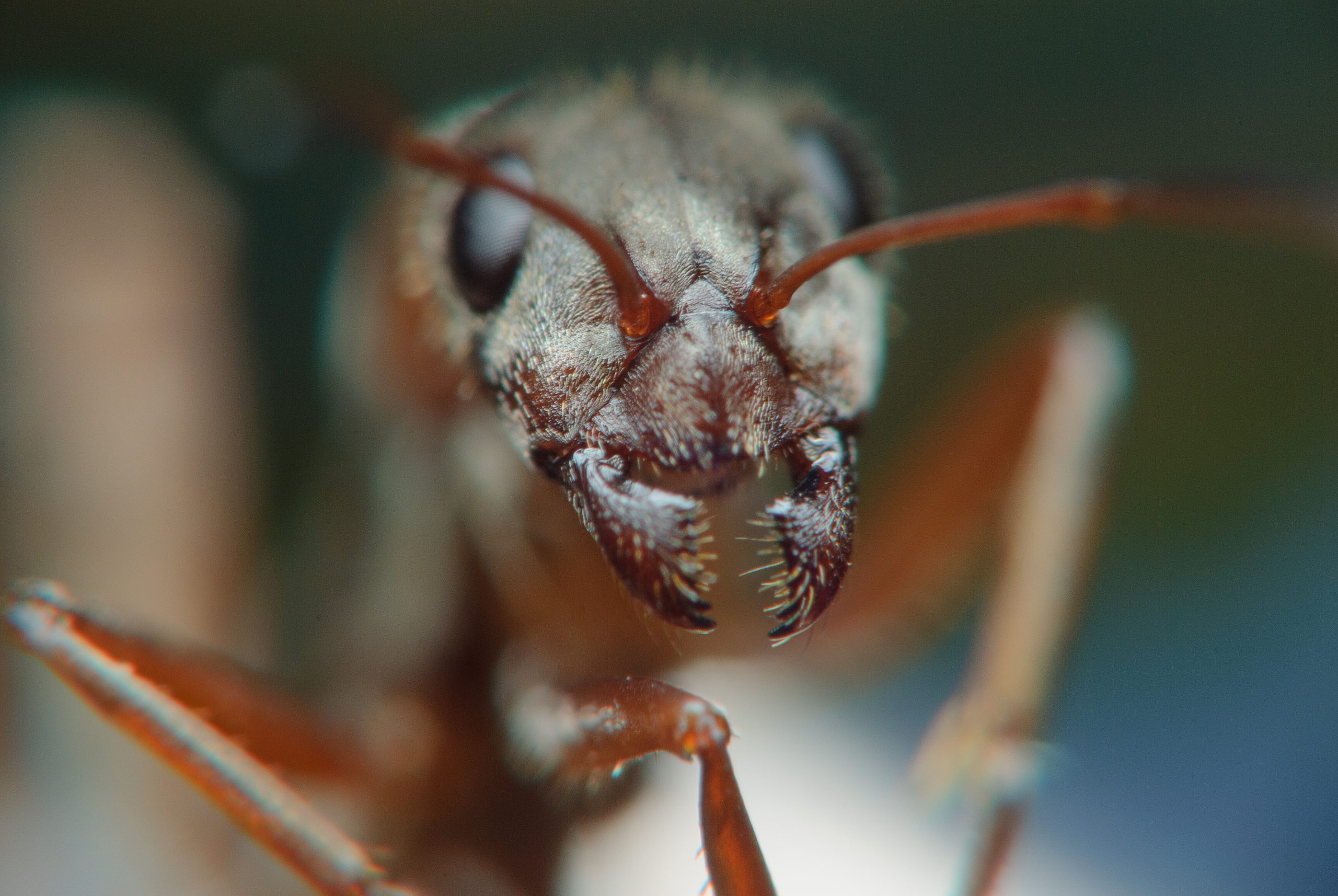
No ant would choose to be a medical staple, yet many have become one. Before the advent of modern medicine, surgeons used ants to clamp wounds shut. The two sides of a wound were pinched together, then an ant held close, until it clamped down with its mandibles. The surgeon would then remove the ant’s body, leaving its jaws embedded in the flesh. The result was a crude but effective surgical staple, which could hold tight for days and be replaced as needed. In ancient India, the technique was used, not just to close surface wounds, but also for deeper, more invasive procedures, such as bowel surgery.
top image: Black garden ants, Germany. Credit: imageBroker/Jürgen Kosten
Discover more interesting insect stories from around the world:
- The giant woodlouse that measures 3cm long and lives on the coast
- "But as he matures and the lure of sex calls, he takes risks…"
- It looks like it's wearing a sequinned jumpsuit and has a penchant for fighting and getting 'all shook up'
- "If it were human-sized, its speed would equate to 800kmph – faster than a speeding bullet"