
Accepted wisdom on the African savannah has long been that hyenas tend to skulk after lions, tracking the big cats to scavenge any fresh scraps the apex predators might leave unguarded. But new evidence flips this on its head by showing that when the two cross each other in the wild, it’s lions – primarily the males – that head towards hyenas.
- When lions raided wild dog dens in Botswana, wildlife guides didn’t expect to see this
- Could a hyena take on a lion?
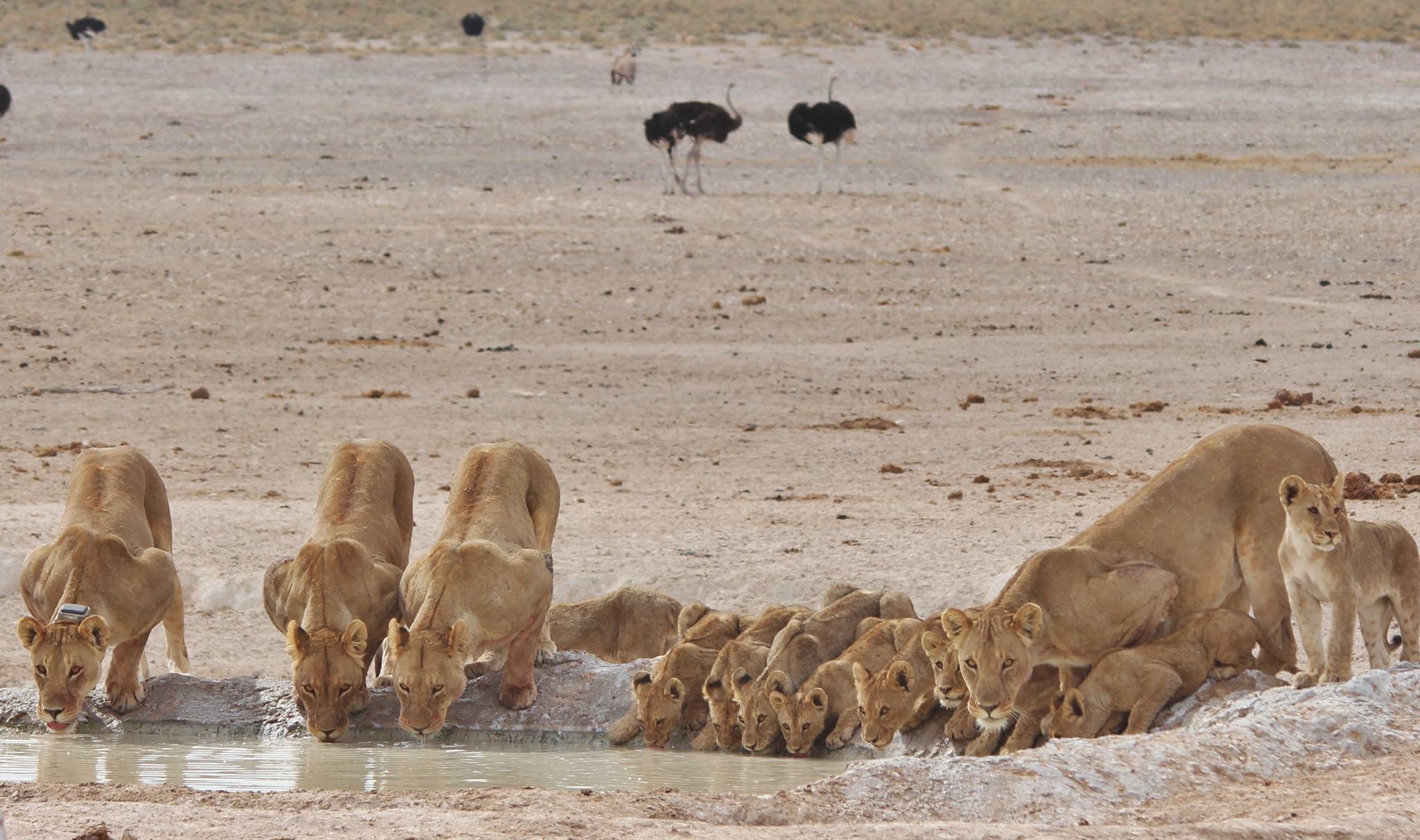
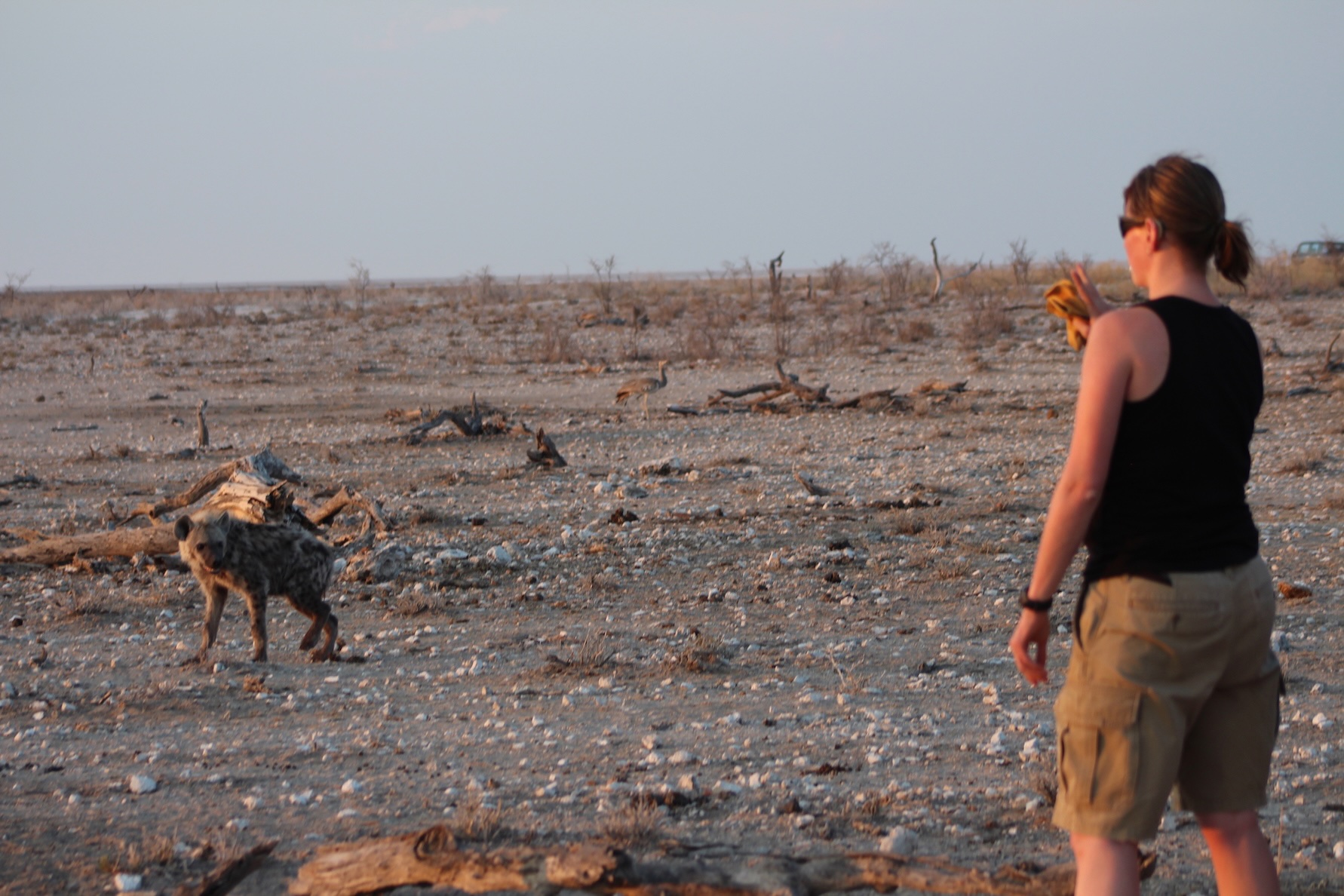
The behaviour of fast-ranging wild carnivores like lions and hyenas is notoriously hard to observe in detail, especially in remote and rugged terrain. As such, this four-year study made use of GPS collars, as well as camera traps and direct observations, to amass a bank of data on the movement and interactions of 17 lions and 14 spotted hyenas in Etosha National Park in Namibia and the Chobe-Linyanti system in Botswana.
The results, published in Frontiers in Ethology, are surprising. “Our data shows that African lions and spotted hyenas leave a clear, measurable signature in the way they move around one another,” says lead author Dr Nancy Barker, of the University of Kwazulu-Natal. “Spotted hyenas consistently move away from lions, while male lions tend to move toward hyenas.
"Because the hyenas' retreat signal was consistent across three independent statistical tests, we can conclude that it reflects a repeatable behavioural pattern.”
- 10 deadliest apex predators in the world
- Why do hyenas laugh?
- What's the most dangerous animal in Africa?
- Hyenas are roaming the streets of this Ethiopian city. What they're doing could be saving people $100,000 USD per year
- "My first reaction was disbelief": spotted hyena seen in Egypt for first time in 5,000 year
Prior to the testing, several months were spent in the field discovering more about the lions and hyenas involved, learning about the hierarchies in the various prides and clans and choosing which individuals would be best for collaring.
The collars were subsequently tracked at five-minute intervals, with the study including only those moments when both animals in a lion-hyena pairing had a GPS fix.
“We asked a simple question: was each animal moving toward the other, away from it, or off to the side?” explains Dr Barker. “When repeated across thousands of simultaneous locations and many pairs of animals, a clear pattern emerges.” The study also shows that while male lions often head towards hyenas, actively tracking them, female lions are less inclined to do the same.
The findings underline behaviour previously seen by Dr Barker, who lived in the bush while studying brown hyenas during her Master’s. “I repeatedly observed lions tracking hyenas,” she says. “I was often told I had the relationship backwards… and that what I had seen was simply a series of chance encounters. I felt there was more to the story.”
Find out more about the study.
Top image: Spotted hyenas in confrontation with a lioness. Credit: Anup Shah/Getty Images
More wildlife stories from around the world
- Crocodile snatches wild dog from riverbank in Zambia. Then its pack turns up to try and save it
- I finally managed to photograph Africa’s incredible wild dogs. These are my best shots
- Polar bear pulls seal pup onto ice then backs away. The reason why is extraordinary
- Mysterious new monkey species with orange lips discovered in the Congo rainforest


