
Though widely regarded as a filthy habit, picking one’s nose is the norm rather than the exception among humans. While many would never admit publicly to using a finger to excavate their nasal cavity, anonymous surveys tell a different story - that it’s a behaviour that more than 90 per cent us indulge in.
We are not alone. At least ten other primate species, including chimps, gorillas, orang utans and macaques, have been documented picking their noses and eating the spoils. Most use their fingers, but a female bearded capuchin in Brazil has been observed probing her nostrils with stick tools and grass stems.
The nose-picking antics of one species might make even human children’s eyes water. The aye-aye, a nocturnal lemur from Madagascar, can push the entirety of its extraordinary elongated middle finger - all 10cm of it - up its nose. In fact, it passes all the way through the nasal cavity and down into the throat.
- Aye-aye uses its long middle finger to pick its nose
- These 14 incredible photos reveal the extraordinary diversity of wildlife in Madagascar
- Bison snot holds the American prairie together. Here's how, according to an ecosystem expert
- “It’s alien in every sense of the word.” In sulphuric caves too deadly for humans, living snot-like slime drips from the ceilings
So why do so many primates do it? One possible answer is: because they can. The aye-aye’s slender middle finger is built primarily for winkling grubs out of dead wood, suggesting its suitability for nasal insertion is simply a bonus. Likewise, it might be just a coincidence that humans’ nostrils are about the same diameter as our digits.
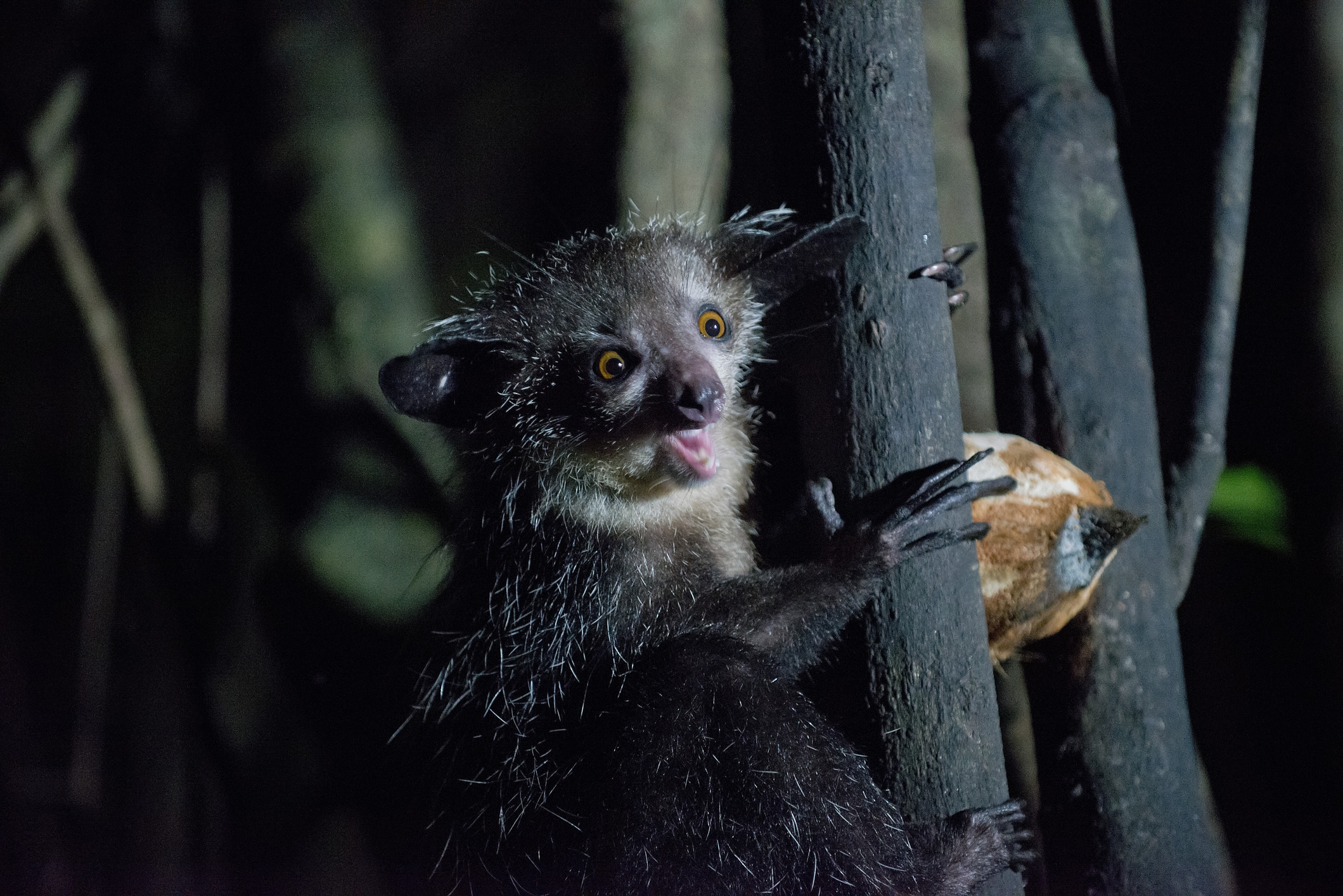
- It has a creepy stare, prowls the night, taps on trees to find food – and is feared as an omen of death. Is this the weirdest primate on the planet?
- "It looks like Gollum from The Lord of the Rings. "8 weirdest, most peculiar (and most wonderful) primates on the planet
But it’s also possible that rhinotillexis – to give nose-picking its technical name – has a biological function. Mammalian snot might consist of 95 per cent water, but it clearly has some nutritional value because it forms a significant part of the diet of oxpecker birds, which also feed on other such delicacies as earwax, ticks and blood plucked from the nooks and crannies of large African herbivores. In which case, perhaps nose-picking is a way to recycle valuable materials.
- Oxpeckers provide an anti-poaching warning system for black rhinos
- Iguana filmed “blowing snot rockets" in Galápagos
Another theory is that ingesting microbes trapped in snot plays a role in priming the body’s immune system. There is also some evidence that mucins, a family of proteins found in nasal mucous, can prevent harmful bacteria sticking to tooth surfaces, which raises the tantalising possibility that chewing on a bogie can improve dental health.


