
When you're a little creature in the animal kingdom, you need to be constantly on the lookout for danger. But researchers have discovered that one animal significantly changes its behaviour when it thinks battles might come about in the future – and how costly those battles might be.
- It's stripy, the size of a house cat, enjoys a good gossip and often start fatal fights with rival gangs...
- They should be enemies, but these two animals work together
New research from the University of Bristol demonstrates how dwarf mongooses (Helogale parvula) respond to the potential of future encounters with rival groups. The animals alter their behaviour when they are in an area most likely to get into a fight with a rival group, even when a rival group is nowhere to be seen.
The dwarf mongoose is the smallest carnivore in Africa, with adults weighing, on average, 270g. They live in groups of between 5-30 primarily in dry grasslands and brushland and are very territorial, with each group tending to use an area between 30-60 hectares.
These territories can overlap, which can lead to fights between groups – with the largest group usually winning.
The new study, published in Nature Ecology & Evolution, shows that mongooses keep track of where their rivals are, but also factor in the relative size of the enemy group. The researchers found that mongoose group members looking out for danger call more when the potential threat is from a larger group.
They also discovered that the biggest changes in behaviours happen when the anticipated threat is greatest.
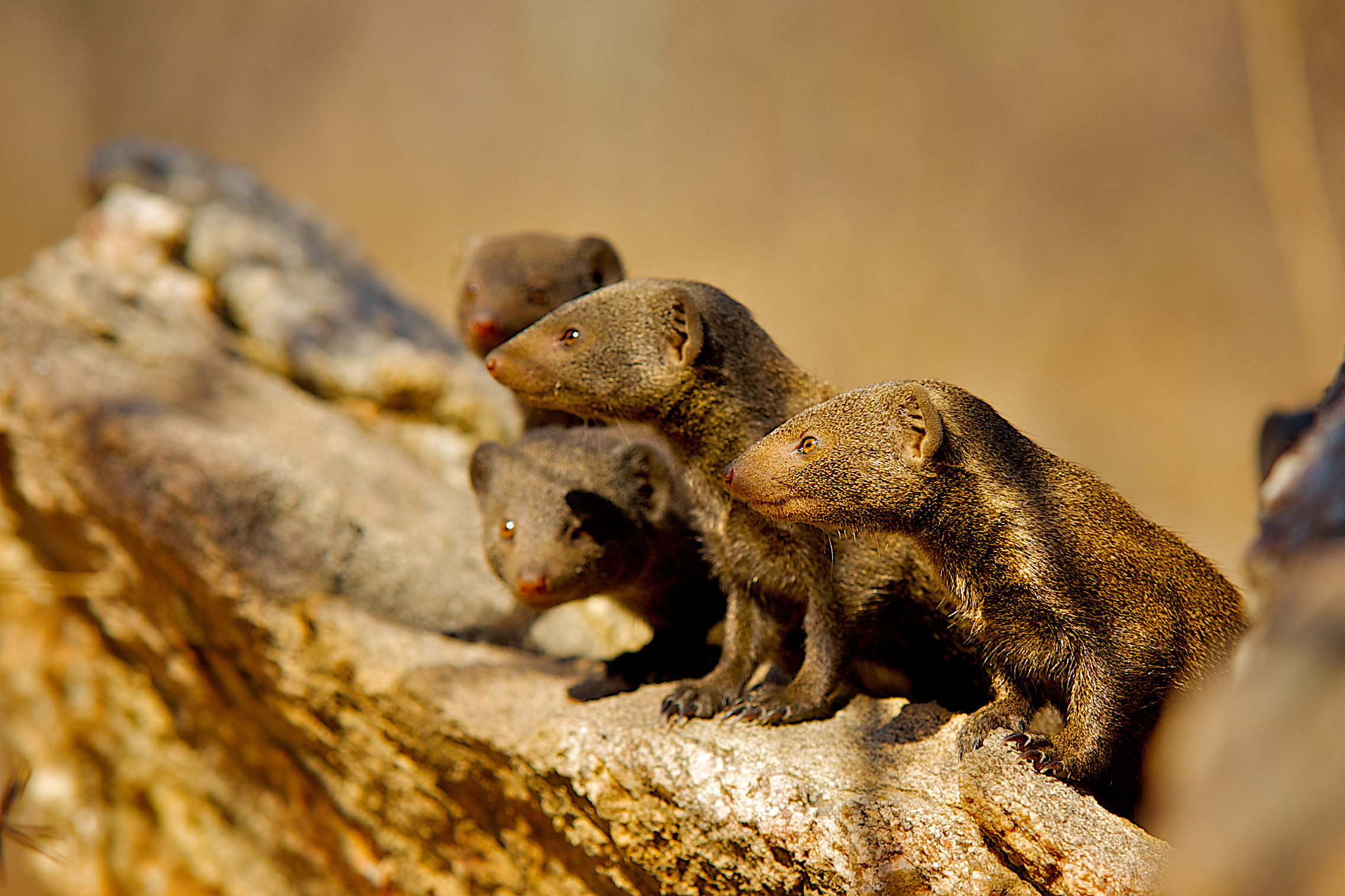
Researchers combined ten years of observation and GPS data to analyse how dwarf mongoose adjust their behaviour to help them mitigate the risk from competitors.
They mapped 12 wild dwarf mongoose groups in South Africa and saw that if a neighbouring group was larger, the smaller dwarf mongoose group would spend less time in the neighbouring group's territory. They also noticed that groups were much less likely to sleep in a neighbouring group's territory if the neighbouring group was well-matched to them – and therefore any confrontation likely to be more costly.
"Not only are the mongooses keeping track of where their enemies might be, but they’re factoring in the relative size of different groups," explains the study's lead author Josh Arbon.
"They can then tailor their pre-emptive behaviour accordingly."
“We know that battles between groups can be very dangerous for participants. What we’ve shown now is that there are constant behavioural changes to mitigate these risks and enhance the likelihood of future contest success," added Andy Radford, a senior author and professor at Bristol University.
Top image: dwarf mongooses (Helogale parvula) play fighting. Credit: James Warwick/The Image Bank/Getty Images


