
It involves up to two million animals – primarily wildebeest, along with hundreds of thousands of zebras and gazelles – circling the Serengeti-Mara ecosystem in search of water and fresh grazing. Their continuous movements cover up to 1,000 kilometres a year.
More than 1.8 million wildebeest and around 300,000 zebras - along with species such as impala, eland, and Thomson’s gazelles – travel in immense herds through Tanzania and Kenya. The animals move from Serengeti National Park in Tanzania to the greener pastures of the Masai Mara National Reserve in Kenya and round again.
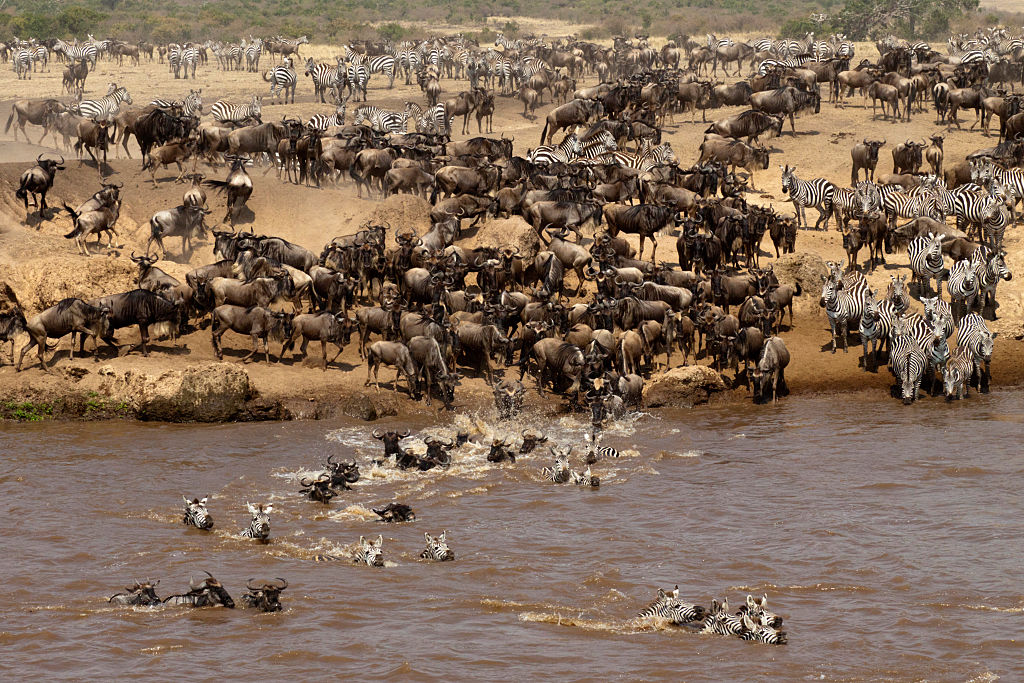
The cycle includes several key events, notably the calving season, the rut and dramatic river crossings.
- Its top speed is 50 miles per hour, it's constantly on the move and takes part in one of the greatest spectacles on Earth
- Jaw-dropping videos of a million wildebeest migrating across Africa – and the infamous Mara River crossing where hungry, deadly crocodiles await
This journey is hazardous. Lions, hyenas, cheetahs, African wild dogs, and crocodiles all prey on the herds. Each year, over 250,000 animals are estimated to die during the migration, with calves and older individuals most at risk.
- Satellite images capture great wildebeest migration from space. A close look reveals something startling
- 10 amazing mammal migrations
- Craziest and most dangerous animal migrations: From tiny insects to giant whales, 10 reckless journeys that will blow your mind
When and where to witness the migration
Because it is a year-long cycle, the animals' location changes depending on the time of year.
January to March, calving season The herds congregate in the southern Serengeti and the Ngorongoro Conservation Area's short-grass plains. In the space of a few weeks, peaking in February, wildebeest give birth to nearly 500,000 calves in one of nature's greatest wildlife events. The calves are able to stand within a few minutes of birth and can run within an hour.
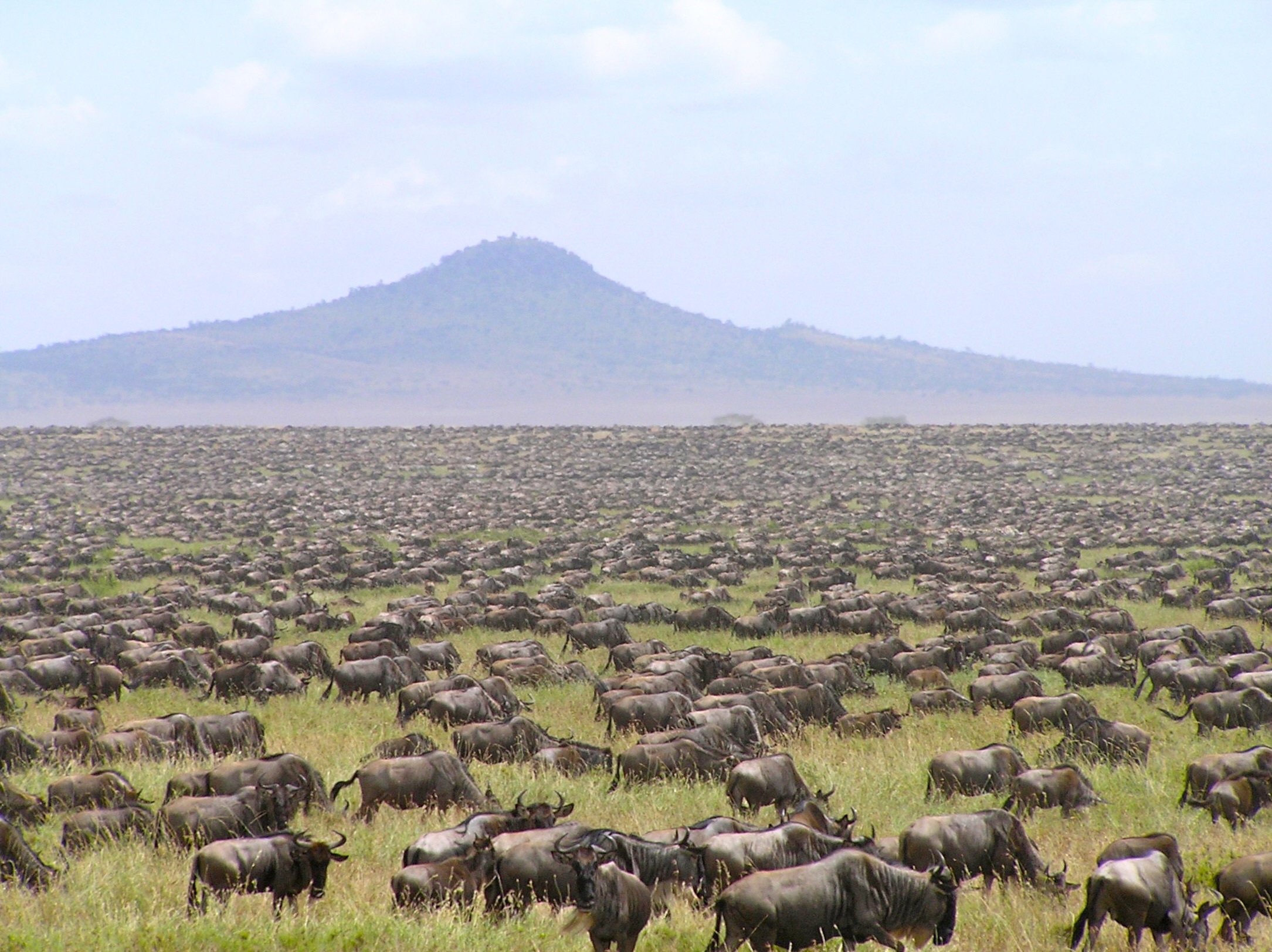
April to June, the rut As the plains dry up, the mega-herds merge and begin moving northwest towards the Moru Kopjes and the Seronera region. The rut (mating season) occurs when over a million wildebeest reach a frenzy of chaotic activity. It typically peaks between May and June and is characterised by loud vocalisations, territorial fighting and the rapid formation of mating herds. As the massive herd sweeps across the savanna, bulls constantly defend their small patches of ground to attract passing females. The atmosphere becomes highly energetic and noisy. Bulls engage in spectacular displays of dominance – prancing, digging up dirt with their horns, and clashing in aggressive territorial fights.
June to July The herds reach the Western Corridor and the Grumeti River, facing their first major tests against the waiting crocodiles.
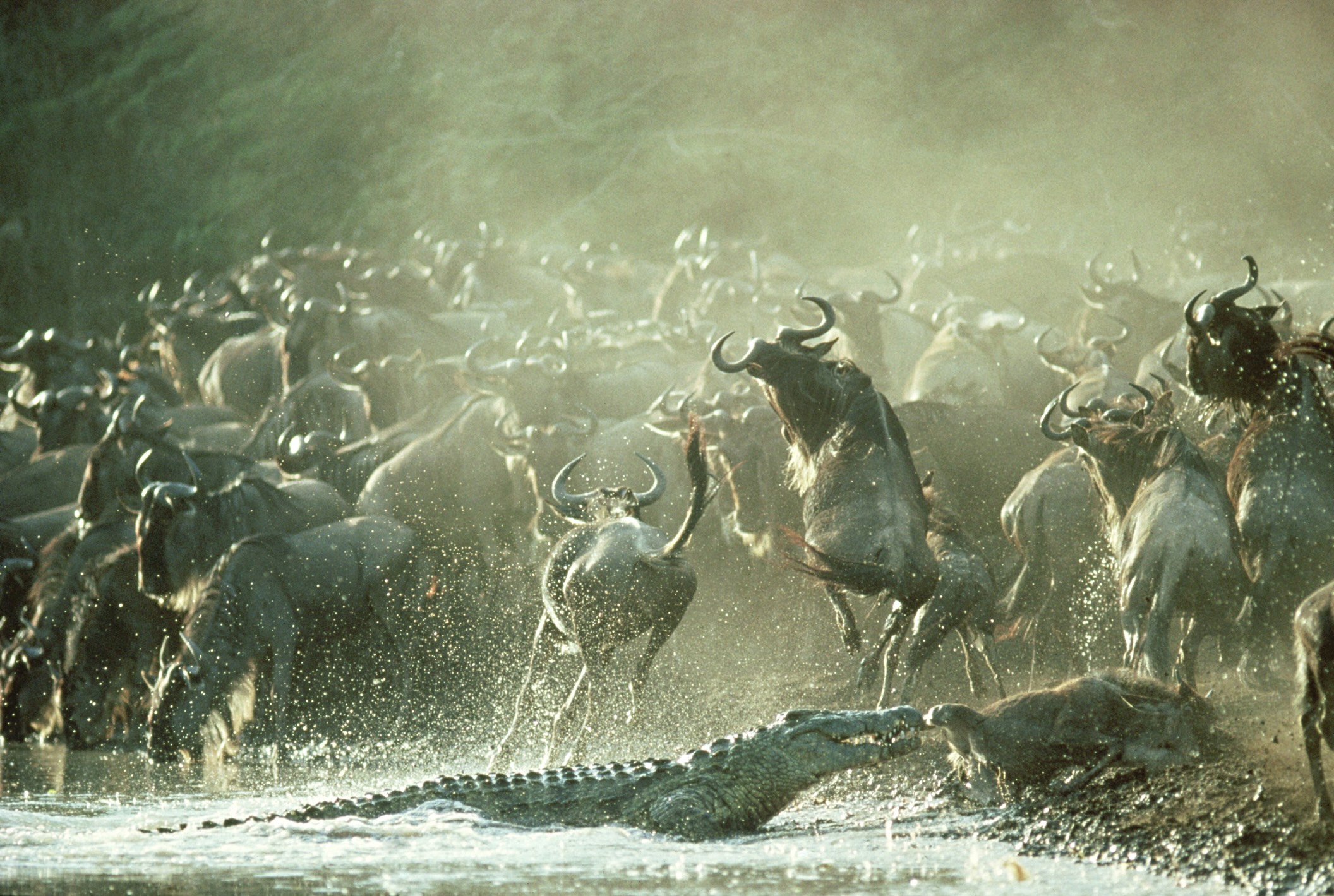
August to September, river crossings This is the most iconic time of the migration. The herds reach the perilous Mara River in the northern Serengeti. Thousands of animals gather before braving the fast currents and lurking predators to cross into Kenya's Masai Mara. The timing of the crossings depends heavily on seasonal rains and the movement of the herds. Observers may wait for hours on the riverbank as herds gather, hesitate and build up 'mob courage' before one brave wildebeest dives in. Aside from massive crocodiles in the water, lions and leopards are known to prowl the steep riverbanks, targeting animals that fail to make it across.
October to December As grasses wither in the north, the herds migrate south again, spreading out across the eastern and southern Serengeti to prepare for the calving season.
The Great Migration is one of greatest wildlife spectacles on Earth, with tourists flocking year round to witness its majesty first-hand. However, although it was long considered to hold the record, it is not the largest movement of herd animals on the planet. That title belongs to the Great Nile Migration in South Sudan and Ethiopia. This massive seasonal movement features up to six million antelope – including white-eared kob, tiang, and Mongalla gazelle – making it roughly three times larger than the famous Serengeti migrations. Even though the Serengeti Great Migration has been dethroned in terms of sheer numbers, it remains the longest overland mammal migration in Africa by distance.


