
A male jaguar has been observed on camera traps set up in a Guatemalan wildlife corridor. The corridor, which connects Guatemala and Honduras, is one of the most fragile pathways for jaguar movement in Central America, with cats facing pressure from human populations and developments.
The camera traps are a collaboration between the wild cat conservation organisation Panthera and the Guatemalan governing agency Consejo Nacional de Areas Protegidas (CONAP). The images, captured in June 2026, suggest that the cats are using the corridor to pass between the two countries.
- Tourists witness jaguar fighting puma in Brazilian wetlands
- Crucial and heartwarming: see world’s first-ever wild jaguar translocation in Argentina
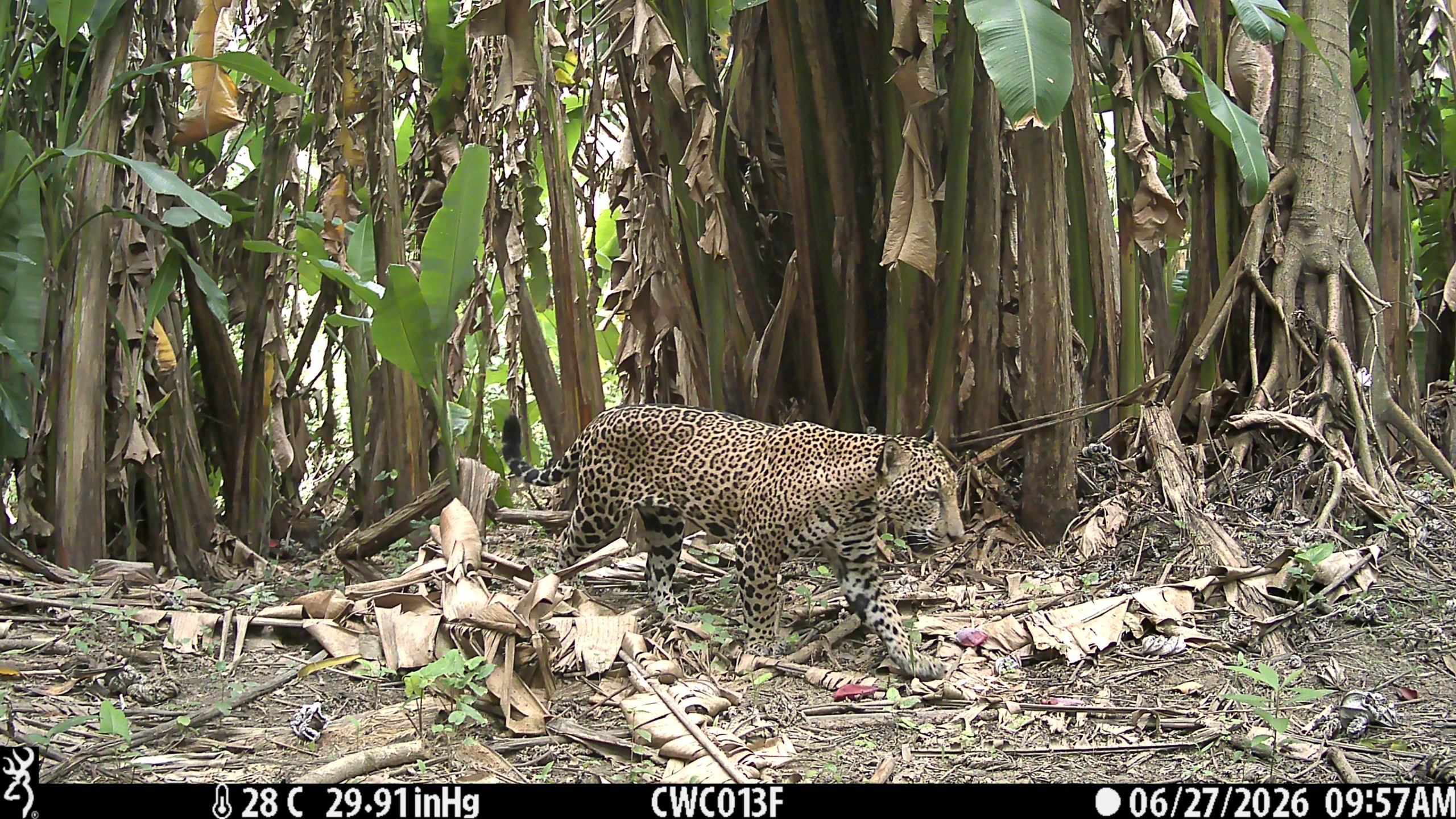
They may also provide answers for scientists who have been researching whether individuals are genetically isolated or are still moving between countries, including to larger populations in Honduras and Belize.
The images, as well as local knowledge and partnerships with other organisations, extend the known Guatemalan range of jaguars beyond the Maya Forest to Sierra de las Minas (a mountain range in the east) and the Izabal corridor (on the Caribbean coast).
Connecting jaguar habitats are crucial to prevent populations from becoming isolated or inbred. Panthera’s Jaguar Corridor Initiative is a conservation strategy that aims to preserve the connectivity of this big cat through their six million square kilometre range from Mexico to Argentina, securing 30 priority jaguar conservation landscapes by 2030.
Top image: a male jaguar caught on a camera trap in the Guatemalan wildlife corridor on 27 June 2026. Credit: Panthera


