Domestic moggies might sometimes be said to fight like alleycats, and so it turns out can much larger wild felids such as jaguars, pumas and ocelots.
And the reason we are finding this out is down to ecotourism.
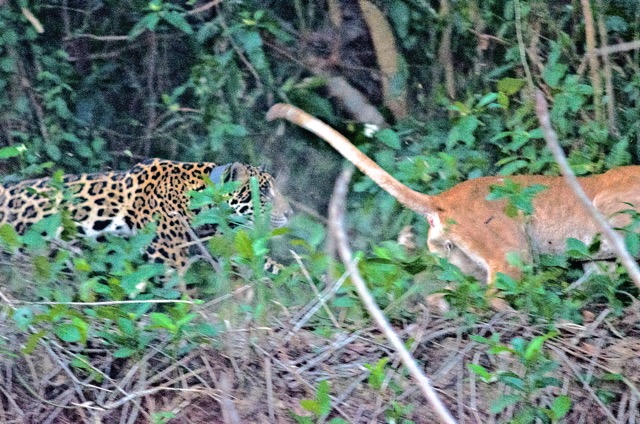
A new research paper published in the journal Ecology and Evolution has looked at four documented cases of interactions, killing and predation between these three species at two tourist hotspots in South America – the Pantanal in Brazil and the Llanos of Colombia.
One instance involved a jaguar chasing a puma away, while another was an observation of a jaguar feeding on an ocelot carcass that it appeared to have killed. A third example was the body of an ocelot discovered by tourists where a biopsy confirmed the aggressor to have been a jaguar. In the fourth, a puma had been killed and partially consumed, again, by a jaguar.
- Jaguar experts camera-trapped the Amazon – and discovered a dark secret
- Pumas are saving human lives in Washington State. Camera-trap footage reveals how
Lead author Fernando Tortato of the big cat conservation group Panthera says a key aspect of the research is that it has been enabled by observations made in tourist areas and often by tourists themselves.
“In Africa, researchers have spent decades observing carnivore behavioural ecology in the field, watching lions interact with hyenas, leopards and other predators for hours at a time,” he says.
“We may now be reaching a similar capacity in the Pantanal, one of the few places in the world where jaguars can be observed hunting and going about their routine activities in the wild.”
In his paper, Tortato points out that the interactions examined are not random and “play an important role in structuring carnivore communities, either by affecting population density, space used or activity pattern.”
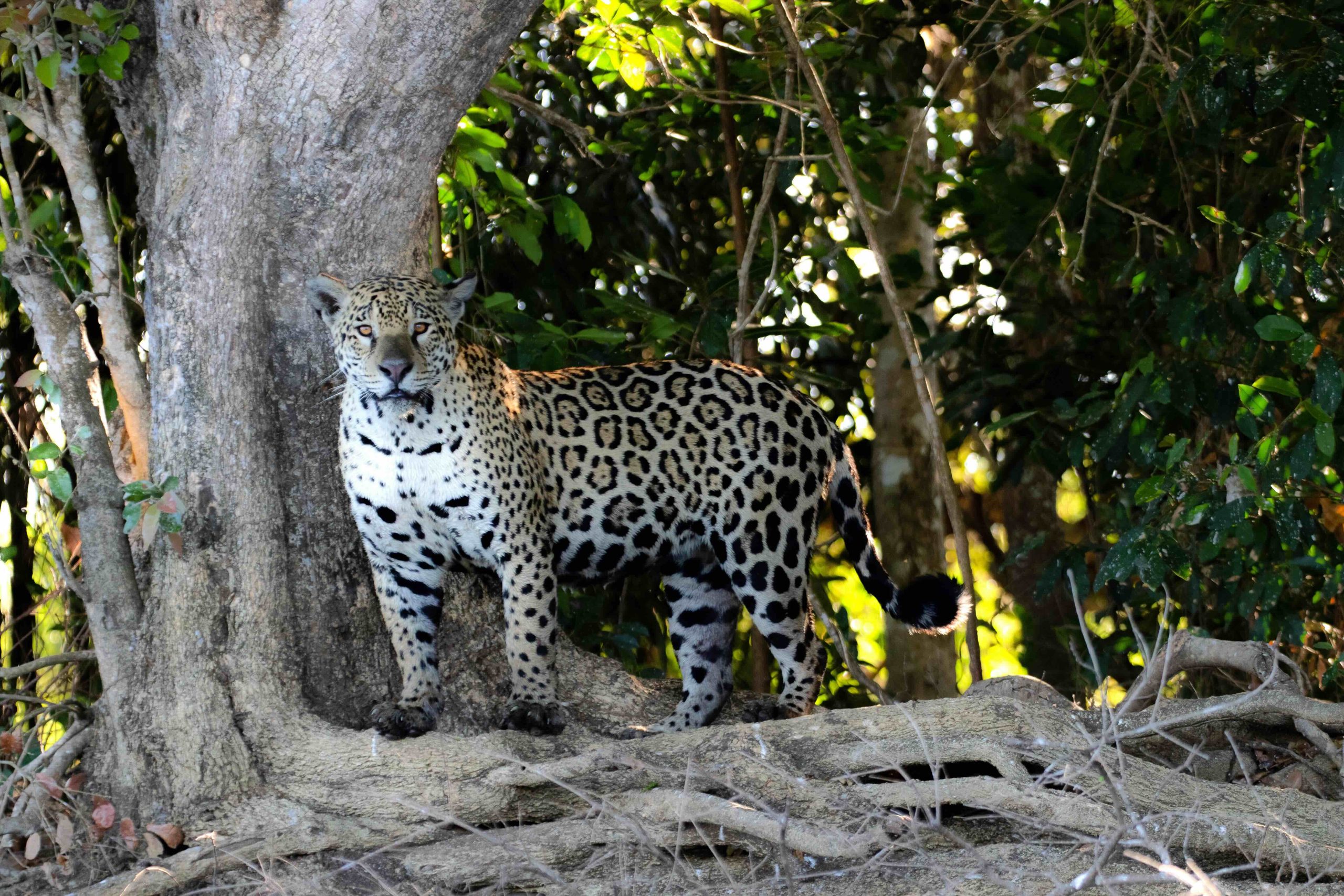
Jaguars, pumas and ocelots all overlap in significant parts of their range, and the jaguar – as the biggest of them – shape the distribution of the other two both through predating for food and killing to reduce competition for resources.
This in itself is not surprising – as Tortato says in the study, “interspecific killing appears common in mammalian carnivores, account for 38 per cent of known mortalities” – but until now, there was very little evidence to demonstrate this.
The Pantanal is the better-known of the two tourist hotspots, attracting an estimated 1 million visitors every year to watch a wide range of wildlife including jaguars, caimans and hyacinth macaws. Los Llanos is more of an emerging destination, visited by about 3,000 international tourists in 2022, it has been reported.
Find out more about the study and Panthera.
Top image: An agonistic encounter between a jaguar and a puma on the banks of the Cuiabá River in Brazil, witnessed by a group of tourists. Credit: Rudolf Schnorrer, via Panthera
More wildlife stories from around the world
- Puma DNA found deep in Guatemalan rainforest. Analysis reveals the cats are eating something unexpected
- Wild jaguar cub spotted in Argentina's Gran Chaco for first time in decades
- Scientists tracked these mountain lions in Los Angeles for seven years – now they've discovered something crucial
- Why 8 Texan pumas were released in Florida – and what happened next