
It is perfectly camouflaged as it slips through the forest in the twilight hours – and a notoriously difficult species to spot. Sadly, the densely vegetated habitat on which the ocelot largely relies is under increasing pressure and numbers of this secretive New World felid are falling.
Learn more about ocelots from our expert guide, including how to identify, where they live and what they eat.
Where does the ocelot live?
The ocelot has a broad range, stretching from the southern USA through Mexico and Central America, across much of South America as far as northern Argentina and southern Brazil, and occasionally into northwestern Uruguay. It does not occur in Chile, and in the USA it is now largely restricted to a small, vulnerable population in Texas.
Across this range, it occupies a wide variety of habitats, including tropical forest, savannah grassland, mangrove, marsh and thorn scrub. The common thread is cover. Dense vegetation gives the ocelot somewhere to rest, stalk prey and avoid larger predators.
How big is the ocelot?
The largest member of their genus, Leopardus, the ocelot is a substantially sized small cat. It typically weighs about 8–15kg and measures around 50–101cm in body length, with a tail that may add a further 30–50cm.
What does it look like?
Its build is stocky rather than delicate, with strong legs, a comparatively short tail and very large paws (its Spanish name, manigordo, means ‘big feet’). Males are usually bigger than females. In some parts of its range, the ocelot may be several times heavier than a domestic cat.
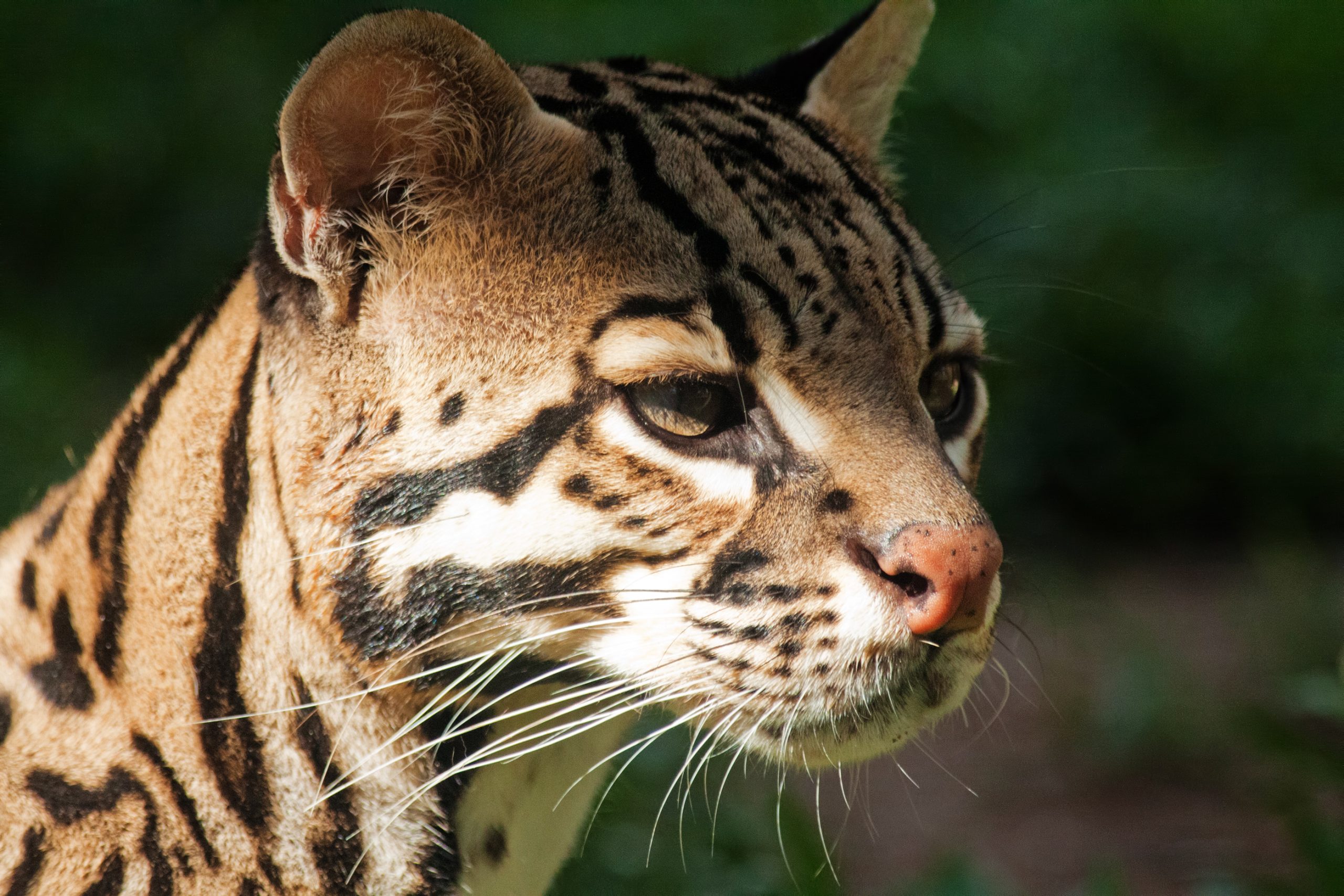
The coat is, of course, one of the ocelot’s most notable features. Its background colour varies from pale yellow and beige to greyish or reddish tones, overlaid with dark spots, stripes and rosettes. These markings often run together along the sides of the body to form long, irregular bands.
What does the ocelot eat?
A skilled and opportunistic carnivore, the ocelot hunts mainly on the ground and relies on acute senses of smell, sight and hearing. Small animals make up much of its diet, including rodents, opossums, birds, reptiles, amphibians, fish and crustaceans. But it is capable of tackling larger animals on occasion, including monkeys, agoutis, armadillos, sloths and young deer.
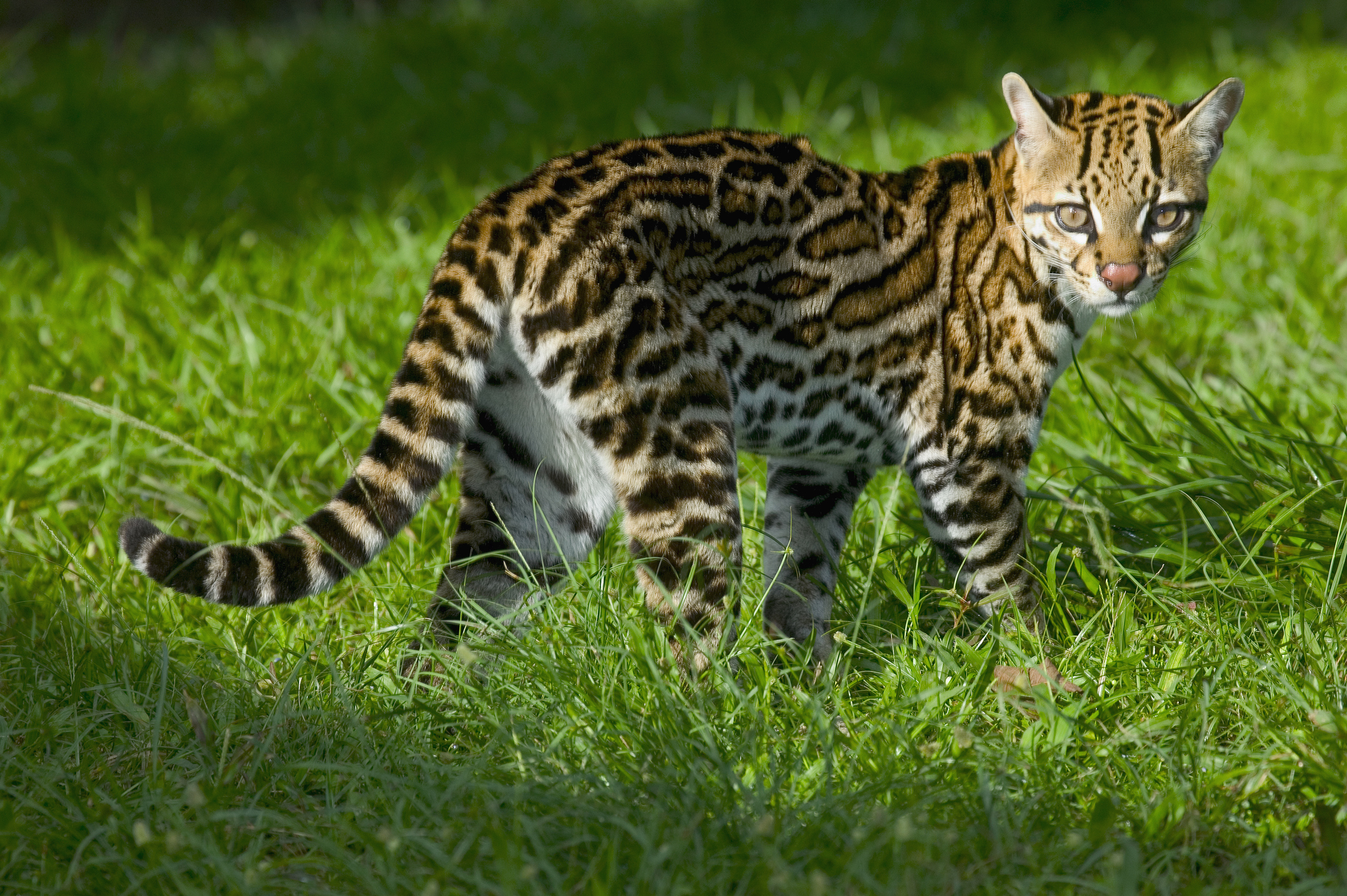
Its hunting style combines patient stalking with sudden bursts of speed. Following a scent trail or the small sounds of movement in leaf litter, it may creep through dense cover before pouncing, but it can also wait at a promising spot and ambush prey as it passes.
Although it is primarily a terrestrial hunter, it is an agile climber and a strong swimmer, which helps it exploit wetland and riverside habitats, and explains why fish and crustaceans can form part of its diet.
- The weird cat that acts and calls like monkey – and able to swing from a branch by a single foot…
- Sleek and graceful yet powerful and merciless – no wonder we're captivated by wild cats. Here are the 10 most beautiful wild cats on the planet
Is it nocturnal?
Usually, yes. The ocelot is mostly nocturnal or crepuscular, meaning it is most active at night or around dawn and dusk. During the day it rests in thick vegetation, tree hollows, on branches or in sheltered depressions in the ground. Night-time activity helps the ocelot hunt many of its preferred prey species. It may also reduce encounters with people and larger cats such as the puma and jaguar.
How does it breed?
The ocelot is solitary for most of the year, with males and females coming together to mate. Breeding can take place year-round in the tropics, though births have been reported to peak in autumn and winter in northern parts of the range, including Mexico and Texas.
After mating, the female makes a den in dense cover. Gestation lasts about 70 days, after which she usually gives birth to one to three kittens. The young are born small and dependent. They are weaned at around six weeks, begin following their mother on hunts a few months later, and become independent at about a year old. A female usually raises only one litter every two years, which means populations can be slow to recover when numbers fall.
What preys on an ocelot?
Larger carnivores may prey on the ocelot, including the jaguar and puma. Other possible threats include large birds of prey, anacondas and caimans, especially to young or vulnerable individuals.
For the most part, however, the greater danger comes from people. The ocelot was once heavily hunted for its fur, and although international trade restrictions have greatly reduced that pressure, illegal hunting and trade have not disappeared entirely. In some areas it is also killed in retaliation for taking poultry.
- "It has webbed feet, a powerful rudder-like tail and a water-resistant coat." 7 wild cats that are incredible swimmers, with 1 underwater specialist
- Are the any deadly big cats in the USA?
Is the ocelot endangered?
Globally, the ocelot is listed as Least Concern by the IUCN, largely because it remains widespread and can be locally common. That status, however, hides a more complicated picture. Some regional populations are much more vulnerable, including the small and isolated population in Texas. Habitat loss and fragmentation due to agriculture, logging, roads and urban development are now major concerns, reducing access to prey and making it harder for individuals to find mates. Road deaths are a particular problem in parts of its range.


