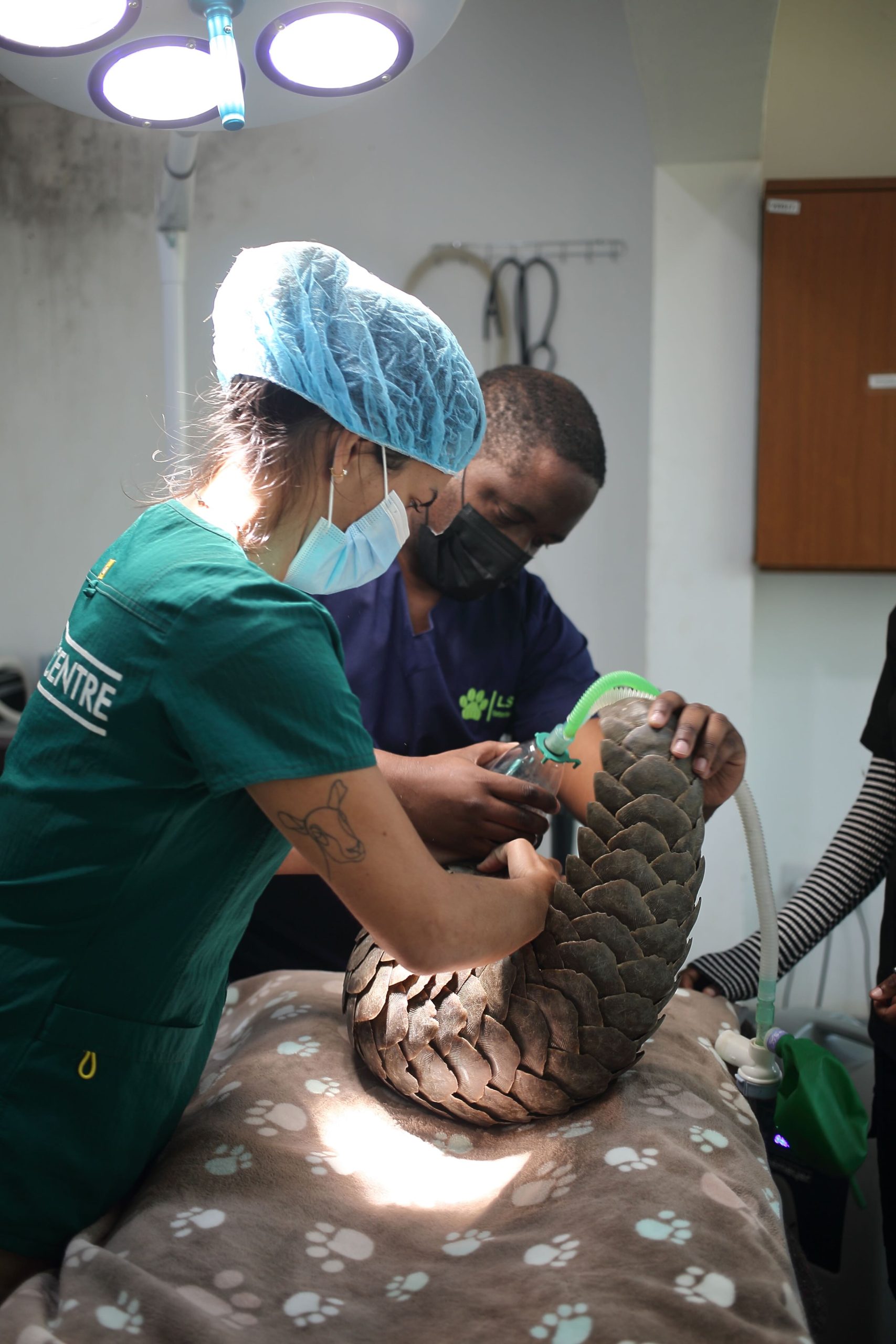
Mandazi lies motionless on the operating table in front of me, her extraordinary armour of overlapping scales rising along her back.
Around her, the veterinary team at Lilongwe Wildlife Centre in Malawi gets to work.
Only days earlier, this Temminck pangolin had been rescued from the illegal wildlife trade. Her left foreleg was so badly injured, believed to have been caught in a snare, that it had to be amputated. Now, under anaesthetic, vets are checking how she is healing.
The seriousness of the threat facing pangolins - one of the world's most trafficked species - become apparent almost as soon as I landed in Malawi.
At Lilongwe International Airport, colourful posters warned passengers against buying or transporting illegal wildlife products, while a dedicated wildlife crime unit works alongside detector dogs trained to sniff out smuggled ivory, rhino horn and other contraband.
Just a short drive away at Lilongwe Wildlife Centre, I found another frontline in that battle. Its patients can change almost daily. Two tiny serval kittens had recently arrived after villagers discovered them alone in the bush. Convinced they were abandoned leopard cubs, they handed them to wildlife rangers. In reality, their mother had probably simply been away hunting.
While not every rescue here begins with poachers, for almost every pangolin it does.
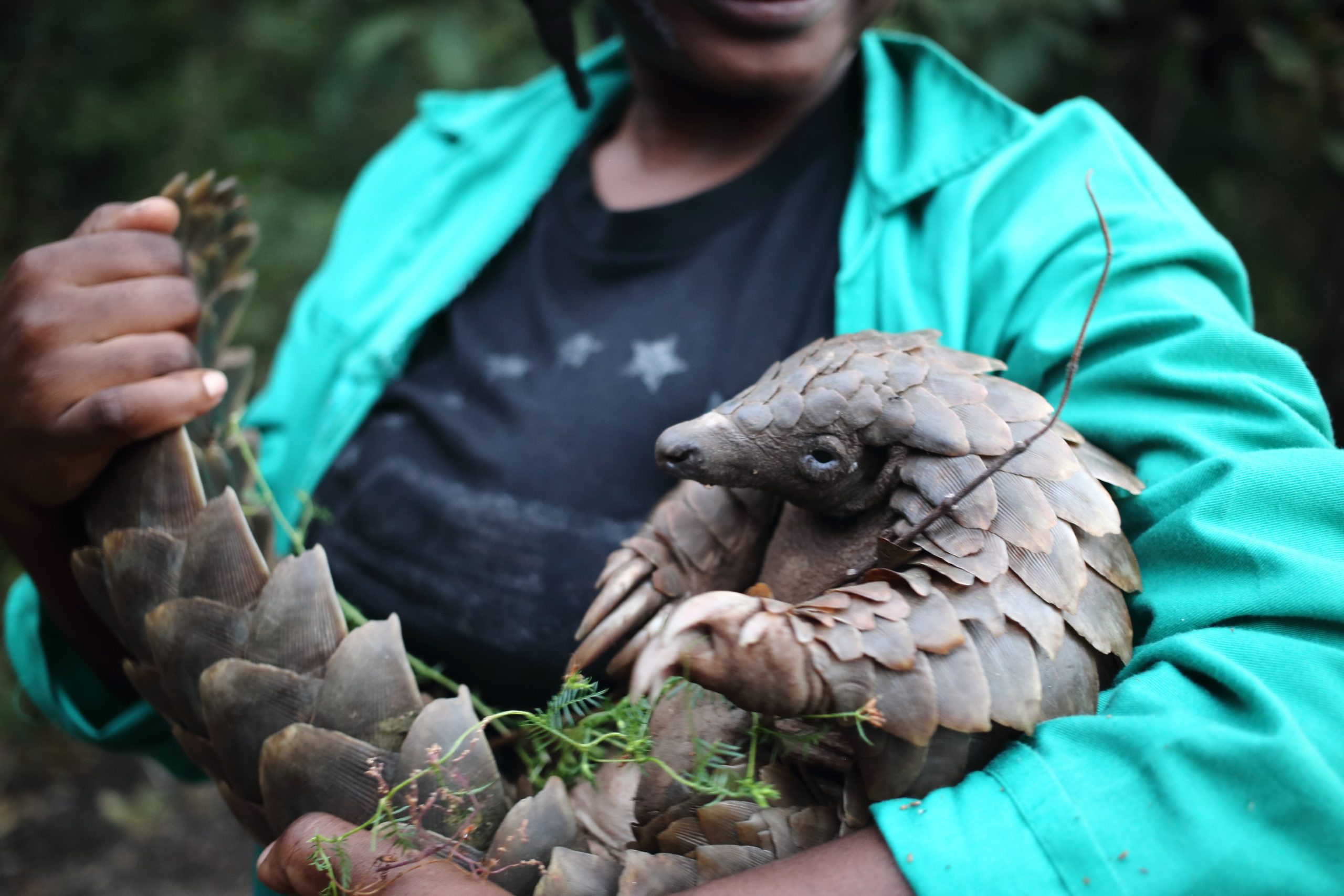
Nature has equipped pangolins with an extraordinary defence. When threatened, they curl themselves into an almost impenetrable ball, protected by hard keratin scales. It works brilliantly against most predators. Against humans, it is tragically useless as a poacher can simply pick them up.
Yet Mandazi is one of the lucky ones. Named after a popular Malawian doughnut, she was among more than 100 pangolins that have passed through the centre since it began rehabilitating the species in 2019.
Some arrive dehydrated after being separated from their mothers. Others are seized from wildlife traffickers or rescued after being kept illegally as pets.
- It looks like a pinecone and is the most trafficked mammal in the world – now scientists have just found a new species
- Community-led conservation offers new hope for the world's most trafficked mammal
Around two-thirds recover sufficiently to be returned to the wild. I met another recent arrival, Changu, whose name means “fast” in the local language. Like Mandazi, there is hope that he too can be rehabilitated and released.
But sadly, just days after my visit, I learn that Changu has passed away. Veterinarian Dr Wanangwa Mhojo explains that the exact cause could not be established during the post-mortem, although an infection may have caused him to deteriorate rapidly, eventually leading to multi-system failure.
He had been held illegally by poachers for around five days before police confiscated him. Although nobody knows exactly what happened during that time, Dr Wanangwa believes he was probably kept in very poor conditions, potentially without food or water, leaving him severely weakened by the time he reached the centre.
His death makes what I witnessed in Lilongwe feel even more precious.
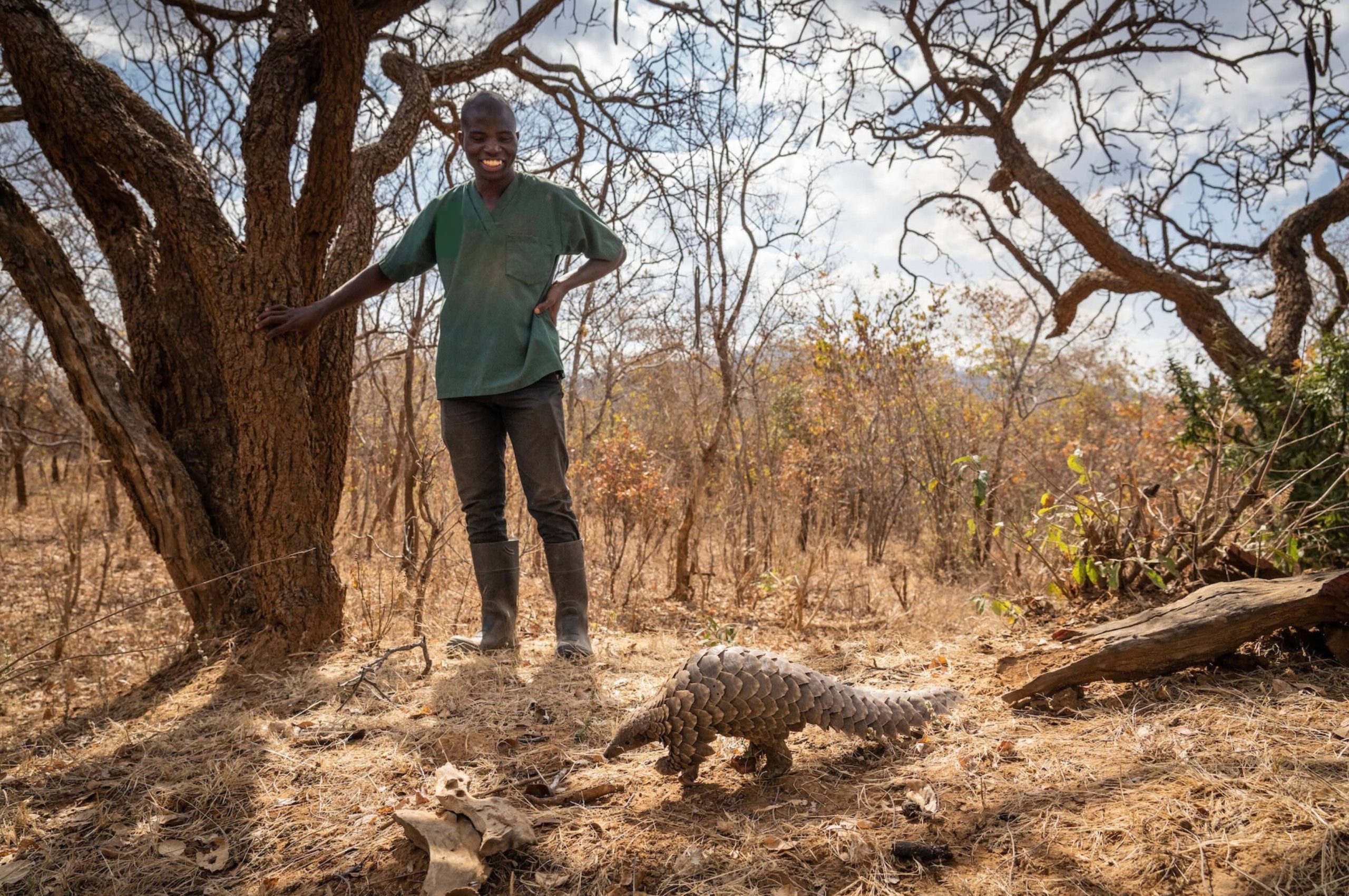
Keeping rescued pangolins alive is notoriously difficult. They cannot simply be given a bowl of food and left to recover. Even Mandazi, despite having only three legs, is taken outside by her carers every day to search naturally for ants.
“At first we thought they’d eat every ant they came across,” Kondwani Kusakala, Head of Wildlife Rehabilitation, tells me.
“But that’s not the case. We’ve learnt which ants they prefer, where to find them and that every pangolin has its own personality.
“Some wake up at one in the morning, others in the middle of the day. We’re still learning from them every single day.”
- Pangolin: Kulu’s Journey – everything you need to know about the new Netflix documentary from the director of My Octopus Teacher
- Baby wild pangolin rescued and nursed back to health in Thailand
When the pangolins wake and are ready to forage, they scratch insistently at the sides of their cardboard boxes. Every walk, meal, bowel movement and tiny sign of progress is then recorded. And if something goes wrong, help can arrive quickly.
Vets, carers and conservationists exchange advice around the clock through a WhatsApp group affectionately known as the “Pangolin Groupies”. Behind the light-hearted name is an extraordinary network of people fighting to keep these animals alive.
A few months on from my visit, Mandazi has been moved to a new secret rehabilitation site to gain weight - hopefully the final part in her stay. She has survived a devastating injury and is learning to negotiate the world on three legs.
Now everyone caring for her is working towards the same moment: the day the cardboard box, the veterinary table and the daily checks are no longer necessary and she can disappear back into the wild where she belongs.
For more information on the work of the hospital go to lilongwewildlife.org/
top image: Pangolin searching for food on the ground. Credit: Jonas Strahberger/ Lilongwe Wildlife Trust
Discover more wildlife stories from around the world:
- Incredibly cute it weighs just 100g and is small enough to sit comfortably in your hand. This is the smallest monkey in the world
- Scientists studied the world’s only singing lemur – and discovered something surprisingly human about its song
- It looks like a pet husky – but this wild predator is built to survive the coldest conditions on Earth and dives headfirst into the snow to hunt