From nut-cracking monkeys to tree-bending apes, primates come in an astonishing range of shapes, sizes and strength styles. Some rely on brute mass, others on explosive power, iron grips or slow, relentless muscle.
Here’s our pick of the primates you wouldn’t want to meet in a pillow fight…
Strongest primates in the world
Gorilla

Let’s face it, you wouldn’t have a chance. We’re talking about the heaviest of all living primates here. The biggest silverback gorillas are about 50 per cent heavier than the reigning World's Strongest Man, Rayno Nel, who weighs in at 148kg.
If you still think you might stand a chance in a pillow fight, it’s worth considering that, while a human’s arm span is about equal to his or her height, a gorilla’s reach is significantly longer - up to 2.7m. (It’s not for no reason that arm span is known as an ‘ape index’.) You’d be swatted off the pole before you could get within striking distance. And if you’re still in doubt, just have a look at this absolute unit…
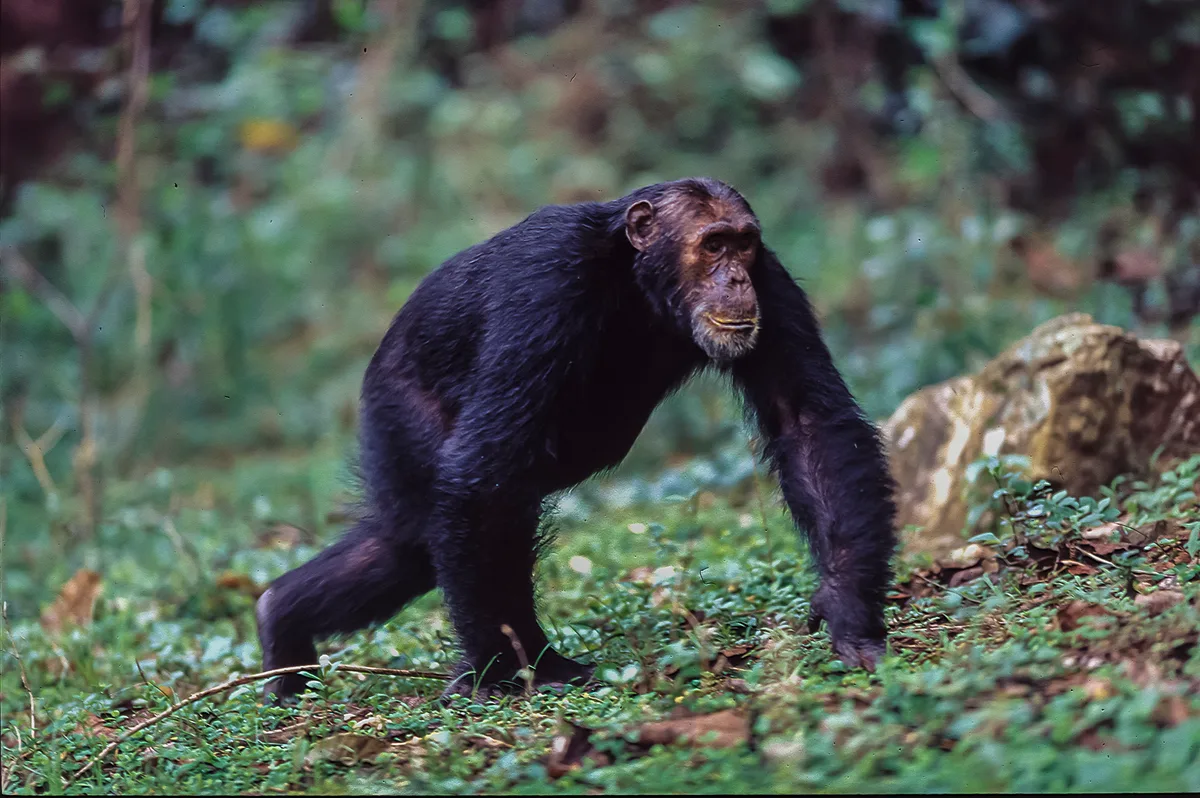
Chimpanzee

According to YouGov surveys, 15 per cent of British men and 22 per cent of US men believe they could beat a chimpanzee in a fight.
Admittedly, chimps aren’t as big as gorillas. The World’s Strongest Man, Rayno Nel, is twice the weight of the largest wild male chimps. But then, the vast majority of men are no Rayno Nels. Added to that, chimp muscles produce about 35 per cent more power per kg than human muscles do. Experiments performed in the 1940s showed that captive male chimps can pull on a rope with about the same force as human males. Wild chimps are likely to be stronger still. And you can bet they wouldn’t stick to the rules in a pillow fight.
Human

World’s strongest men aside, humans aren’t really built for power. We are more about stamina. Our ancestors probably hunted by tracking prey over long distances rather than overpowering it in direct combat. That said, there is one feat of strength that humans really do excel at.
Once we started walking upright on two legs, our arms were free to be put to other uses, such as throwing things. And thanks to the configuration of our shoulders and hips, which allows the rapid rotation of our upper body while extending the arm, we are able to throw objects further and faster than any other ape can manage, even if they’ve been trained specifically to do so.
A chimp might be able to lob faeces at zoo visitors, but no non-human ape is capable of propelling a javelin 100m. Indeed, we might owe our throwing prowess to the need to finish off exhausted prey with spears or rocks at the end of a long hunt.
Intriguingly, the skeletal and muscular features that enable us to throw with great power might also allow us to pack a formidable punch. Scientists have calculated that a blow struck by the closed fist of a heavyweight boxer is equivalent to a 6kg wooden mallet swung at 20mph (32kph) https://pubmed.ncbi.nlm.nih.gov/3936571/ .
Tufted capuchin

These stocky South American monkeys might only be the size of a small domestic cat, but they punch well above their weight.
For a start, they have disproportionately large jaw muscles which power a bite that can crack open nuts and seeds which are off the menu for other, similar-sized monkeys. Their arms, too, are surprisingly meaty and are capable of wielding rocks as hammers to break into and morsels too hard for their teeth. This is a rare example of tool use among South American monkeys.
Tufted capuchins are a potent combination of brains and brawn, equipped with the intelligence required to hatch plans and the horsepower required to execute them.
- What are the smallest monkeys and primates in the world? Meet the tiny creatures of the monkey world
- This monkey has dagger-like teeth and the bite strength of a jaguar. Combined, it's one of the Amazon's most powerful tools
Potto

This slow-moving, nocturnal denizen of tropical African forests has long been famed for its grip strength. One rather grisly historical account states that a potto clings to branches so tightly that it can only be removed by severing its digits.
However, a study of the muscles that power the potto’s grip found that they aren’t particularly large compared to those of other primates. In which case, either the potto’s grip strength has been overstated in the past, or it is the product of something other than muscle mass.
Gibbon

It stands to reason that an animal that spends its life swinging from branch to branch in forest canopies is going to boast impressive upper body strength. And sure enough, gibbons don’t disappoint.
If biceps size is your measure of strength - and let’s face it, for many gym bros, it is - then gibbons are up there with the strongest of them all.
The biceps, along with two other muscles responsible for flexing the arm at the elbow - the brachialis and brachioradialis (entirely appropriately for an animal famous for brachiating) - are, relative to body size, particularly big and powerful in gibbons compared with other primates
Brachiation is an endless series of one-armed pull-ups, so it makes perfect sense for gibbons to be well endowed with flexor muscles. On the other hand, the muscles that extend the arms at the elbow - such as the triceps, which are rather hefty in humans - are unusually small in gibbons, so they might struggle with push-ups.
Indri

If gibbons are the primate world’s pull-up champions, indris are the long-jump specialists. Long-legged and weighing in at about 9kg, they are the largest living species of lemur. They travel through Madagascar’s forests using a mode of locomotion known by zoologists as ‘vertical clinging and leaping’, which involves jumping between upright tree-trunks, and are reported to cover more than 10m in a single leap.
With an explosive burst of leg power, an indri launches itself into the air with a force around eight times its own body weight. For comparison, the force exerted by a human jumping from a standing start is equal to about three body weights.
Orangutan
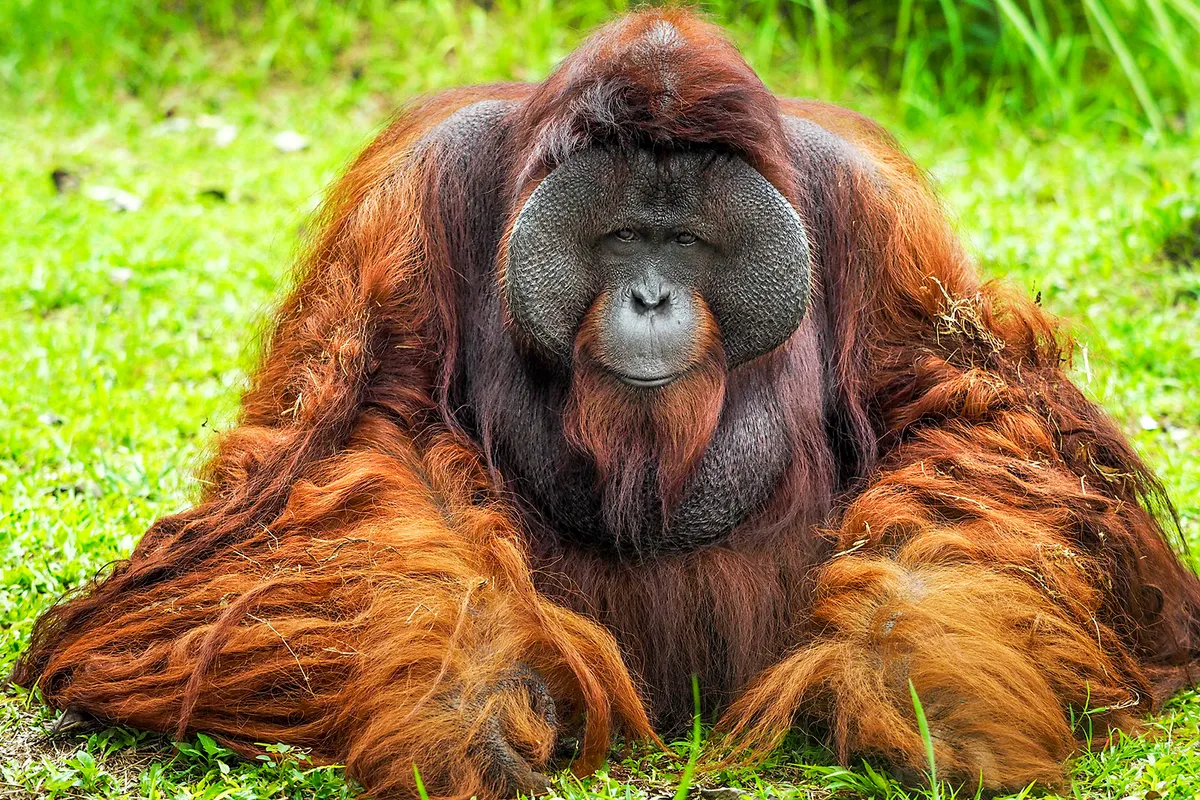
As the largest fully arboreal mammals on Earth (a large male can exceed 100kg) orangutans must tread carefully in the trees. Rather than swinging wildly like gibbons, or leaping explosively like indri, they move deliberately, testing branches for strength and shifting their weight with controlled precision.
Orangutans are more like tractors than gymnasts, engineered to deliver great power at low speed. It’s a style of locomotion that can be sustained for long periods, in a habitat where one wrong move is likely to have disastrous consequences.
Muriqui

Some South American monkeys are able to draw on a source of strength not possessed by any African or Asian primates.
Members of the family Atelidae, which includes spider, howler and woolly monkeys, as well as muriquis (also known as woolly spider monkeys), are equipped with a muscular, prehensile tail that can be deployed with great power and dexterity to grasp branches and foliage as the monkeys clamber around the treetops.
These remarkable appendages, which effectively serve as a fifth limb, are strong enough to support the bearer’s entire weight. It’s likely that the most powerful of these ‘prehensile’ tails belong to the two species of muriqui, which are among the heaviest of all South American primates, at up to 10kg in weight.
Gigantopithecus
The eastern gorilla might be the biggest of all living primates, but it’s not the biggest that ever lived. That title goes to a relative of the orangutans named Gigantopithecus that went extinct about 250,000 years ago.
- At a staggering 3 metres tall the extinct prehistoric Gigantopithecus is the biggest ape ever, but it wouldn't be the heaviest...
- Great ape guide: learn all about the different great ape species, where they live and what they eat
Known only from fossil teeth and a few fragments of jawbones found in caves in China, it probably specialised in eating tough, fibrous plant material. We may never know how strong it was. But standing about 3m tall and weighing up to 300kg, it’s a fair bet that it would have easily overpowered even a gorilla in a pillow fight.


