
Elephant seals are helping scientists to gather data on whales and dolphins in remote areas of the Southern Ocean by swimming around with listening devices stuck to their heads.
Between 2017 and 2020, researchers fitted acoustic tags to nine female elephant seals. The data included humpback whale songs as well as calls made by blue whales, fin whales and sperm whales, among others.
Various dolphin vocalisations also appear in the recordings. “We were surprised by the number of these small cetaceans,” says Christophe Guinet at the Centre of Biological Studies Chize, in France. It can be difficult to spot dolphins in the Southern Ocean – known for poor weather conditions – because of their size. But the intrepid seals picked up their calls many times.
Southern elephant seals with acoustic tags are great research partners. For one thing, they have 'drift' phases, in which they sleep while at sea. Because the seals make very little noise at these times, hydrophones can register the calls of other marine mammals.
Also, female southern elephant seals, in particular, reliably return to the same place on land to breed or replace their fur – known as moulting. Scientists therefore know where to collect the tags.
Finally, the seals typically spend several months at sea, covering thousands of kilometres, and making perhaps 60 dives each day. This offers a “unique way to observe the Southern Ocean”, says Guinet. “We are really lucky.”
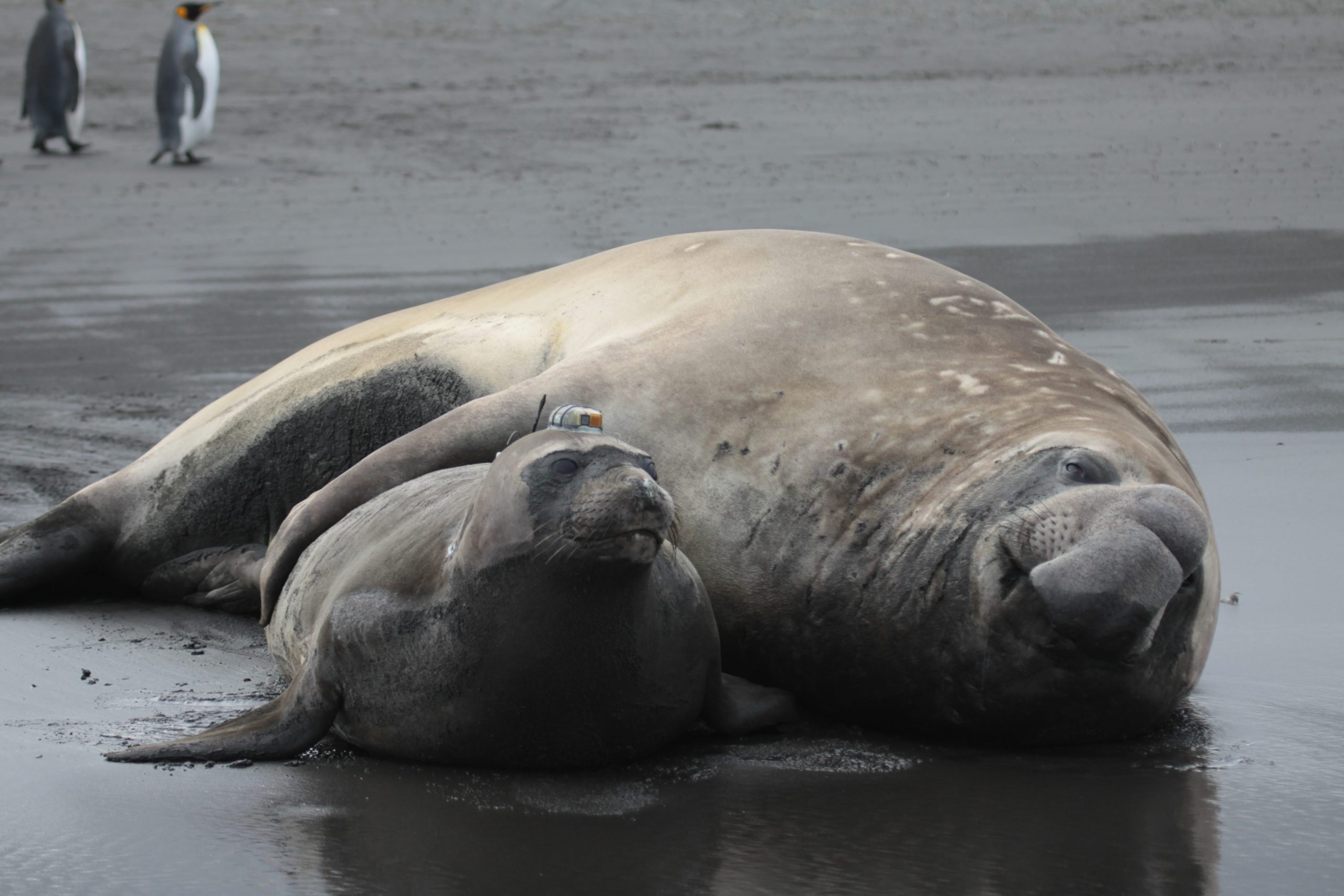
Attaching the acoustic tags requires some skill, though. A scientist holding a 2.5m-long tube with a 10cm-long needle at its end must gingerly approach a reposing seal and inject anaesthetic with this gangly implement. While the seal is unconscious, researchers attach an acoustic tag with straps and a glued-on base. After they remove the tag months later, the base will naturally fall away the next time the seal moults.
“We are convinced that in the coming years we should increase the number of seals equipped with passive acoustic recorders – we can do so many things,” says Guinet. It’s even possible, he adds, to detect the seal’s own heartbeat, or listen to it chewing and swallowing prey.
Find out more about the study, published in the journal Frontiers in Marine Science.
More wildlife stories from around the world
- Underwater recorders capture sound of mysterious, 10m-long giant off Australian coast
- “Ghostly" ocean giant spotted at intersection of Pacific and Indian oceans
- "I started screaming." Scientists were filming dolphins in Australia, when this happened
- Dramatic footage shows moment two massive elephant seals collide in Antarctica
Top image: southern elephant seal with acoustic tag. Credit: Anatole Gros-Martial et al., Frontiers in Marine Science 2026


