
Peering through the gloomy coral reef during our night dive, we saw a flash of movement in front of us: a shark.
But it wasn’t swimming. It was… waddling.
True to their name, Raja Ampat’s walking sharks – aka the Raja Ampat epaulette shark (Hemiscyllium freycineti) – strut across the seabed using their fins like makeshift legs.
And one was strutting its stuff right in front of us.
“They're definitely one of my favourite animals to introduce to guests when we are in Raja Ampat,” says Yeray Moreno, head of experience and conservation at Rascal Voyages and my dive guide for my week in this Indonesian paradise. “The best way to spot them is when they are patrolling the reef.”
Now, researchers have confirmed that coral reefs seem to provide nursery grounds for these little sharks, which don’t grow more than around a metre long.
Edy Setyawan, a scientist at the Elasmobranch Institute Indonesia and other researchers published their findings in Frontiers in Fish Science.
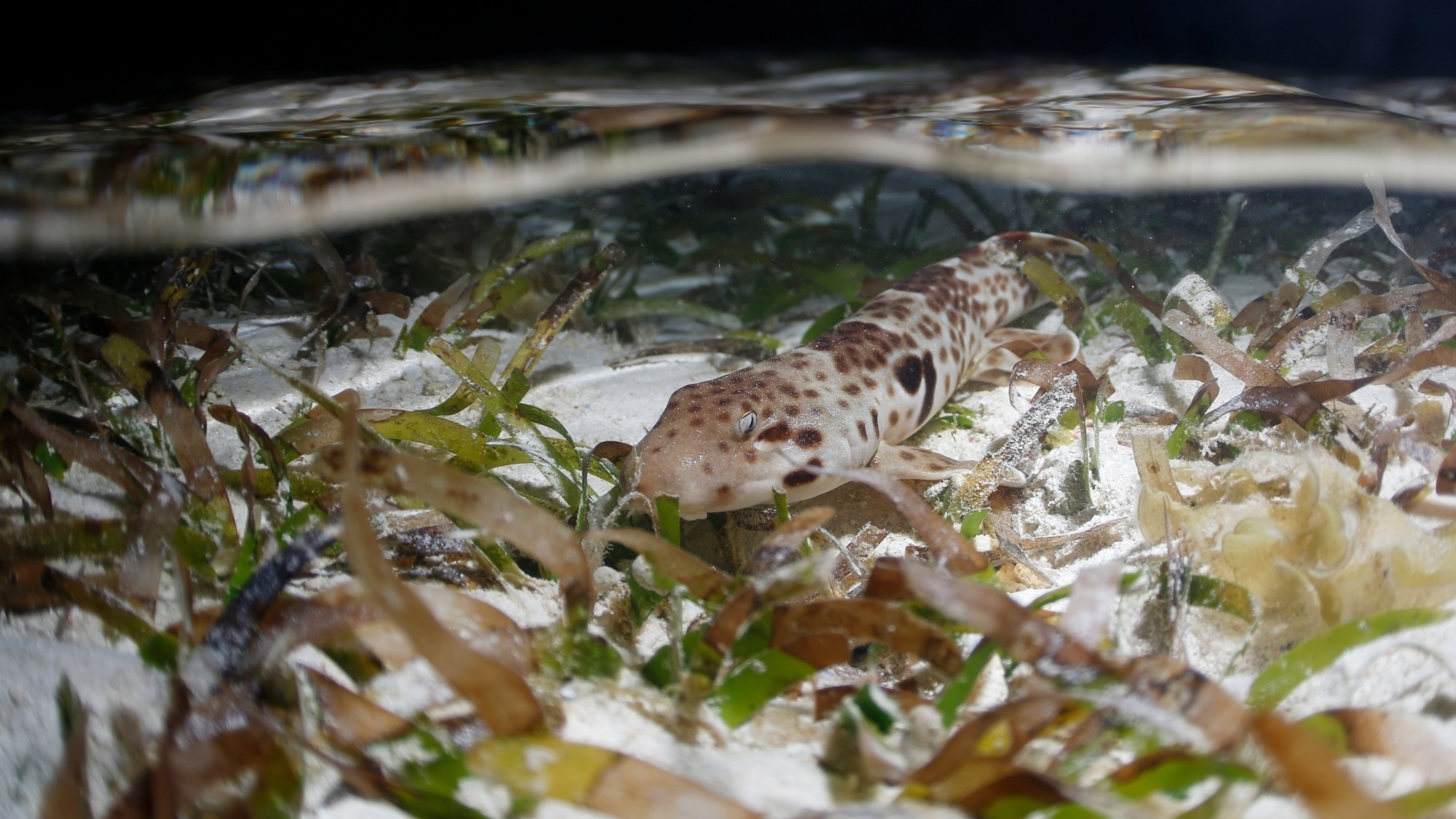
Moreno wasn’t involved in the study but dives in Raja Ampat regularly and sees these adorable elasmobranchs frequently. “They are nocturnal animals, so we are lucky enough to encounter them often – pretty much every trip – as long as we're in the water at night,” he says.
Before our dive, Moreno had briefed us to cover our torch with our hand to soften its light and minimise disturbance to marine animals such as walking sharks. The dim light gave our night dive an atmospheric glow. “They're quite difficult to spot and they absolutely hate torches,” he explains.
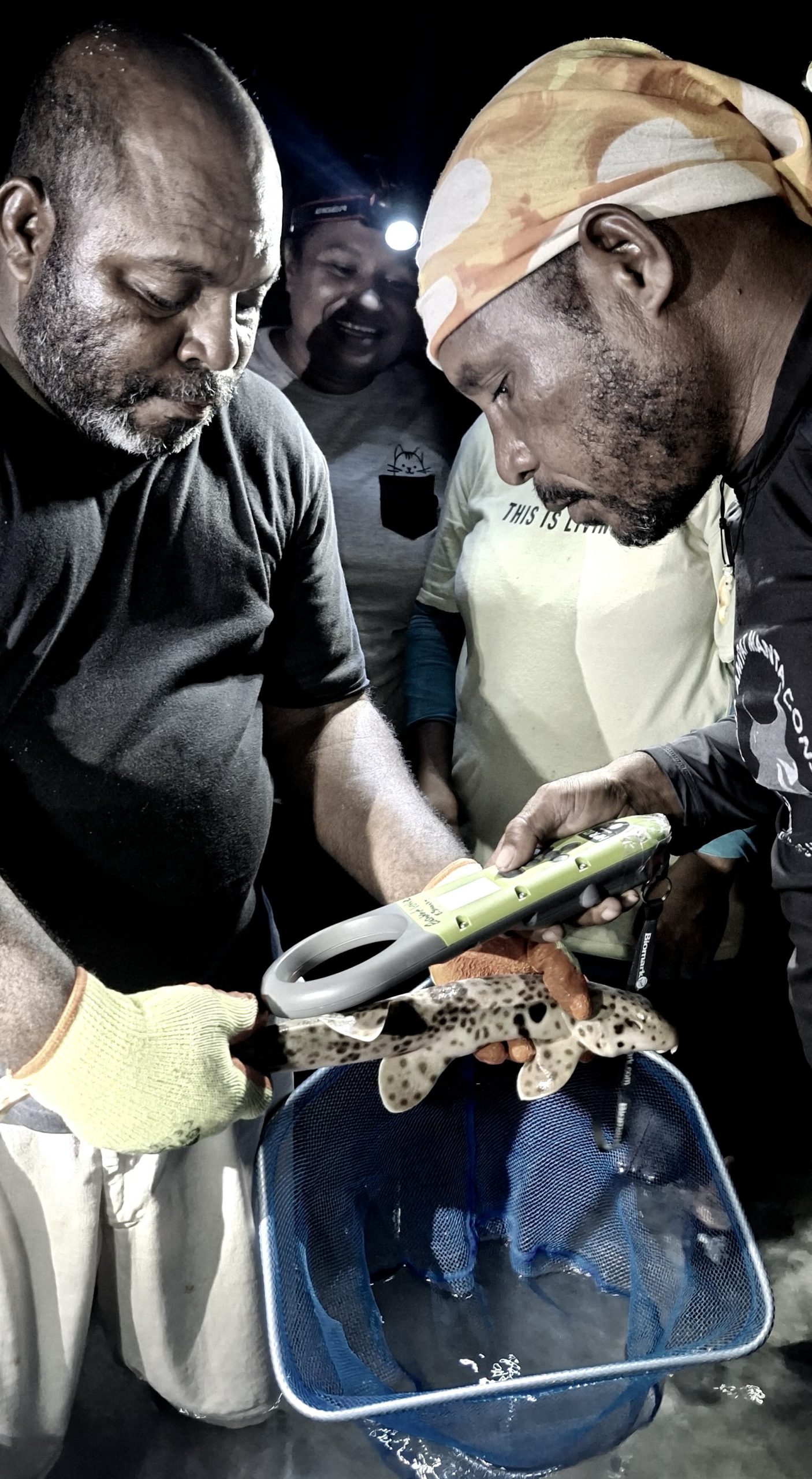
Rather than scuba diving or snorkelling, the study’s researchers conducted 64 night-time surveys – of around two hours each – by paddling through shallow waters in Raja Ampat’s Dampier Strait. Using special tags and photo IDs, they recorded 736 individual sharks out of 1,191 sightings in total. “At each site, survey teams of five researchers waded through coastal waters less than 50cm deep, continuously scanning for sharks with handheld and head torches,” says the study.
While they searched, they recorded data, such as noting down what type of habitat sharks were found on – including coral, seagrass, mangroves or sand – and whether the animals were feeding, swimming, mating or resting.
“Upon detection, each individual shark was carefully approached and captured either by hand (using gloves) or with hand nets,” they write.
They took photos of the sharks’ patterns, which can help them identify individuals, measured and weighed them and checked if they were mature. They also tagged some sharks. All this was done in under five minutes to minimise any stress for the sharks.
- Tuna carcass placed at bottom of ocean. All was quiet, before this happened
- Mega-shark remains found on beach in Australia. Experts say it was absolutely massive

Overall, the scientists spent around 146 hours surveying the area between February 2024 and April 2025.
Most of the sharks were seen in seagrass meadows (73%). But sharks found in coral reefs were more likely to be immature, suggesting that these habitats might be nursery grounds for these walking sharks. “Coral reefs appear to serve as a primary nursery habitat for H. freycineti, characterised by a predominance of juvenile sharks and a low proportion of mature sharks,” says the study.
This is probably because the nooks and crannies of the reef provide great hiding places and there’s lots of food to be found. “Coral reefs likely provide structural complexity that offers protection from predators and abundant foraging opportunities for small-bodied juvenile sharks,” the authors write.
Moreno, too, has seen immature sharks during his many dives on the reefs of Raja Ampat. “I've been lucky enough to find juveniles and even eggs of walking sharks,” he says. He spotted the eggs when peering deep inside a crevice to see if there were any shrimp or other cool little critters hiding inside. “The whole silhouette of the shark started to appear” inside the tiny egg, he recalls.
Epaulette sharks sometimes even walk on land, something Moreno has seen too. During a beachside dinner under the stars, he saw a walking shark crawling between tidepools in very shallow water. “It was one of my most memorable moments,” he says. “We didn't even need to get wet to see them.”
As the sharks grow and are less vulnerable, they seem to move onto different habitat types, such as among seagrasses.

Understanding where walking sharks – and especially their babies – spend their time is an important part of protecting the rich biodiversity of, which is often called the Last Paradise.
“The Raja Ampat archipelago in eastern Indonesia represents the global epicentre of tropical marine biodiversity, with nearly 1,700 species of coral reef fishes documented to date,” write the authors in the study, adding that the region is protected by a two-million-hectare network made up of nine Marine Protected Areas (MPAs).
The information gathered about epaulette sharks could inform protection measures. The study authors note that they didn’t document any immediate threats to the sharks during their study but that there are many potential risks. These include, according to the study, “intensified human activity in shallow coastal areas, rapid coastal development associated with a growing tourism industry, habitat degradation, and coastal pollution.”
Find out more about the study.
Top image credit: Edy Setyawan, Elasmobranch Institute Indonesia | Melissa travelled courtesy of Rascal Voyages.
More wildlife stories from around the world
- 16ft great white shark found with perfectly circular hole in its head – scientists know exactly what caused it
- NASA officials sent over 2,000 baby jellyfish into space. Tens of thousands more came back to Earth
- Scientists tied plastic bottles to fishing nets – and couldn't believe what happened next…
- Arctic bobtail squid seen alive in natural habitat for first time ever


