
Among the many weird and wonderful creatures in the ocean is a type of snail that doesn’t crawl. Vermetid snails – also known as worm snails – are a type of marine mollusc that settles on a rock or hard surface around a day after hatching and stays there for life.
Once they’ve chosen a spot, they cement themselves to it and remain there for the rest of their lives.
In the same way that many oysters can all settle in an area to form an expansive reef, when lots of worm snails set up camp together, they create what is known as a vermetid reef.
- A tiny mollusc helped bring down the Spanish Armada. Here's how
- It’s bigger than the City of London and is home to a whopping 7.5 billion residents – or more
Like coral reefs, oyster beds, mangroves and seagrass meadows, vermetid reefs benefit the environment by storing carbon, minimising coastal erosion and protecting coastal communities from flooding and strong waves.
They also create a complex habitat with homes for lots of animals – think of their 3D structures, complete with nooks and crannies, like underwater apartments that marine critters can move into.
“Greater habitat complexity means greater surface available, thus providing additional resources for adults and juveniles of many species: food, cavities, caves and then new niches, refuges from predation, from artisan fishery nets, as well as resting or mating sites, boosting the total number of individuals and species,” explain the authors of a paper in the Journal of the Marine Biological Association of the United Kingdom.
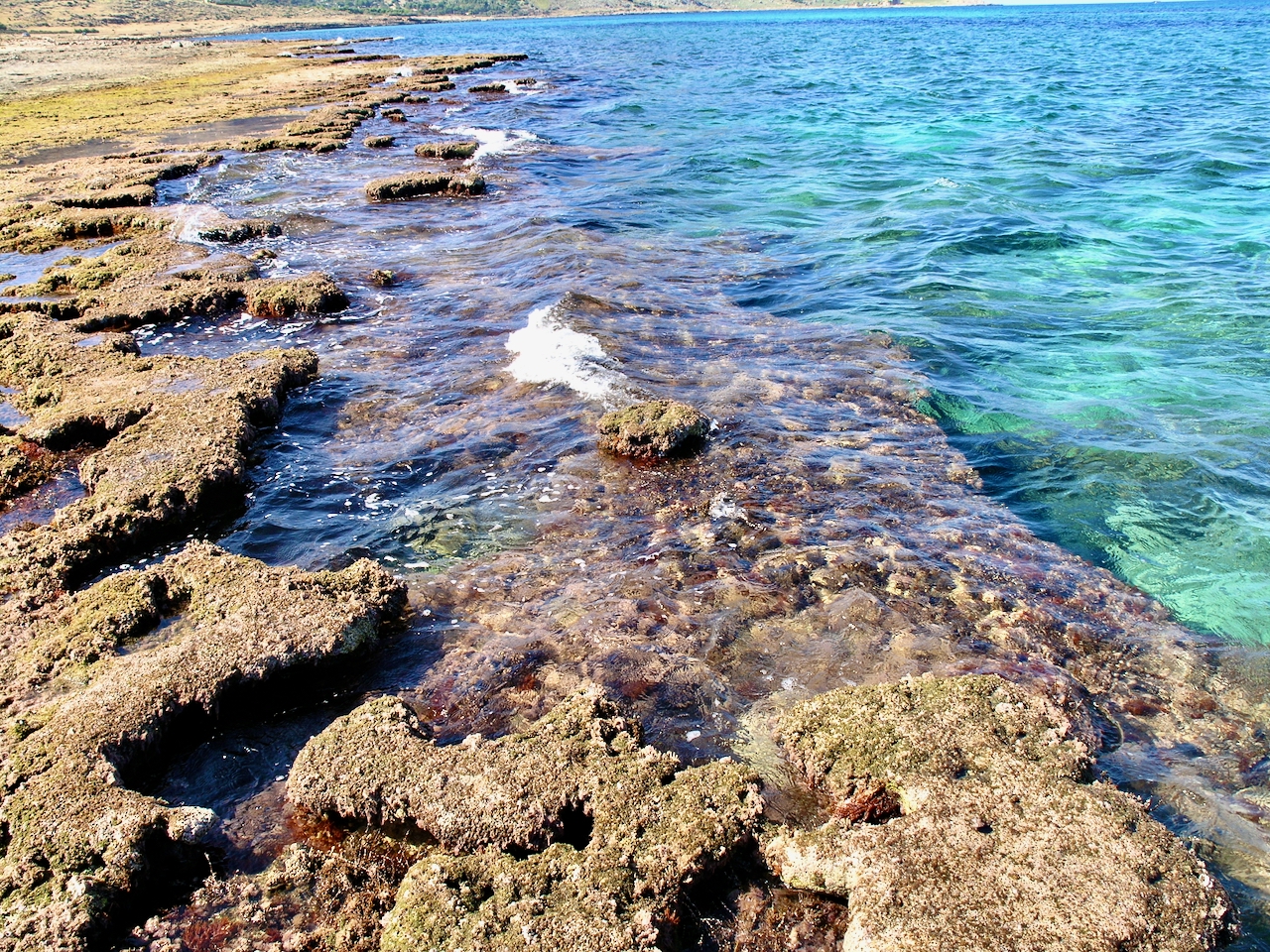
These reefs can be vast. Among the best known on the planet are found in the Mediterranean Sea off the coast of Israel. There are several of these reefs peppered across a 150km stretch of the coastline.
They look like “broad horizontal flats at about mid sea level,” writes the Israel Oceanographic and Limnological Research (IOLR)’s Rilov Lab on its website. This is because the worm snails attach to soft rocks and build their protective tube-like homes out of calcium carbonate – the same thing that coral skeletons, snail shells and seashells are made of.
Over time, the original limestone rocks are worn away by the waves coming in behind them leaving the “rocky platforms” that were created by the snails.
These platforms might look impressive but experts are worried. One species, called Dendropoma petraeum, seems to be disappearing from the reef. “Only very few individuals and small patches have been found in the hundreds of transect conducted in the past six years,” says the Rilov Lab. This species is considered threatened.
This is a problem because without this vermetid to build a habitat for other animals, the wider ecosystem could be under threat.
Scientists in the region don’t know what’s behind the vanishing vermetid. But it’s not the only animal that’s gone missing in recent years. “A large predatory whelk that was once abundant on the Israeli rocky shores – Stramonita haemastoma – has also completely vanished from our shores,” they write.
- “The fish life has exploded": 400,000 corals planted on dying reef in Bali. What happened next was remarkable
- It’s the size of a small apartment, contains hundreds of rooms growing crops, and is home to more than a million farmers
- “This colossal, complex city – the size of 2 tennis courts with thousands of rooms, from classrooms to ventilation units – was built by millions of hard-working architects”


