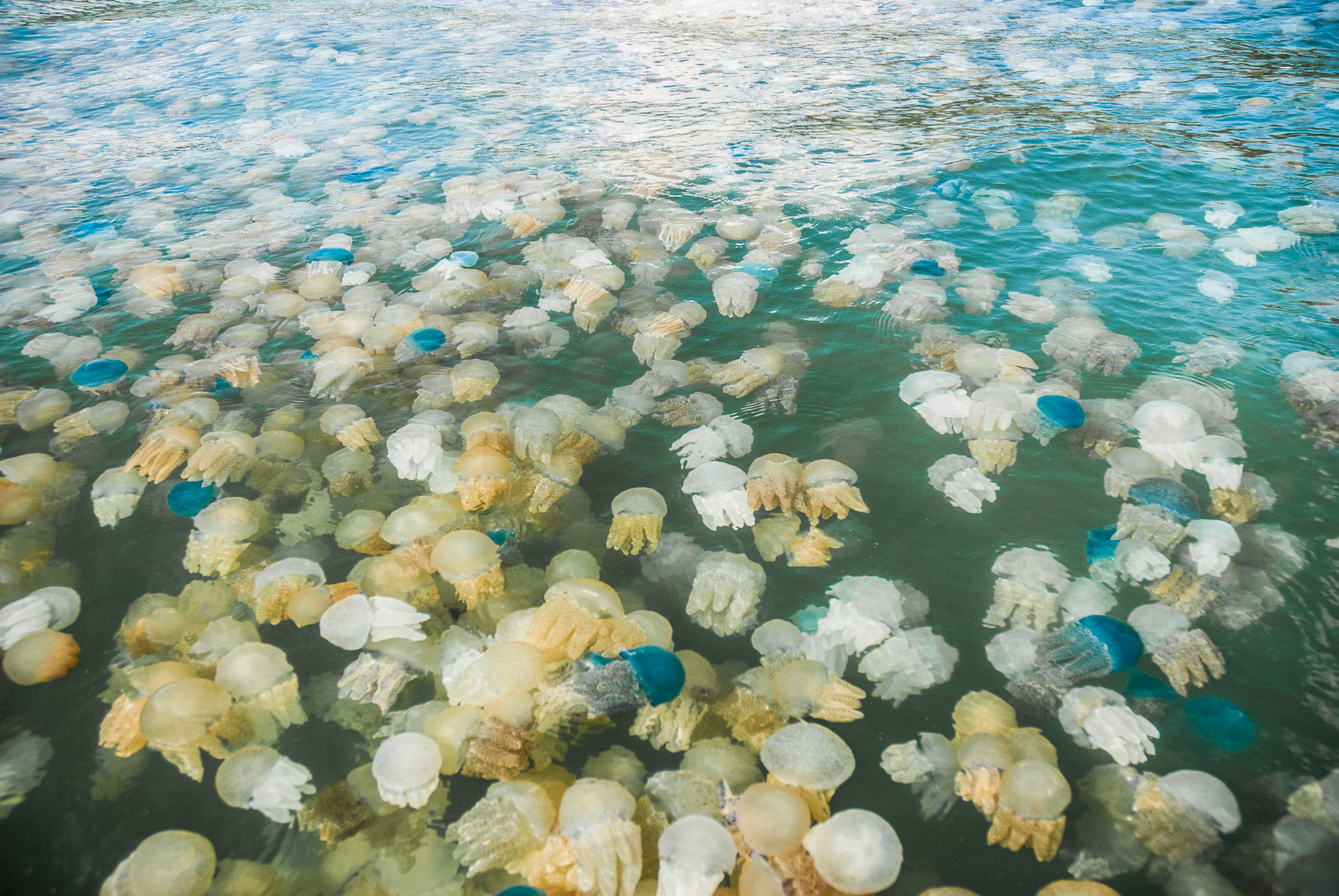
For more than four decades, scientists, fishermen and holiday-makers alike have noticed a steep rise in the number of jellyfish in coastal waters and stranded on beaches, particularly in the summer months.
These jellyfish ‘blooms’ are happening all over the world and, as well as putting many of us off swimming in the sea, can be detrimental to fishing and clog up the pipework of coastal power plants. Indeed, the Marine Conservation Society (MCS), a UK environmental charity, recorded a whopping 92 per cent increase in annual jellyfish numbers between 2004 and 2025.
- Deadly box jellyfish discovered on Singapore's 'Island of Death Behind'
- NASA officials sent over 2,000 baby jellyfish into space. Tens of thousands more came back to Earth
Jellyfish are marine invertebrates that have been around for at least 500 million years and, despite the name, are not related to fish. Though able to propel themselves, they are weak swimmers and largely at the mercy of tides and ocean currents.
Typically, a jellyfish has an umbrella-shaped body and a set of tentacles that hold stinging cells, called nematocysts, which fire venom to trap prey and deter enemies. Though there are many studies into the blooms, the reasons behind the rise in jellyfish numbers are complex and not fully understood.
To help with research, MCS is asking members of the UK public to take part in its Jelly Watch campaign and report sightings of jellyfish, alive or dead – taking care not to touch the creatures (the stings are painful even when the jellyfish is dead). They are also asking for sightings of sea turtles, which prey on jellyfish.
“Jellyfish can tell us a surprising amount about what’s happening beneath the waves,” says Anna Bunney, citizen science programme officer for MCS. “While summer is often associated with peak numbers, year-round records give a much clearer picture of how marine ecosystems are responding to environmental change.”
So what’s likely to be causing these explosions in jellyfish numbers? Scientists largely agree that jellyfish blooms signify that the world’s oceans are undergoing major changes. The hotter climate, for instance, has raised the temperatures of the world’s oceans. For jellyfish, this means a longer breeding season and faster growth phases and reproductive cycles.
- Gigantic jellyfish caught on camera in Patagonia. This ocean titan can grow longer than a tennis court
- Heaviest jellyfish on Earth filmed on night dive in Pacific Ocean
In 2011, scientists from Exeter University found signs of a link between jellyfish numbers and the North Atlantic Oscillation (NAO), a weather pattern that describes the airflow between the warm tropics and colder northern regions. Climate change has widened the NAO’s seasonal extremes and shifted atmospheric pressure.
This year, scientists are monitoring the potential impact of a Super El Niño, which occurs when ocean and weather patterns in the Pacific shift, causing sea surface temperatures to rise and disrupting normal ocean conditions.
“Warmer and nutrient- deficient surface waters caused by El Niño can create favourable conditions for jellyfish with the potential for more frequent blooms,” says the MCS. This pattern is reflected in the charity’s data from the last El Niño event in 2015, which was their third-highest year on record.
- This jellyfish can heal wounds “in minutes” – now scientists want to uncover its secret
- Scuba diver filmed dazzling jellyfish in Thailand. What she spotted attached to it amazed her more
Many of the world’s coastal waters have also become over-enriched with nutrients, especially nitrogen and phosphorus from sewage, agricultural run-off and industrial waste entering the sea via rivers.
This over-enrichment is called eutrophication and often leads to blooms of algae, and oxygen depletion. Jellyfish can survive in low oxygen and happily feed on algae and other micronutrients while competitors and predators such as fish and turtles are forced away or die.
Overfishing also removes those competitor species, leaving jellyfish to occupy their ecological niches and multiply unchecked. Jelly Watch and other studies may soon shed more light on why our oceans are blooming with these beautiful but problematic life-forms.
Top image: jellyfish in a kelp forest. Credit: Velvetfish/Getty Images
Discover more wildlife stories from around the world:
- “If she climbed into our canoe, we were guaranteed to capsize, and I was not ready for a wrestling match with an orangutan in deadly crocodile territory…”
- These bizarre insects make sounds with their genitals to escape hungry predators
- It's the size of Switzerland and an astonishing 20 million years old. The world's largest underwater island that's teeming with whales