
Glimpsing the frills of dense green seagrass a few metres below the surface might suggest you’re swimming through a coastal paradise but you’d have to travel around 190 miles off the coast of Mauritius to reach the world’s largest underwater ocean bank.
The Saya de Malha Bank is an underwater island located halfway between the Seychelles and Mauritius in the Indian Ocean.
- This terrifying giant ocean predator lurks in the shallows of this remote haven – with a shocking, lethal trick: It hunts on land
- "A sting from one of these deadly creatures can kill a human in a matter of hours…" 10 most dangerous, deadliest animals in the Indian Ocean
Between 80 and 90% of its shallow seafloor is flush with seagrass. The wisps of vibrant grasses below the sea reminded historic sailors of fabric. “The banks were named around 500 years ago by Portuguese sailors who were exploring a new trade route to India,” writes EBSCO on its website.
“The origin of the name Saya de Malha, an ancient Portuguese word meaning “mesh skirt,” apparently derives from the association of its impenetrable properties and the hazard that such mesh of shallow banks poses to navigation.”
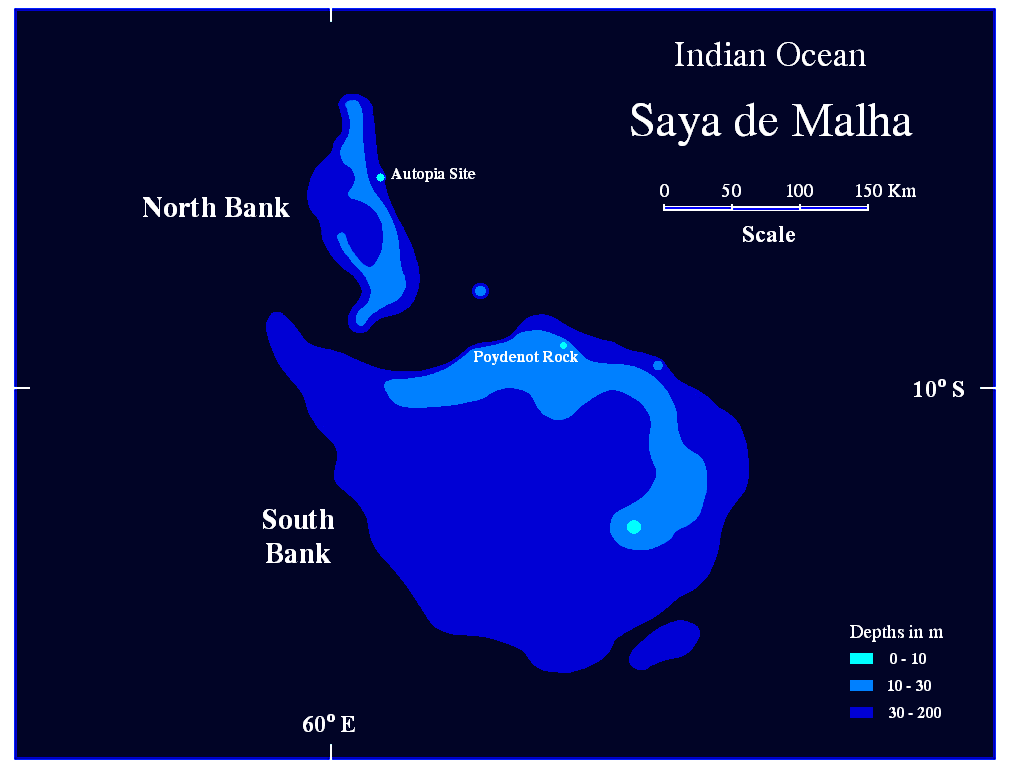
Stretching on for around 15,756 square miles, Saya de Malha Bank was once thought to be home to the world’s largest seagrass meadow but a new contender stole its crown in 2022.
When scientists equipped tiger sharks with cameras, these swimming assistants helped them discover a huge seagrass meadow in the Bahamas. Experts estimate that the Bahama Banks could be as big as 35,520 square miles, which would make it almost as large as Portugal. Even if it’s only 25,500 square miles (their lower range), it’s still marginally bigger than Sri Lanka.
Saya de Malha Bank is part of the Mascarene Plateau: an underwater plateau that formed between 20 and 40 million years ago. “These banks likely were islands that sank below the ocean surface as recently as 18,000 to 6,000 years ago,” writes EBSCO.
It’s made up of two banks – the North and South Banks – with a channel in the middle of them. The banks’ depths range from 8 to 300 metres. The sides of the bank drop away sharply to the seabed around it, which can be up to 2,000 metres deep.
A combination of the shallow seagrass habitats and upwelling of nutrients from the deep waters below makes this a fantastic place for marine life.
“Saya de Malha supports a diverse range of cetacean species,” says the University of Exeter’s Kirsten Thompson in a statement. Thompson was involved in a 2023 paper in Regional Studies in Marine Science on the presence of whales and dolphins in these waters
“The relatively shallow waters and tropical currents make it a hotspot for biodiversity, but the geography also means that little scientific work has been done here, as ships tend to avoid it,” she adds.
Thompson and colleagues put underwater microphones in the water to listen out for animals and heard lots of sperm whale clicks. “Their apparent relatively high abundance, in comparison to other species, is likely due to the detectability of their echolocation clicks, which can be detected from several kilometres away,” write the authors in the paper.
They recorded 12 cetacean species in total, including Bryde’s whales, Blainville’s beaked whales, pilot whales and orcasas well as bottlenose, striped and spinner dolphins.
There are also lots of fishes, turtles, seabirds sharks. With their abundance of food and shelter, the banks are a handy stepping stone for animals that make long migrations. The world’s largest fish – the whale shark – is a frequent visitor.
- It contains over half of Earth’s water and all of the continents could fit into its basin in one mega-puzzle
- One mile down, iron-rich waters, toxic fluids, and 81°C acidic vents made this volcano seem uninhabitable – yet scientists filmed something staggering
The bank’s remote location may have protected it from degradation so far but experts are worried that this won’t continue. “The Saya de Malha Bank likely contains reserves of oil and gas, prompting commercial interest in exploration and extraction, which could damage the ecosystem,” writes the High Seas Alliance on its website, adding that the negative effects of seabed mining in nearby waters could ripple into the bank too.
Unregulated fishing is also a concern in these High Seas waters.
“In addition, oil tankers regularly traveling through neighbouring waters put its biodiversity at risk from oil spills and the dumping of waste,” they say.
Experts want to see the bank protected from these types of threats, says the High Seas Alliance: “As a biodiversity hotspot and key migration and breeding area, safeguarding the bank would help conserve marine life across the Indian Ocean basin.”
- At the bottom of the Indian Ocean a deep sea robot discovered something huge and truly incredible
- They can start out as underwater volcanoes, take up to 30 million years to form – and are home to about 1 million people
- It’s almost twice the size of Washington state and stretches 18 miles down into the Earth’s crust – and it’s underwater too


