
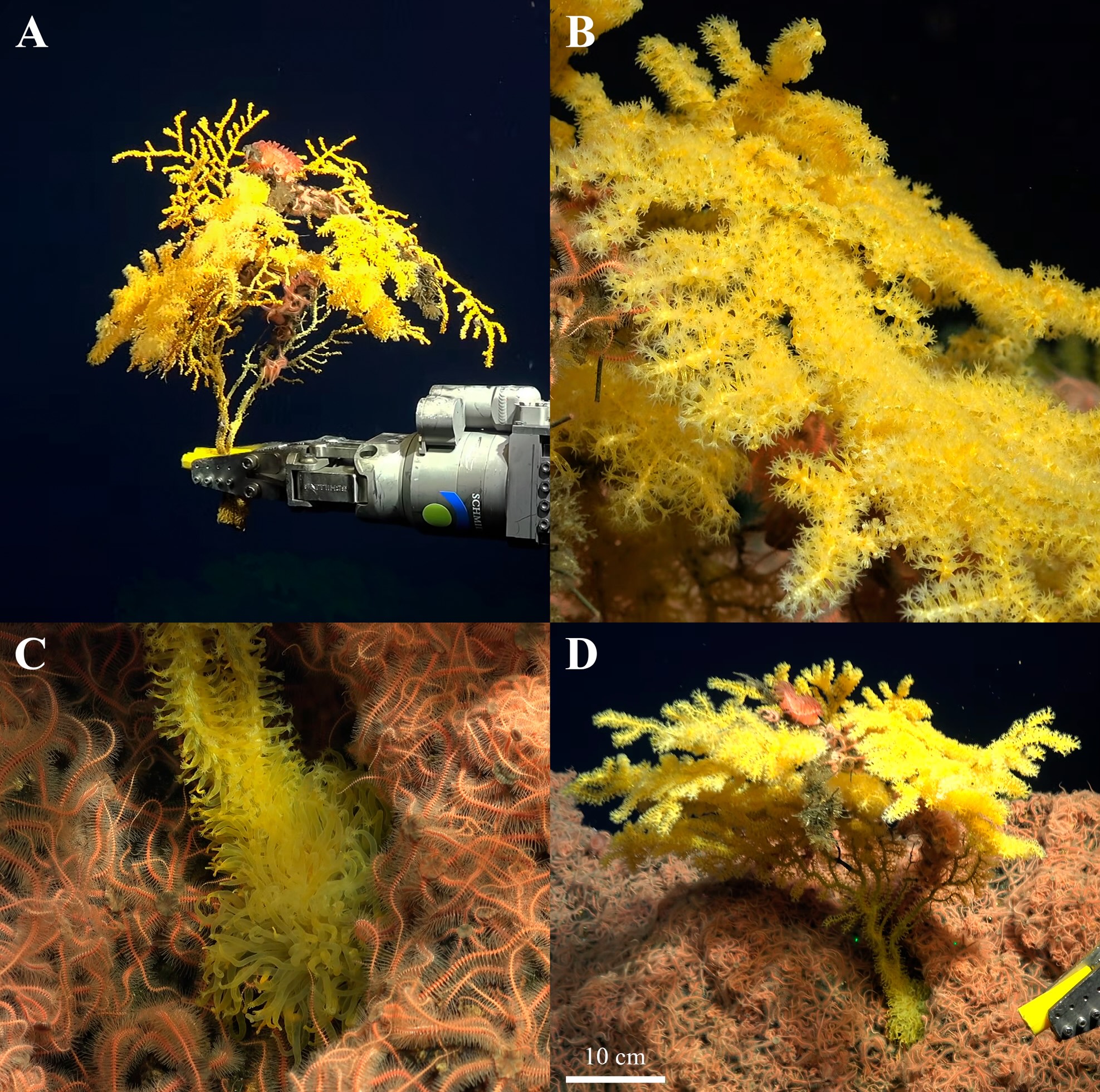
A dazzling new coral, which grows over a metre tall and looks like a golden tree, has been found in the Pacific Ocean.
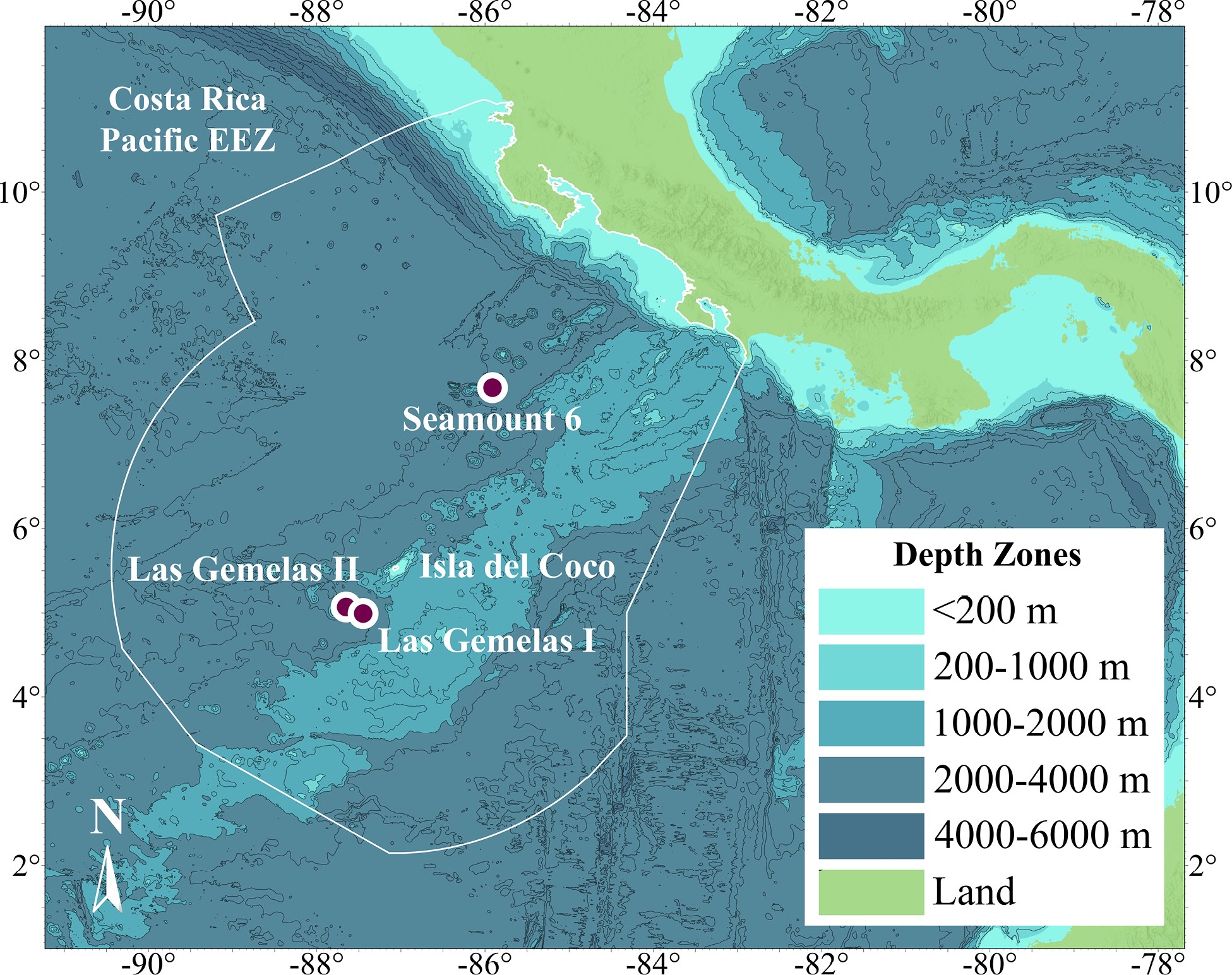
The discovery was made by deep-sea scientists from the Schmidt Ocean Institute, who were exploring seamounts off the coast of Costa Rica in 2019 and 2023 when they stumbled across the coral colonies.
But it wasn’t just the coral that amazed the researchers. The rocky outcrops from which the bright-yellow, tree-like forms were growing were surrounded by thousands of brittle stars – a marine animal with a round, central body and five spindly arms – creating a magical spectacle of gilded trees and stars.
The discovery is described in a study published in the journal ZooKeys.
- What’s the difference between fringing reefs, atolls and barrier reefs?
- How deep is the deepest part of the ocean?
- Astonishing ‘explosion of life’ coral spawning in Cambodia stuns scientists
- Satellite images reveal more than 1,000 unmapped coral reefs in Australia
The new coral is so genetically and morphologically different to other corals, that the researchers had to come up with an entirely new genus for its classification: Laurinque. The name comes from ‘Laurinquë’, meaning ‘golden tree’ in Quenya, the Elvish language created by J.R.R. Tolkien for The Lord of the Rings and The Silmarillion.
The species itself has been named Laurinque elenya, inspired by the fields of brittle stars surrounding the coral colonies. ‘Elenya’ is Quenya for ‘stellar’ or ‘of the stars’.
“I saw the octocoral garden for the first time in 2019 and I was impressed by the beauty of the landscape, which later inspired the Elvish name of the taxa,” says the study’s lead researcher, Odalisca Breedy, from the Universidad de Costa Rica.
- Scientists record world's longest underwater timelapse. What is reveals is astonishing
- “It’s so dry that NASA has used parts of it to test Mars rovers.” 6 extreme places on Earth where you can still find life
Breedy explains how working out where this coral belonged in the coral family tree was particularly difficult. “I thought the species could belong to a known family and genera, but after the preliminary morphological analysis I realised that it was something very different that I could not match with the known taxa.
“In 2023 we collected more samples and thanks to the exhaustive molecular analyses made by my colleagues, Cathy McFadden, Catalina Murillo and Andrea Quattrini, we were able to determine the taxonomic placement of the stunning species, in one of the most enigmatic sites.”
Due to the logistical challenges involved in accessing deep-ocean environments and the high costs of oceanographic expeditions, underwater formations such as Costa Rica’s seamounts remain relatively unexplored. But that’s not to say life doesn’t thrive in these extreme places.
The discovery of Laurinque elenya is another reminder of how important the deep ocean is for a whole host of life.
Find out more about the study, published in the journal ZooKeys.
Top image: In situ colony of Laurinque elenya in Las Gemelas II, taken during the 2023 expedition. Credit: ROV SuBastian, via O. Breedy et al. ZooKeys 2026
More amazing wildlife stories from around the world
- "I started screaming." Scientists were filming dolphins in Australia, when this happened
- Giant squid detected in deep-sea canyon off coast of Australia
- Staggering drone footage shows 24m giants speeding through Indonesian waters
- Tuna carcass placed at bottom of ocean. All was quiet, before this happened


