Astonishing image of scorpionfish devouring prey whole among Ocean Photographer of the Year 2026 finalists
Astonishing image of scorpionfish devouring prey whole among Ocean Photographer of the Year 2026 finalists
Delve into the hidden worlds of our oceans with the 2026 finalists.
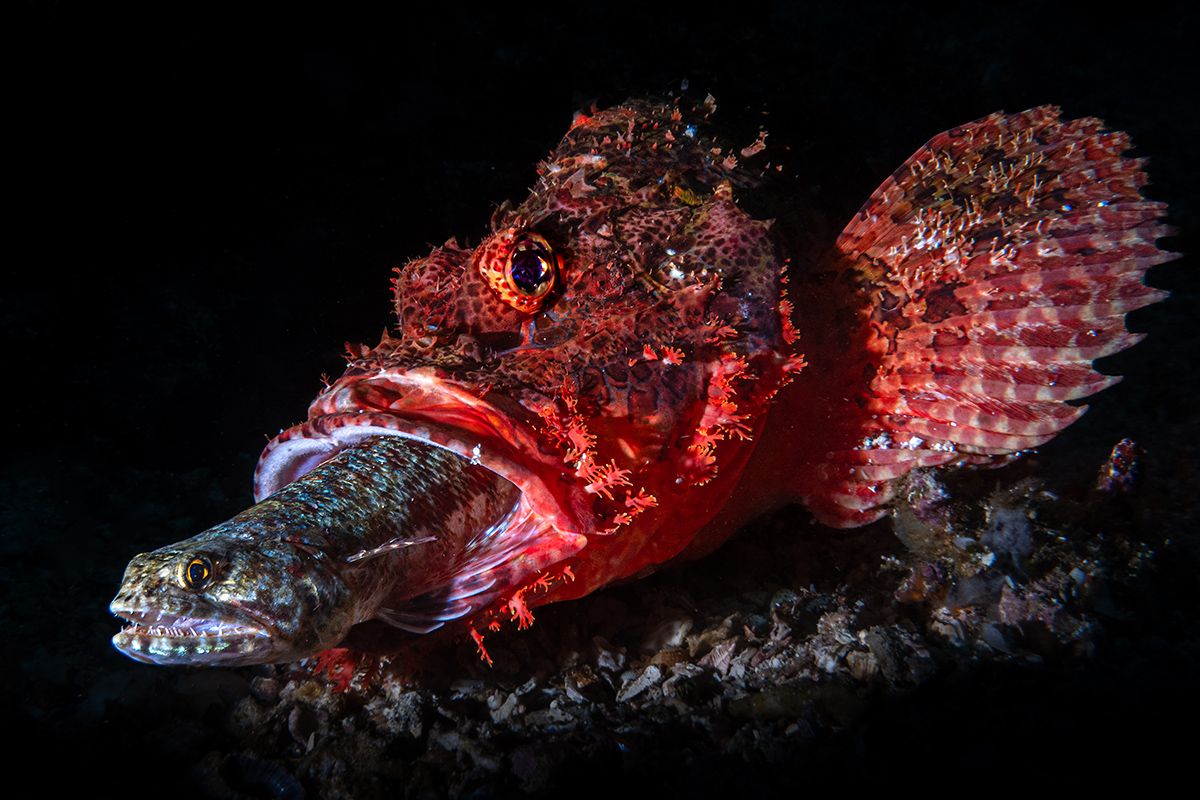
A scorpionfish consumes a lizardfish in a moment of hunting behaviour, revealing the constant balance
between survival and vulnerability on coral reefs. The compact composition isolates the interaction using a
snoot to direct light onto the two fish while keeping the background subdued. The position of both animals
makes the behaviour immediately visible, showing the scorpionfish’s feeding strategy and the brief, powerful encounters that shape life on the reef.
Photo Credit: Andrea Michelutti / Ocean Photographer of the Year
Among the standout images are two orcas working together to carry off a humpback whale calf, a scorpionfish caught mid-meal devouring a lizardfish, and a male octopus courting a mate with its specialised mating arm extended.
The Ocean Unseen: Hidden Worlds category is new for 2026, providing an intimate insight into the worlds of our oceans' smallest inhabitants. Images from this category include a spawning Christmas tree worms and a parasitic copepod living on the eye of a giant black sea bass.
Category winners, along with the overall Ocean Photographer of the Year 2026 award, will be announced in September.
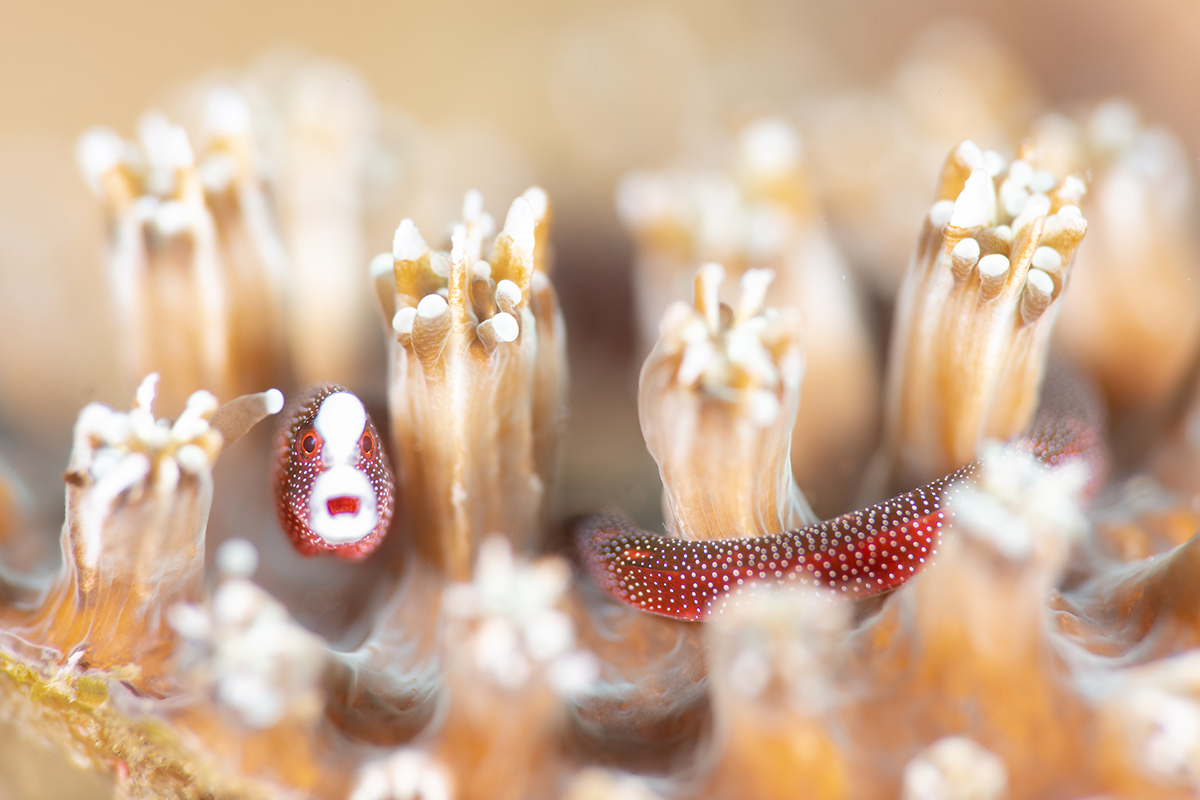
Ocean Unseen: Hidden Worlds Category - Luis Arpa Toribio
A Braun’s pughead pipefish (Bulbonaricus brauni) peers from between coral polyps in Lembeh, Indonesia. Its unusual features give it a curious, almost surprised expression. - Photo Credit: Luis Arpa Toribio / Ocean Photographer of the Year
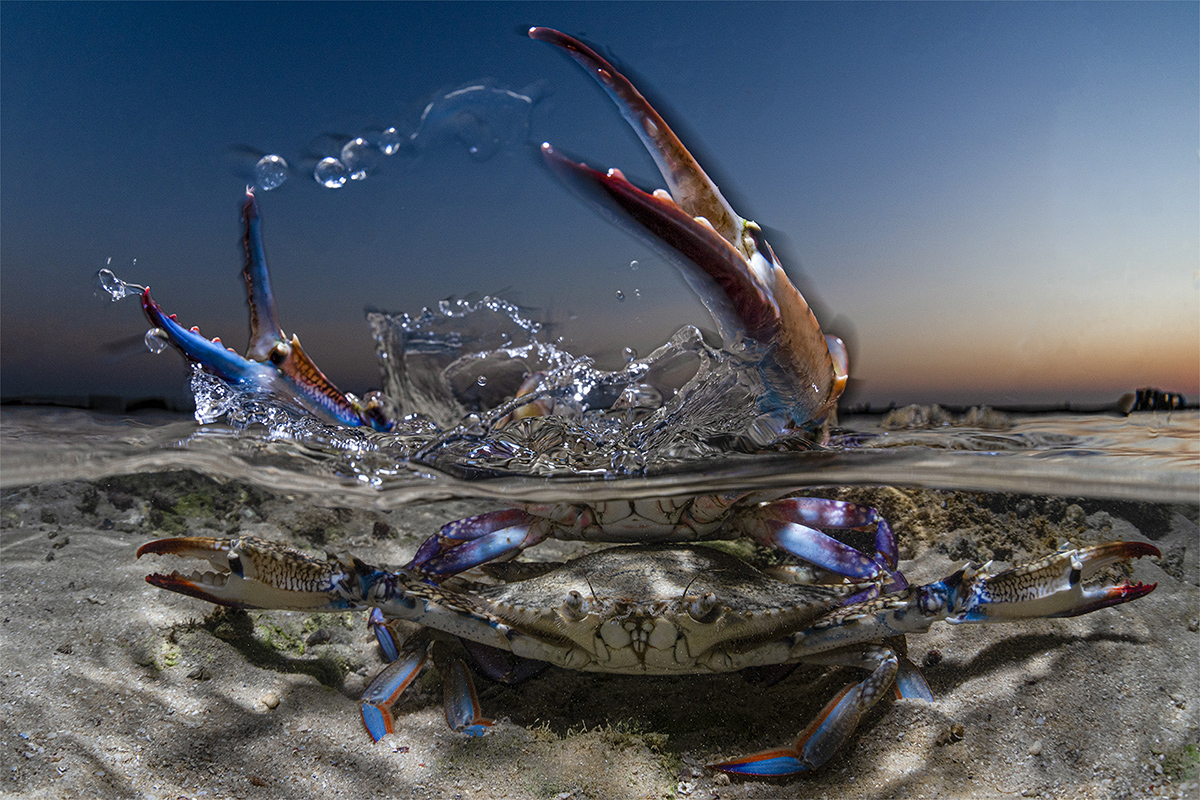
Wildlife Category - Abdulaziz Al Saleh
A male blue crab (Callinectes sapidus) displays his large claws above the water while protecting a female during mating in Kuwait’s Arabian Gulf. During reproduction, males guard females to reduce the risk of predation and competition. This split level image was taken at sunrise in a shallow intertidal zone, where careful movement was essential to avoid disturbing the crabs. The female’s distinctively coloured claws and her still posture contrast with the male’s defensive display. - Photo Credit: Abdulaziz Al Saleh / Ocean Photographer of the Year
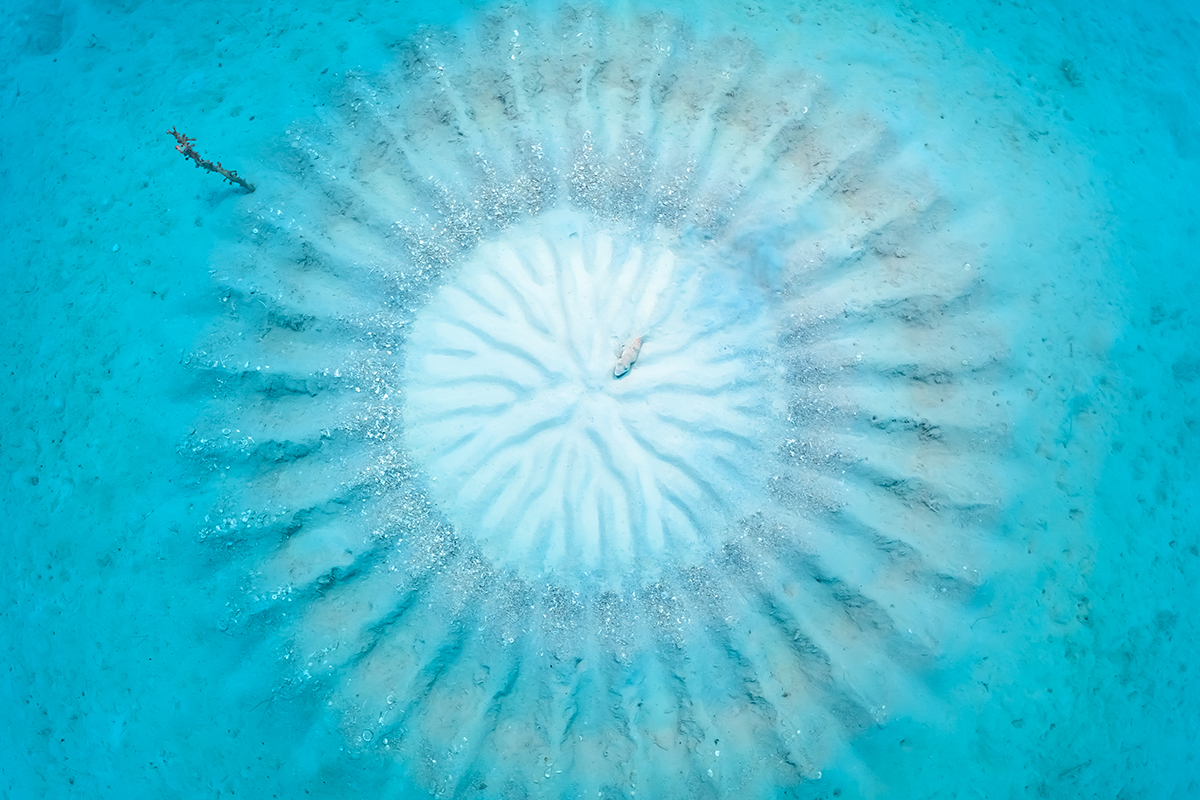
Conservation, Hope Category - Shigeno Yuta
A male white-spotted pufferfish creates an intricate spawning nest in the sand. The fish carefully shapes a two metre-wide radial pattern using only his fins. Built over several days, this structure and its subtle details reveal the extraordinary effort this small fish invests in reproduction. Fine sand, shells and fragments are arranged from the centre outward, each piece carried into place by the fish. - Photo Credit: Shigeno Yuta / Ocean Photographer of the Year
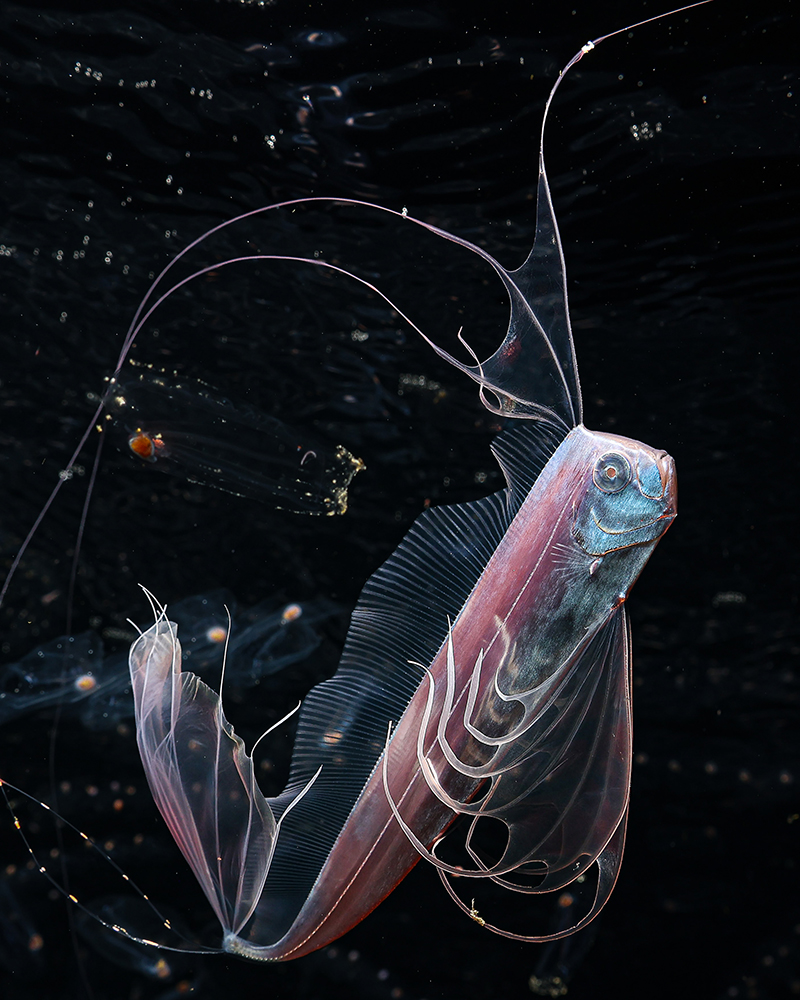
A ribbonfish rises vertically through the dark waters of Osezaki, Japan. Its long, silver body and delicate fins are
adapted for life in the open ocean. This image was captured during a winter blackwater dive. Around the
ribbonfish, a swarm of salps – small, jelly-like animals that feed on tiny particles in the ocean – creates a
glimpse of life moving through the deep sea. - Photo Credit: Mitsuna Kawai / Ocean Photographer of the Year
Human Connection: People & Ocean Planet Award - Anita Verde
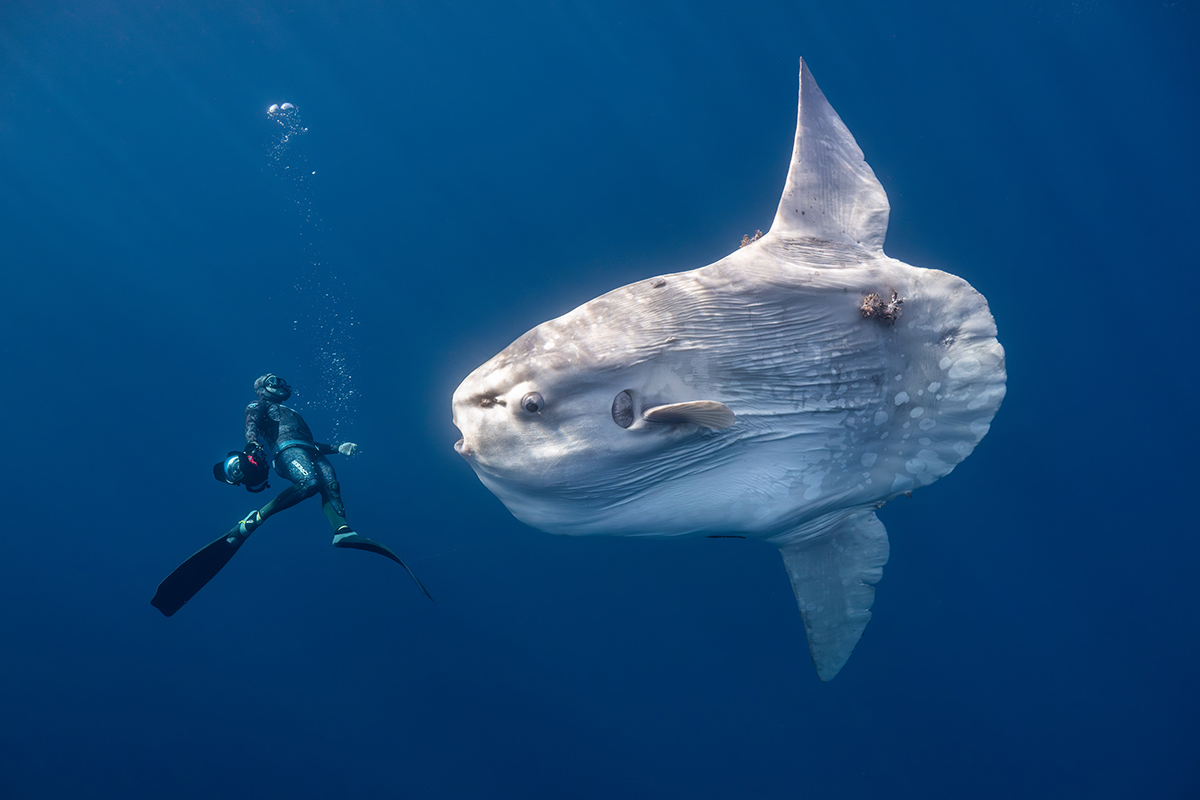
A giant oceanic sunfish (Mola mola) glides through the clear waters of Mexico's Baja Peninsula. Encountered during the final hour of a 2025 sardine run expedition, the unusually pale fish approaches the freedivers on its own, while soft sunlight gives it a moon-like glow. The unexpected meeting is a reminder that the ocean's most memorable moments often happen when least expected. - Photo Credit: Anita Verde / Ocean Photographer of the Year
Wildlife Category - Talia Greis
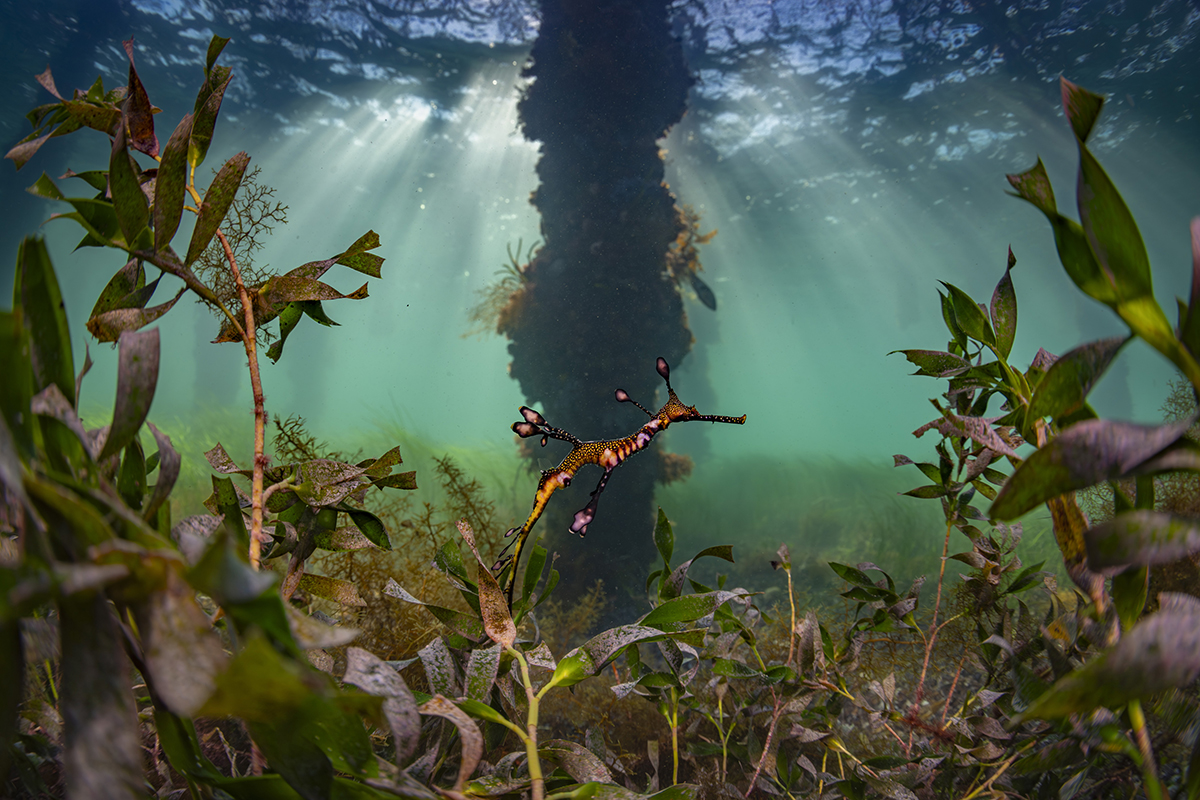
A juvenile weedy seadragon drifts among seagrass beneath Flinders Pier, Victoria, Australia. Unlike adults, young seadragons have darker colouring that helps them disappear among the vegetation. This individual was missing the appendages on its snout, a feature some seadragons lose over their lifetime. - Photo Credit: Talia Greis / Ocean Photographer of the Year
Ocean Unseen: Hidden Worlds Category - Steven Lopez
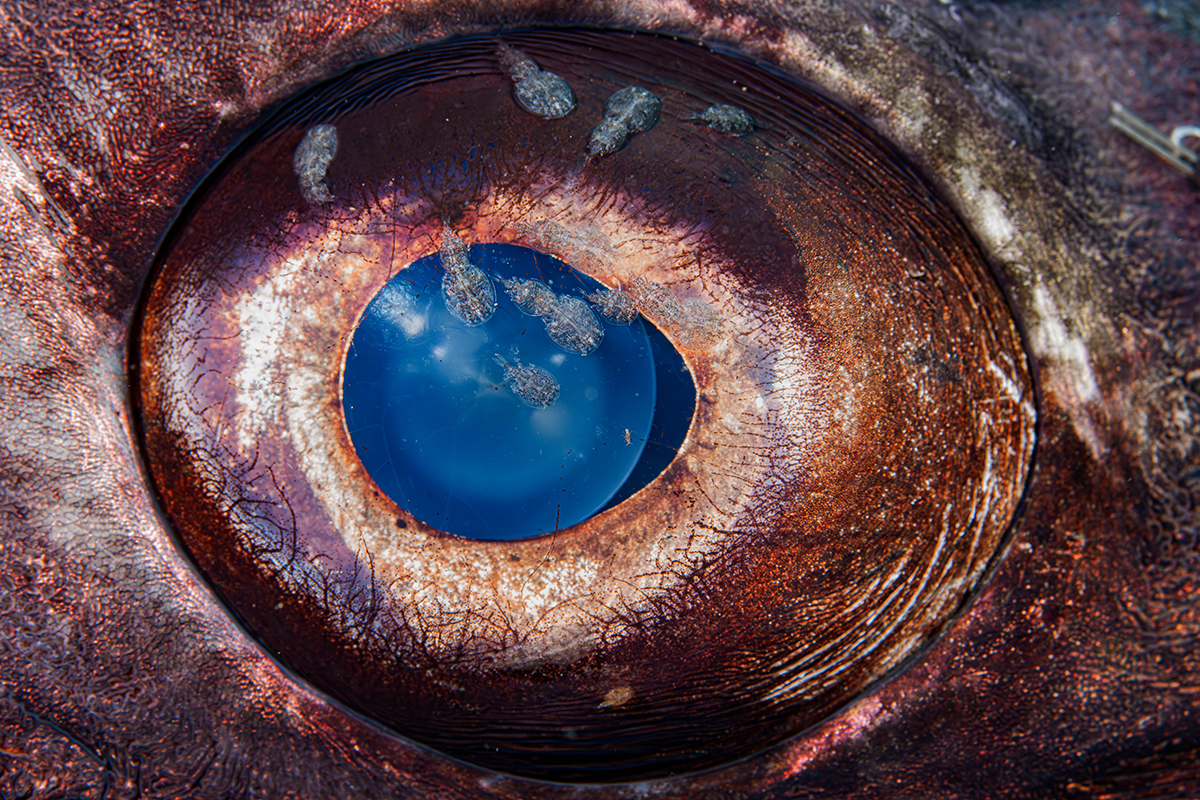
A close view of a giant black sea bass reveals tiny parasitic copepods clustered around its eye in a Catalina Island kelp forest. Once misidentified on other hosts, these copepods are now known to have a specific relationship with this threatened fish. In the late 1970s and early 1980s, the giant black sea bass was nearly extinct in Southern California but is now recovering through protection efforts. This image highlights how even a giant predator can support a hidden community of much smaller organisms. - Photo Credit: Steven Lopez / Ocean Photographer of the Year
Conservation, Hope Category - Thomas Pavy
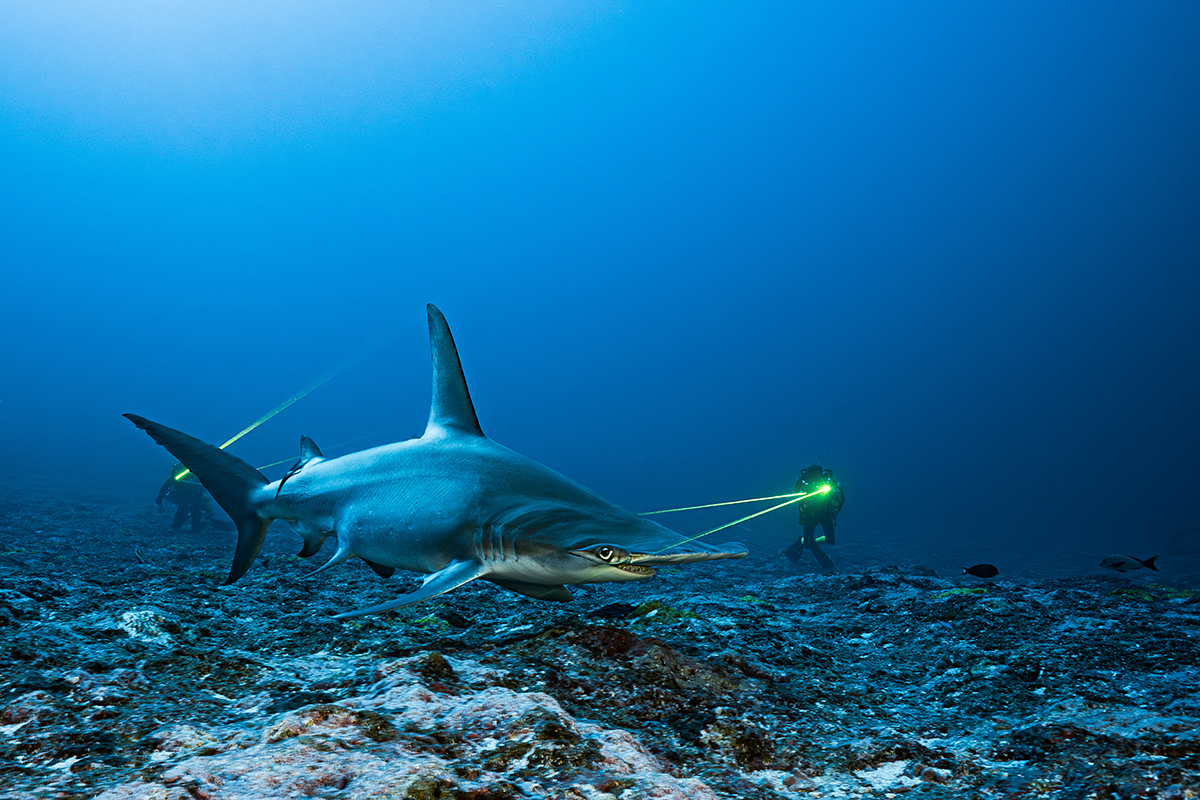
A great hammerhead shark (Sphyrna mokarran) is photographed at 55 metres depth in Tiputa Pass, Rangiroa Atoll, during a population survey. This image represents the moment an anonymous shark becomes a known individual. Through photo identification and laser-calibrated video photogrammetry, scientists can track sharks over time, measuring size, sex and population trends. Conducted without bait or attractants, this research helps reveal the lives of Tamataroa, a culturally respected species protected in French Polynesia. - Photo Credit: Thomas Pavy / Ocean Photographer of the Year
Ocean Unseen: Hidden Worlds Category - Bing Lin
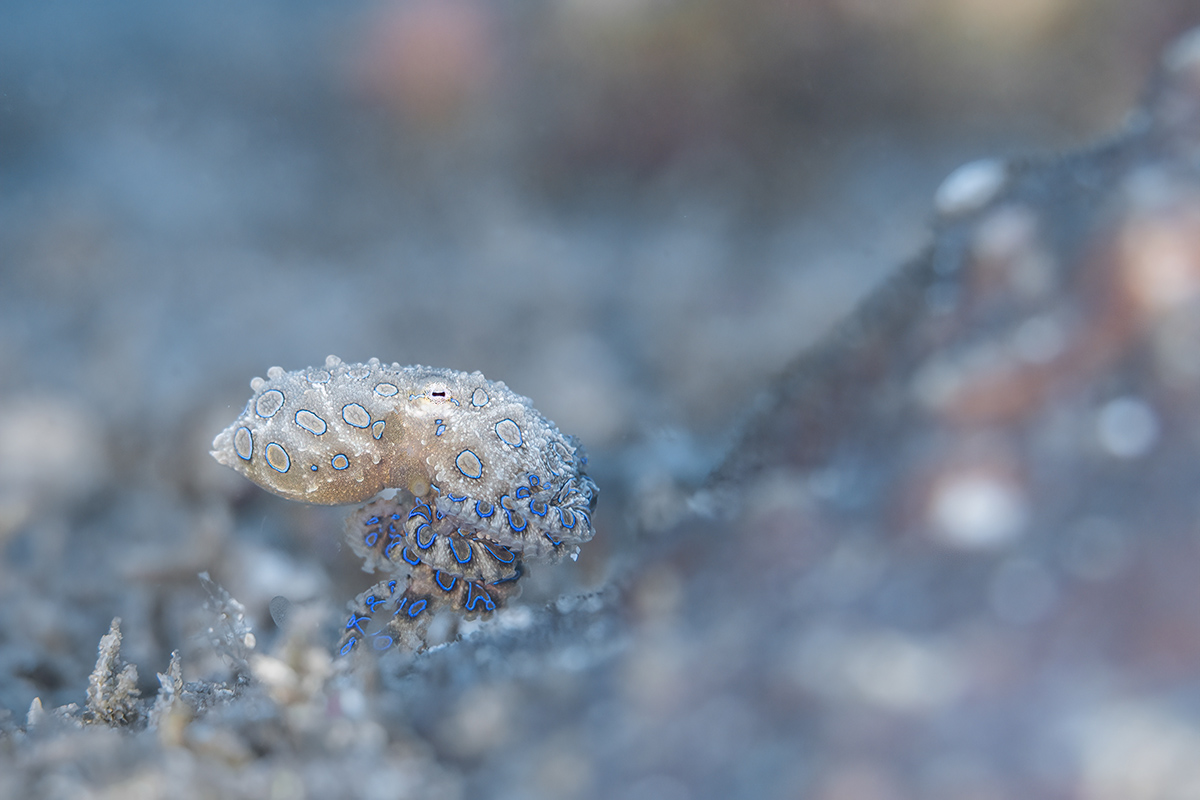
A blue-ringed octopus, smaller than a golf ball, moves across the crest of a reef wall at Malapascua Island, Philippines. This species is nocturnal, intensely secretive, and rarely seen during daylight hours, which makes moments like this incredibly rare. Using its intricate camouflage, this tiny predator blends into the reef while searching for prey among rocks and coral. Photographed with a macro lens, the image reveals details often missed in the underwater landscape. - Photo Credit: Bing Lin / Ocean Photographer of the Year
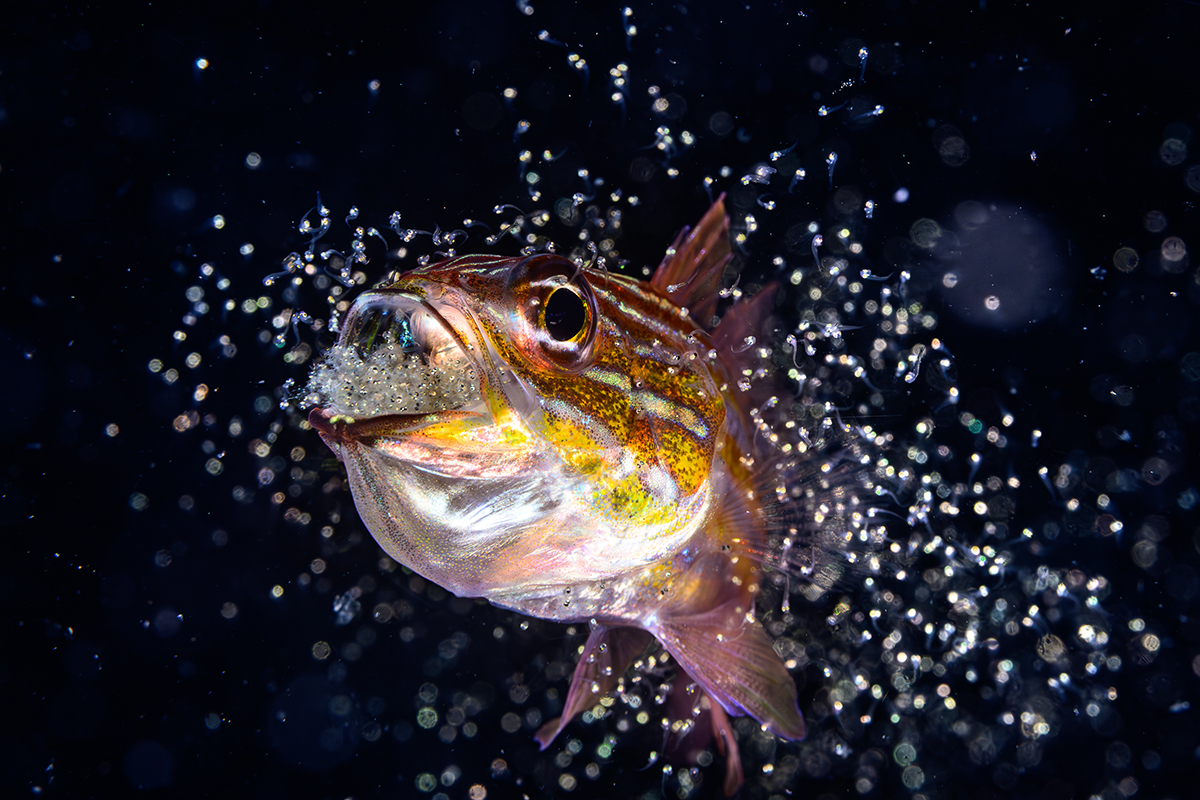
This photograph captures a male cardinalfish releasing the larvae he has been brooding inside his mouth. Although this species is common in Japanese waters, the image reveals a rarely-noticed stage of its lifecycle. The male carries and protects the developing eggs for around a week, eating little or nothing during this period. The larvae are released over several events, with the first release containing the largest number. - Photo Credit: Shigeno Yuta / Ocean Photographer of the Year
Fine Art Category - Richard Condlyffe
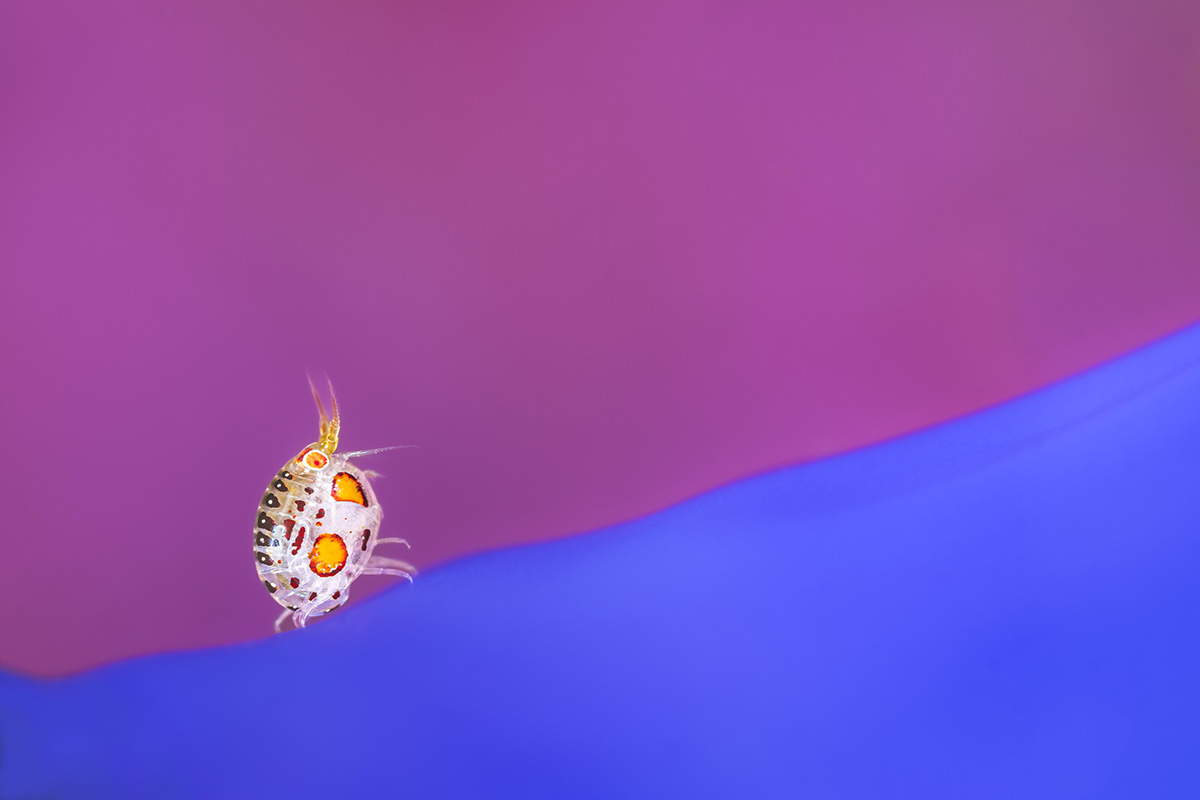
A ladybug amphipod (Cyproideidae sp.), only 3mm long, rests on a blue sea squirt in the coral reefs of Komodo, Indonesia. These tiny crustaceans are easily overlooked, yet their intricate forms reveal the hidden diversity of reef life. Using a super-macro lens, the photographer isolated the amphipod against the soft coral background, revealing details invisible to the naked eye, including its delicate translucent legs. - Photo Credit: Richard Condlyffe / Ocean Photographer of the Year
Wildlife Category - Henley Spiers
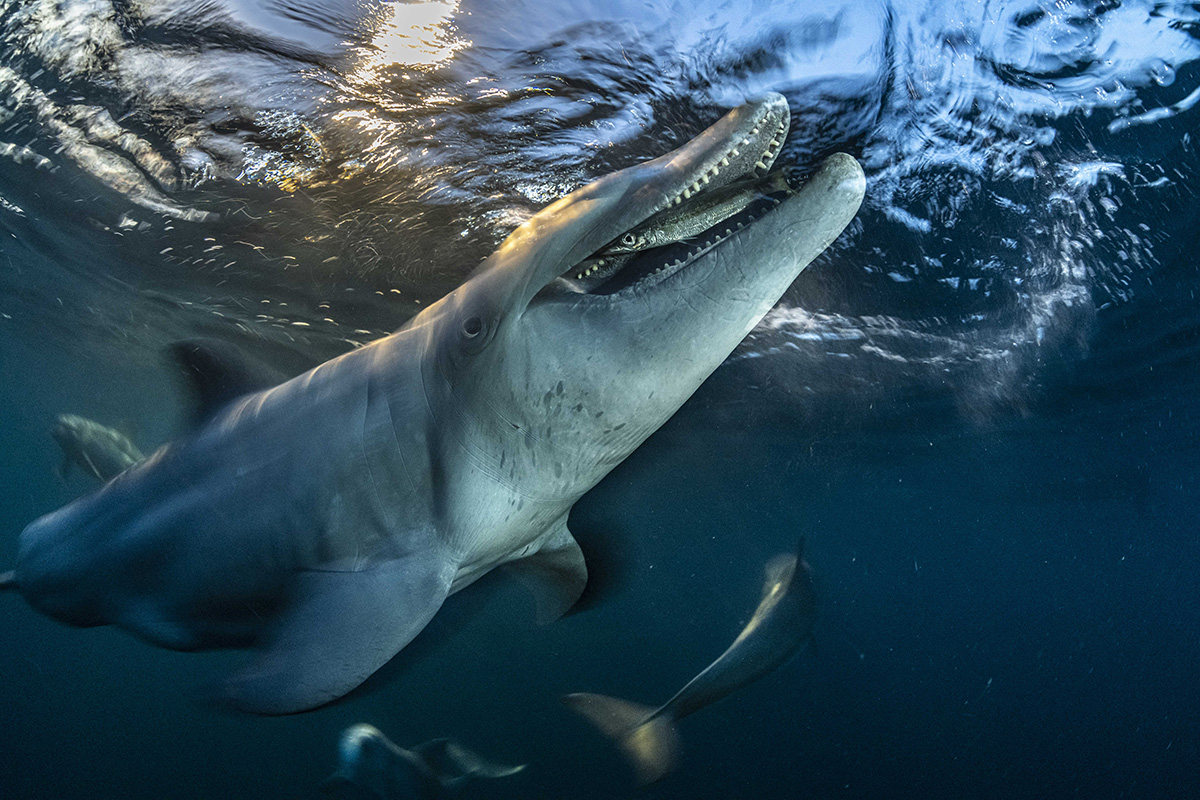
A bottlenose dolphin bites a small fish beside a traditional bagan fishing platform in Indonesia. These dolphins have learned to associate the illuminated nets with an easy source of food, often taking discarded or unwanted fish provided by fishermen. Bagan vessels use lights at night to attract fish before lowering nets from floating platforms. This image captures the close relationship between a wild predator and a human fishing practice, while revealing how animal behaviour can adapt to changing ocean environments. - Photo Credit: Henley Spiers / Ocean Photographer of the Year
Conservation, Hope Category - Leighton Lum
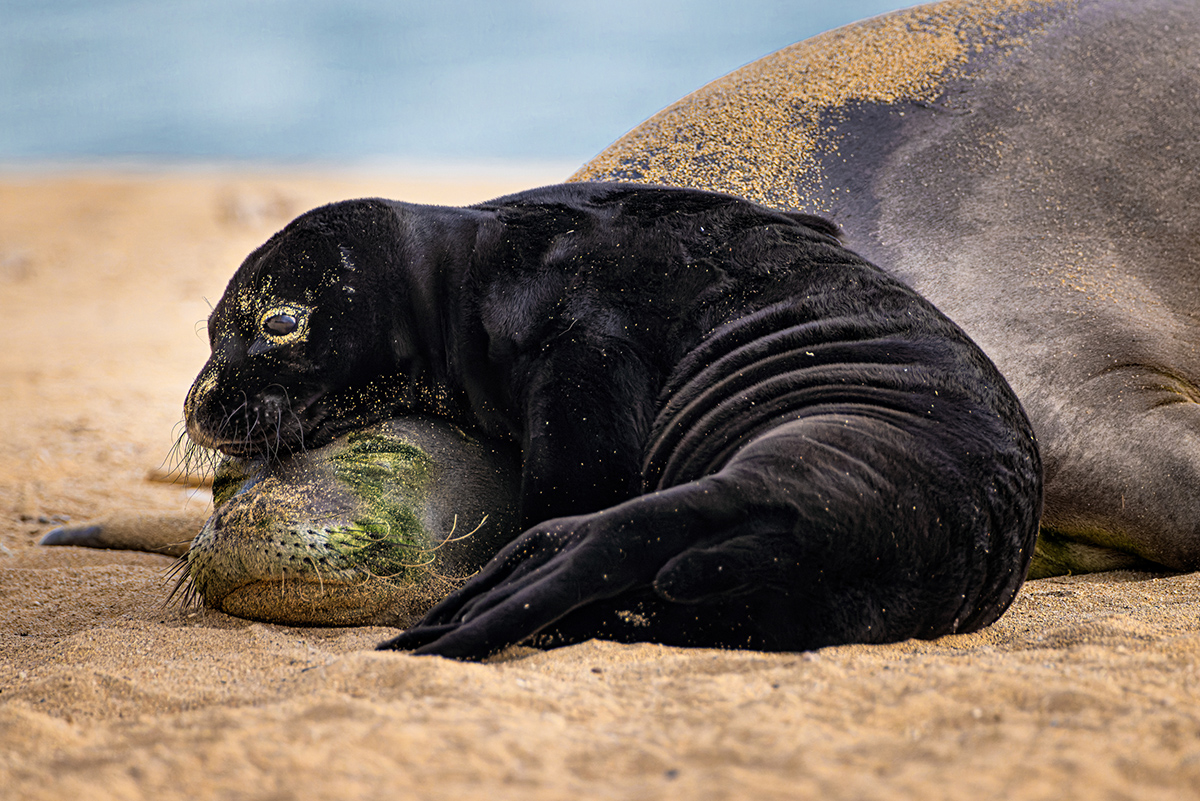
A Hawaiian monk seal rests with her week-old pup on Kaimana Beach in Waikīkī. Mothers nurse their pups for around six weeks without feeding, losing up to a third of their body weight while the pup grows rapidly before becoming independent. Despite choosing one of Hawaiʻi's busiest beaches to raise her pup, Kaiwi has successfully raised several pups here. It does, however, require the support of conservation teams and volunteers to ensure that tourists and locals don't get too close during this time. - Photo Credit: Leighton Lum / Ocean Photographer of the Year
Wildlife Category - Rafael Fernandez Caballero
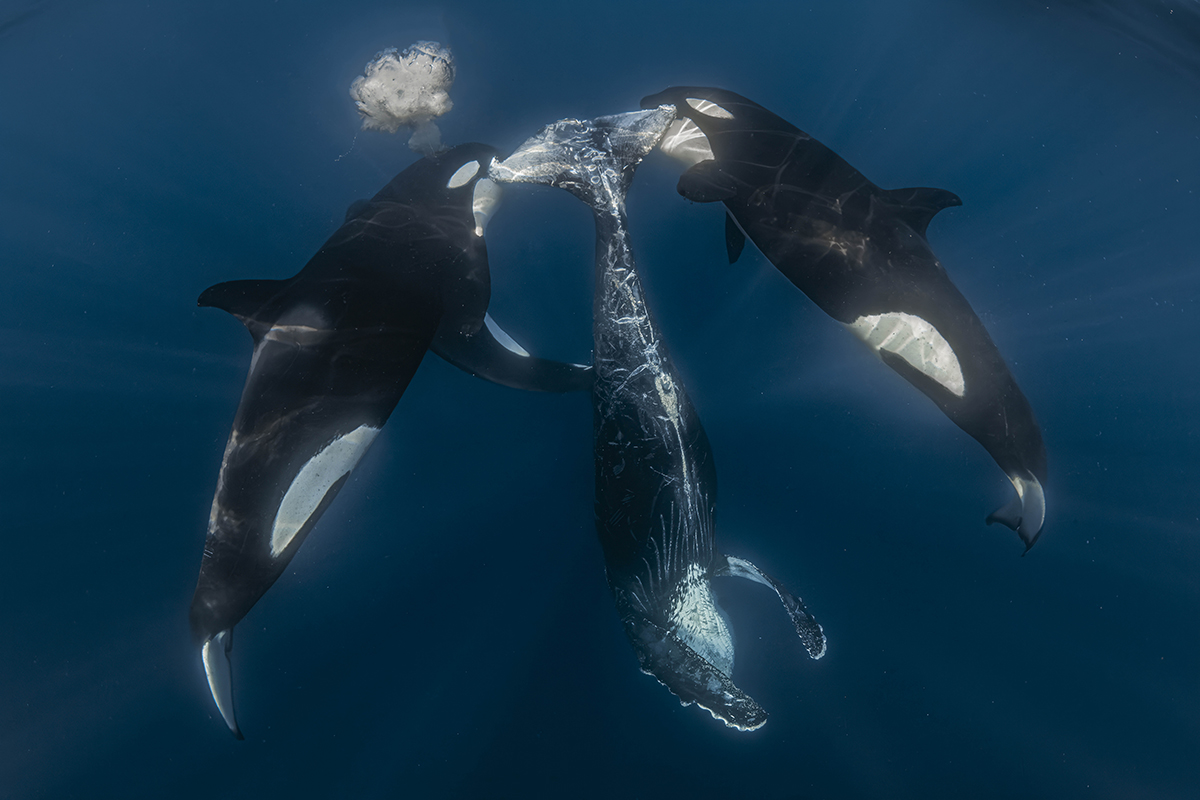
In the Pacific waters of Mexico, this photograph captures the aftermath of a successful orca hunt. Nearly an hour after a pod separated a humpback whale calf from its mother, the orcas resurfaced carrying their prey between them. The event reveals the cooperative hunting strategies of orcas, where multiple individuals work together to isolate and subdue large prey. What the image doesn't show is that after the kill, other scavengers, including silky sharks, were drawn to the remains, showing how one event can influence an entire marine food web. - Photo Credit: Rafael Caballero / Ocean Photographer of the Year
Ocean Unseen: Hidden Worlds Category - Lale Alev Ozten Low
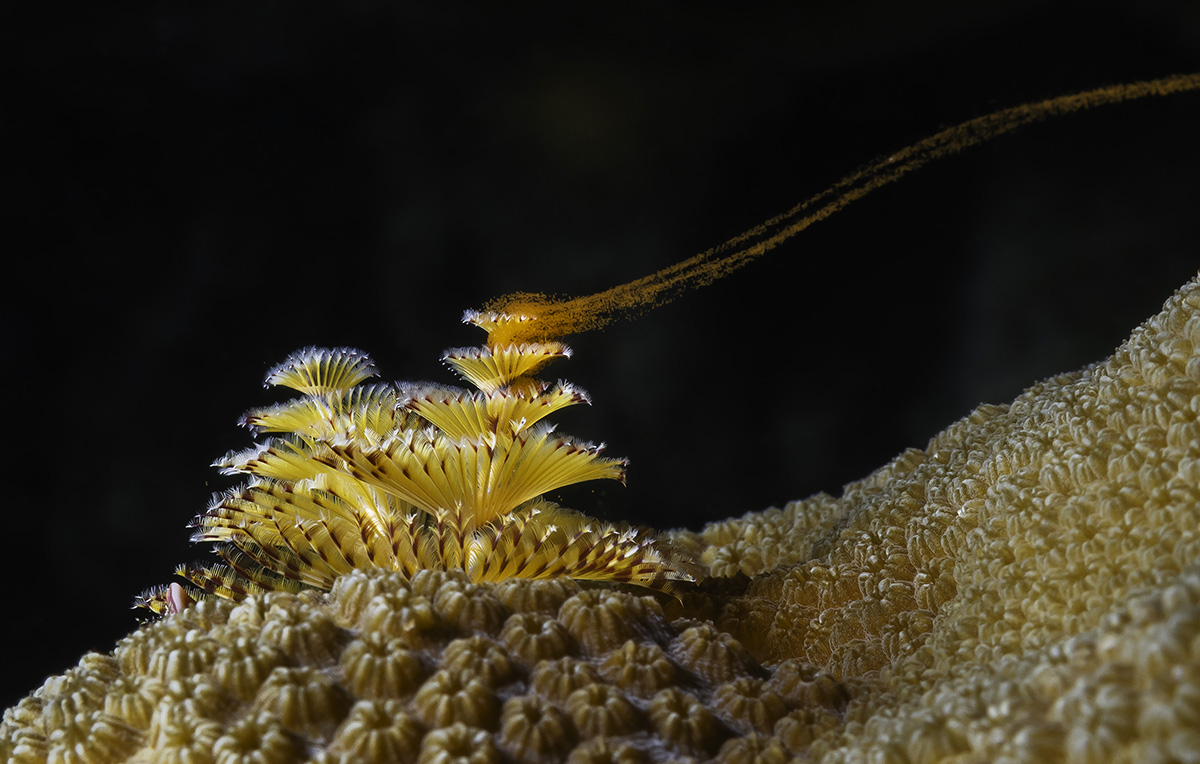
During a coral spawning night dive, a Christmas tree worm releases a stream of tiny eggs from the coral surface where it lives. Christmas tree worms are tube-dwelling marine worms that use colourful feeding crowns to capture plankton from the water. This image captures a brief reproductive event that takes place across coral reefs after dark. - Photo Credit: Lale Alev Ozten Low / Ocean Photographer of the Year
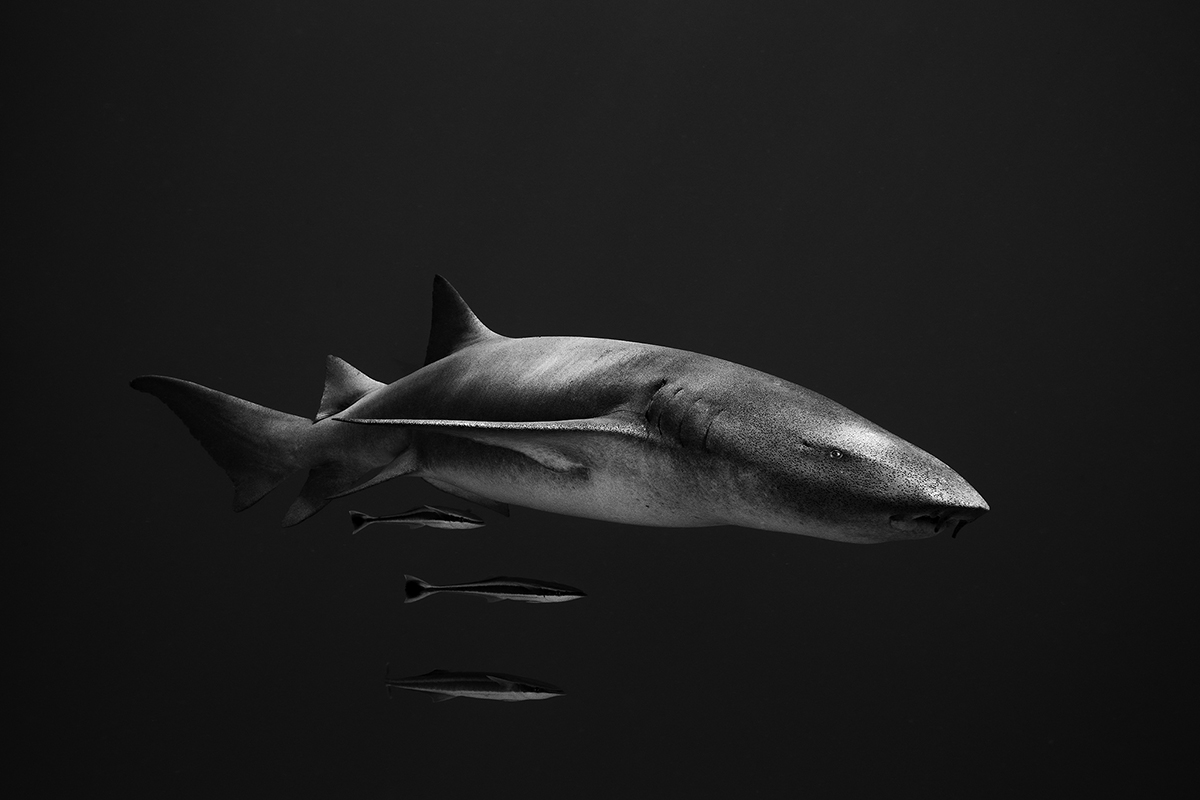
A tawny nurse shark glides through the warm waters of the Maldives as the setting sun filters through the ocean surface. Beneath it, remoras travel alongside their host, illustrating a common partnership in which the smaller fish gain transport, protection and feeding opportunities. Often perceived as fearsome predators, nurse sharks are slow-moving, bottom-dwelling animals that play an important role in maintaining healthy marine ecosystems. The shark's direct gaze creates a sense of connection with the viewer. - Photo Credit: Matty Smith / Ocean Photographer of the Year
Wildlife Category - Joshua Blank
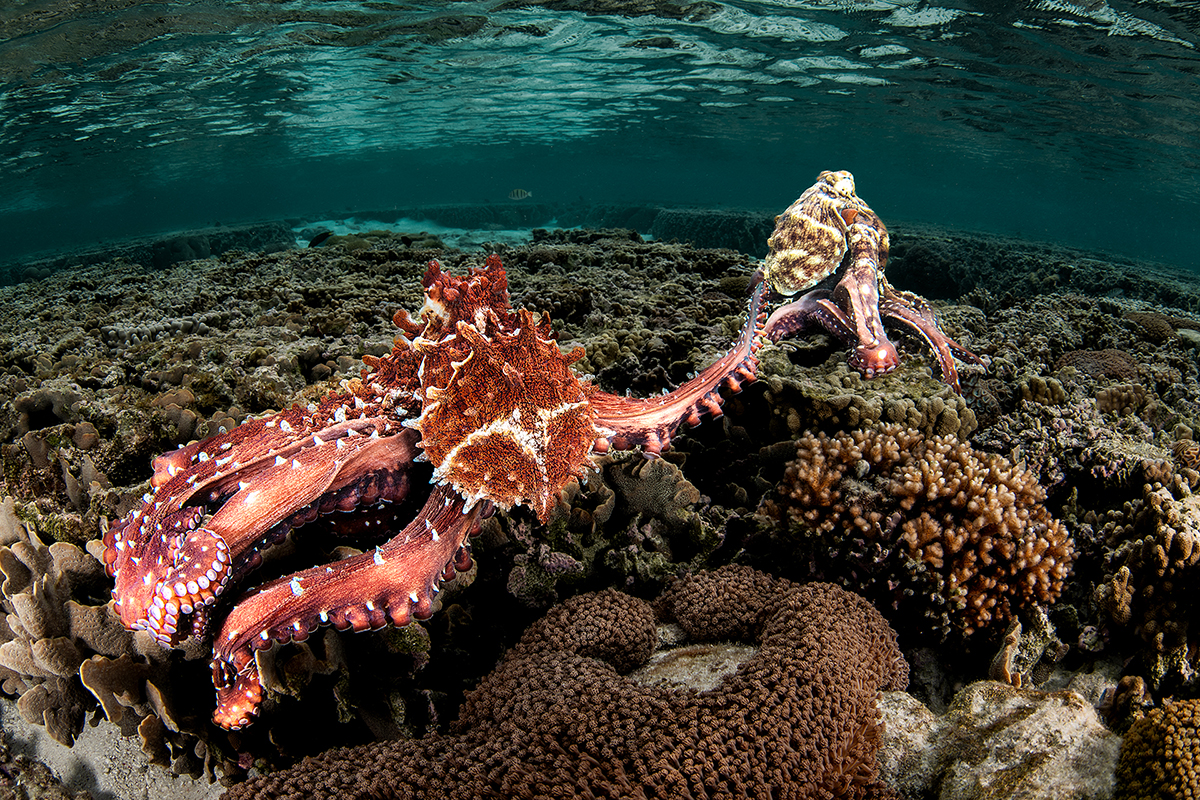
This image captures two octopuses during courtship on a shallow coral reef at Lady Elliot Island, part of Australia’s Great Barrier Reef. The male extends his specialised mating arm, known as a hectocotylus, to transfer spermatophores to the female. The interaction continued for several minutes as the male approached and the female moved across the reef, before eventually accepting him. - Photo Credit: Joshua Blank / Ocean Photographer of the Year
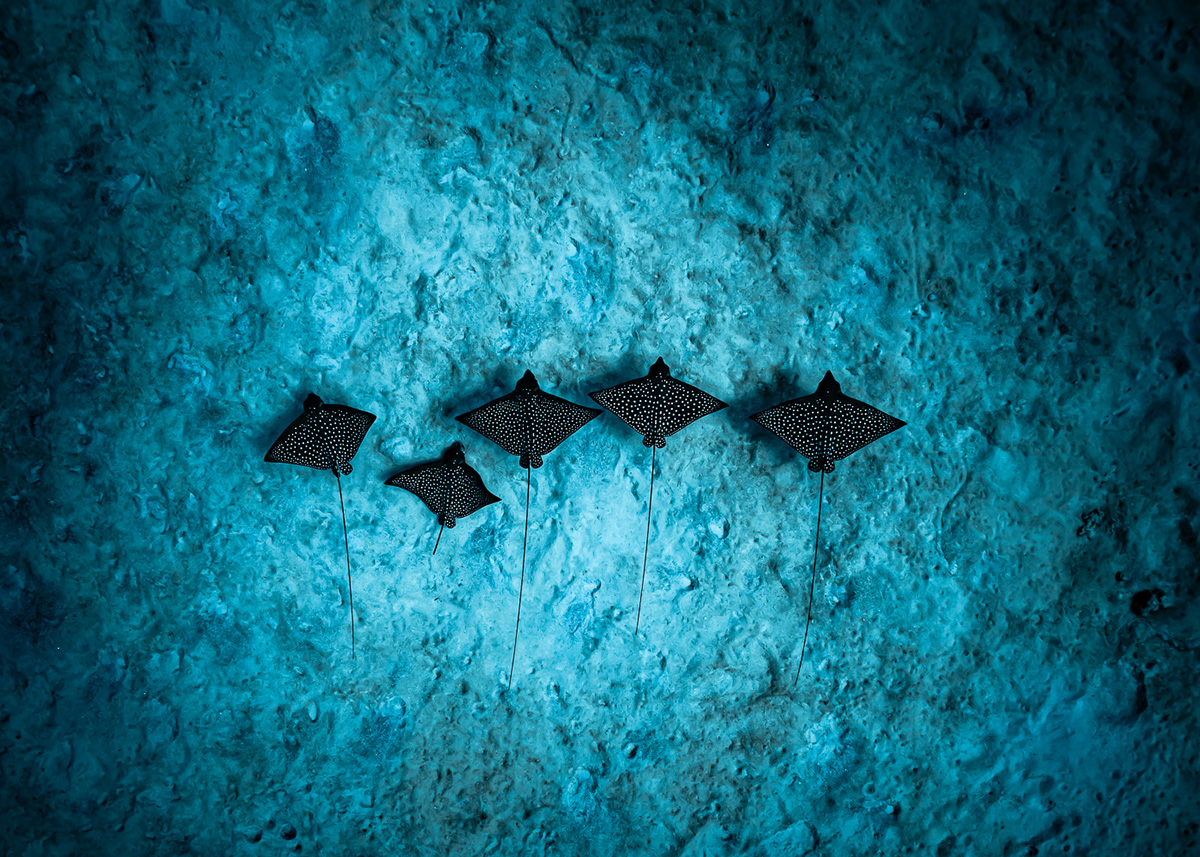
Five spotted eagle rays glide above the sandy seabed, their dark bodies and white markings contrasting against the pale background. These rays often travel together while searching for prey, using electroreceptors to detect hidden molluscs and crustaceans beneath the sand. Photographed during a dive in search of manta rays, this formation appeared during the journey back to shore. - Photo Credit: John Kowitz / Ocean Photographer of the Year
Wildlife Category - Andrea Michelutti
A scorpionfish consumes a lizardfish in a moment of hunting behaviour, revealing the constant balance between survival and vulnerability on coral reefs. The compact composition isolates the interaction using a snoot to direct light onto the two fish while keeping the background subdued. The position of both animals makes the behaviour immediately visible, showing the scorpionfish’s feeding strategy and the brief, powerful encounters that shape life on the reef. - Photo Credit: Andrea Michelutti / Ocean Photographer of the Year
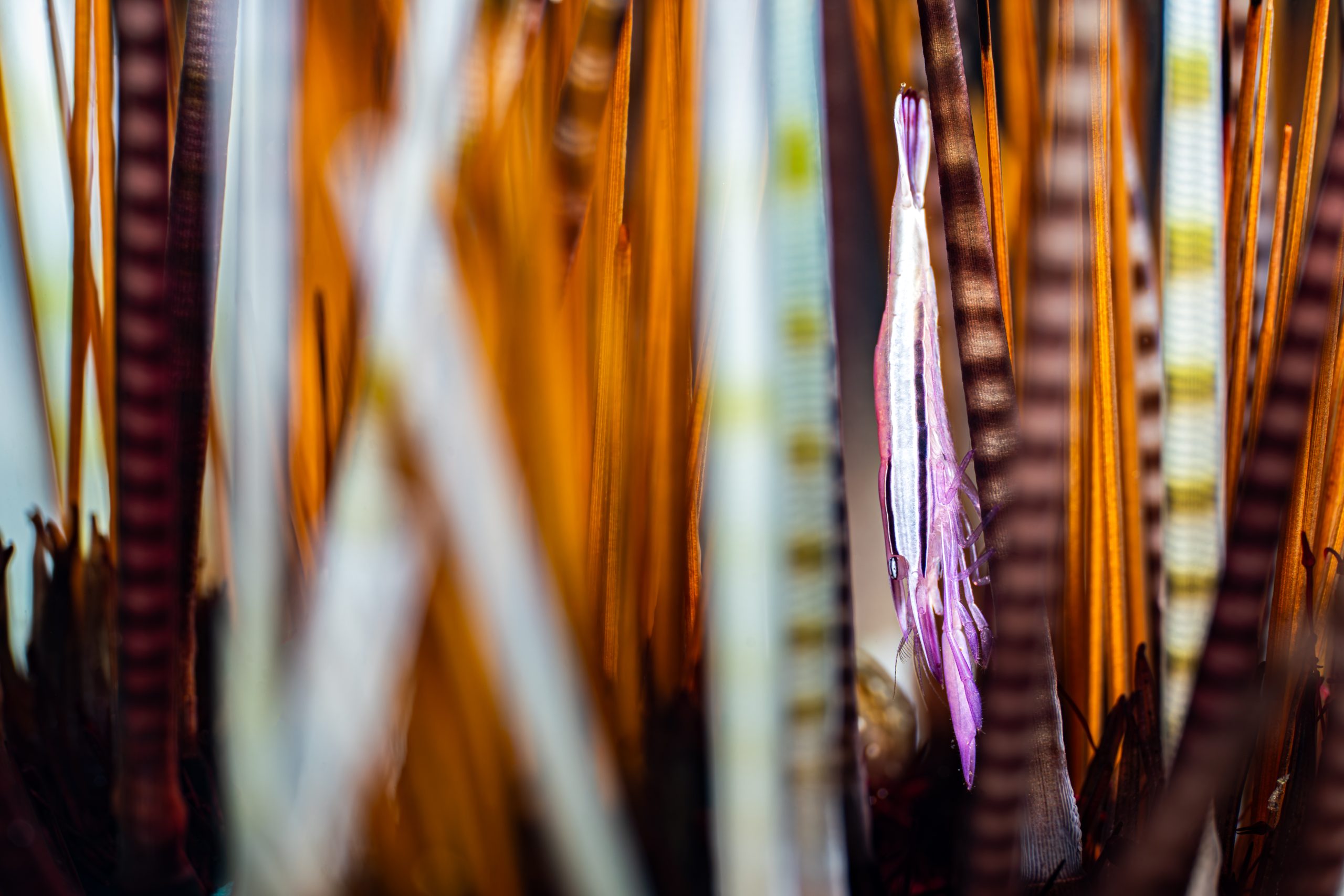
A tiny urchin shrimp (Stegopontonia commensalis) hides among the venomous spines of a sea urchin. The shrimp has adapted to align itself vertically, mimicking the shape and orientation of the sea urchin's spines. This remarkable camouflage allows the shrimp to live safely within its host, gaining protection while leaving the urchin unharmed. Look closely and you may spot the shrimp's translucent eye, almost invisible against the striped body. - Photo Credit: Ajiex Dharma / Ocean Photographer of the Year
Wildlife Category - Allan Cronin
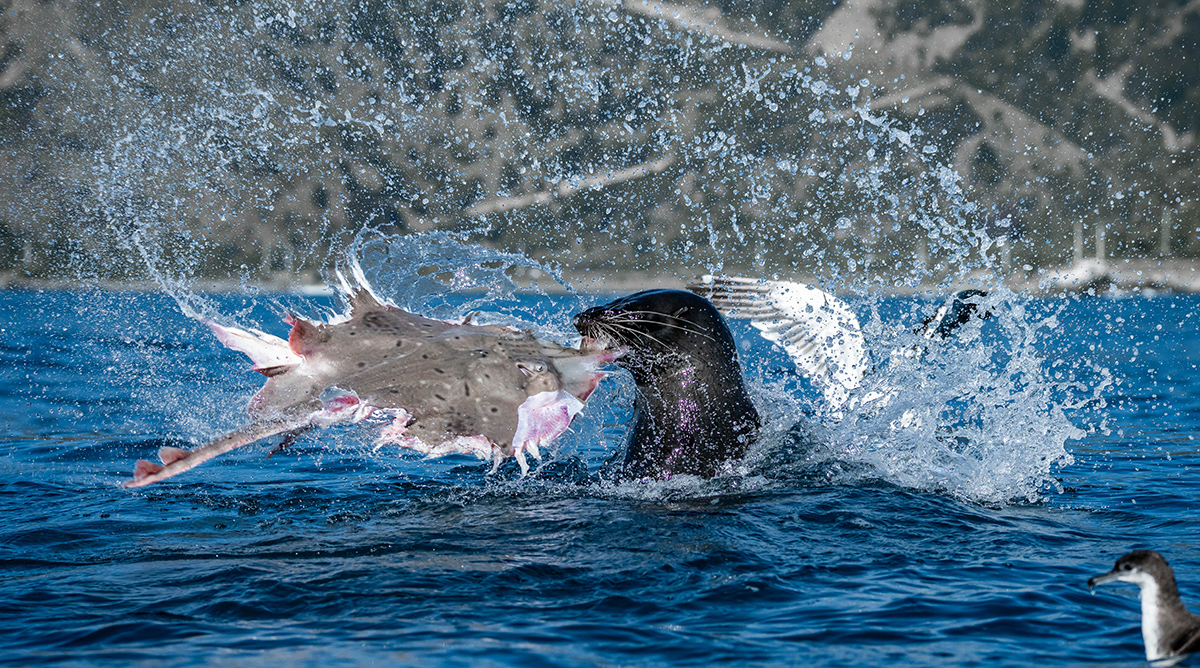
A New Zealand fur seal tears apart a rough skate in the waters of New Zealand, while seabirds gather for the scraps. Unable to swallow such large prey whole, the seal throws the skate repeatedly to break it into smaller pieces. Photographed from a kayak, this scene reveals the feeding strategy of a powerful predator and the chain of life that follows every meal. - Photo Credit: Allan Cronin / Ocean Photographer of the Year
Picture researcher across BBC Science Focus, BBC Countryfile and BBC Wildlife
Lily is the picture researcher across BBC Science Focus, BBC Countryfile and BBC Wildlife. She holds a degree in Photojournalism, where she specialised in social documentary reportage. Her photographic work has been shortlisted for the BarTur Photo Award’s Unity in Diversity category and exhibited internationally as part of the Urban Photo Awards. Before joining the team, she worked on freelance projects and as a product specialist for leading camera brands.