
In marine conservation, some animals tend to garner more attention than others. It’s not hard to see why large, charismatic creatures, such as sharks and whales, or magnificent corals (which are also animals) often hog the limelight.
Mussels, oysters and limpets may not seem as exciting as an acrobatic dolphin, but these underdogs are hugely important for both the environment and for humans.
A new study in Frontiers in Marine Science has quantified how valuable well-managed oyster reefs around the world could be. “We estimate that fully restored oyster reefs in the top ten hotspot countries worldwide would yield a GEP of $12 trillion” according to a statement from the study’s author Matteo Convertino, associate professor at Tsinghua University.
They came to this figure by identifying places around the world that are suitable for oyster reefs to thrive and estimating their potential value.
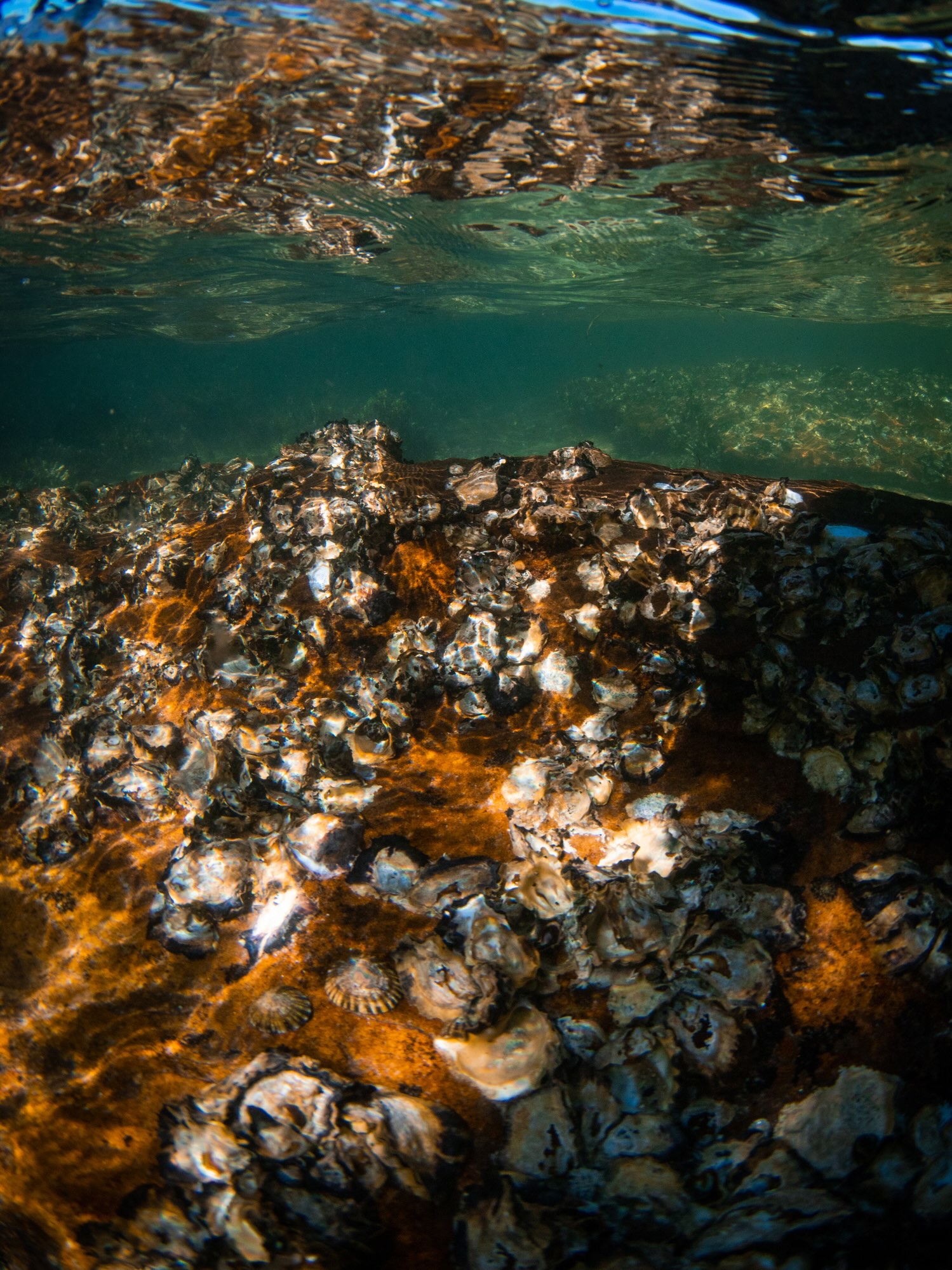
Oysters don’t just provide food for animals and people. These filter feeders also keep the water clean, recycle nutrients, protect the shoreline from erosion and strong storms, provide a home for other marine animals (and their babies) and store huge amounts of carbon.
Ten nations hold the most potential to support reefs, the study says. These are Australia, Argentina, Chile, China, France, Germany, Italy, Japan, South Korea and the USA.
These countries have around 295,000 square kilometres (113,900 square miles) that could support oysters, only 10% of which currently have these reefs. This means there’s a lot of opportunity for oyster reefs to spread, the study authors say.
“Some countries may see an expansion of reefs due to more favourable conditions for the growth and dispersal of oysters: in particular this could happen in Australia, Indonesia, South Korea, Japan and France,” explains Convertino.
- Colossal squid filmed alive in deep ocean for the first time ever
- Explosive power of great white shark revealed in staggering slow-motion video
If global oyster reefs were supported in reaching their full potential through protection and restoration, they could be worth $12 trillion, the study says. That’s more than 10 times as much as Elon Musk was worth when SpaceX was listed on the stock market and he became the world’s first trillionaire, with a net worth of around $1.11 trillion.
Whether these estimates become reality will depend on how reefs fare in the face of threats such as climate change, habitat degradation and pollution. 85 per cent of the world’s oyster reefs have been lost in the last 150 years and less than a quarter (23%) of the areas that could support these habitats are protected.
“We estimated that 90% of sites suitable for oyster reefs require restoration, while 80% need protection through conservation efforts,” says Convertino. “In other words, the current oyster situation is very suboptimal but there is a huge opportunity, considering the benefits.”
Unfortunately, without serious efforts to protect and restore oyster reefs, these habitats may not reach their potential. Convertino adds: “Because global warming generally decreases the habitat quality of oyster reefs, we expect that their global GEP [gross ecosystem product] will go down from the current potential value of $12 trillion.”
More wildlife stories from around the world
- Diver finds turtle face down in a sea sponge. You won’t believe what it’s doing
- NASA officials sent over 2,000 baby jellyfish into space. Tens of thousands more came back to Earth
- Giant squid detected in deep-sea canyon off coast of Australia
- Deep-sea scientists discover 57 new species in a canyon nearly twice as deep as the Grand Canyon
Top image: Oysters. Credit: Philip Thurston/Getty Images


