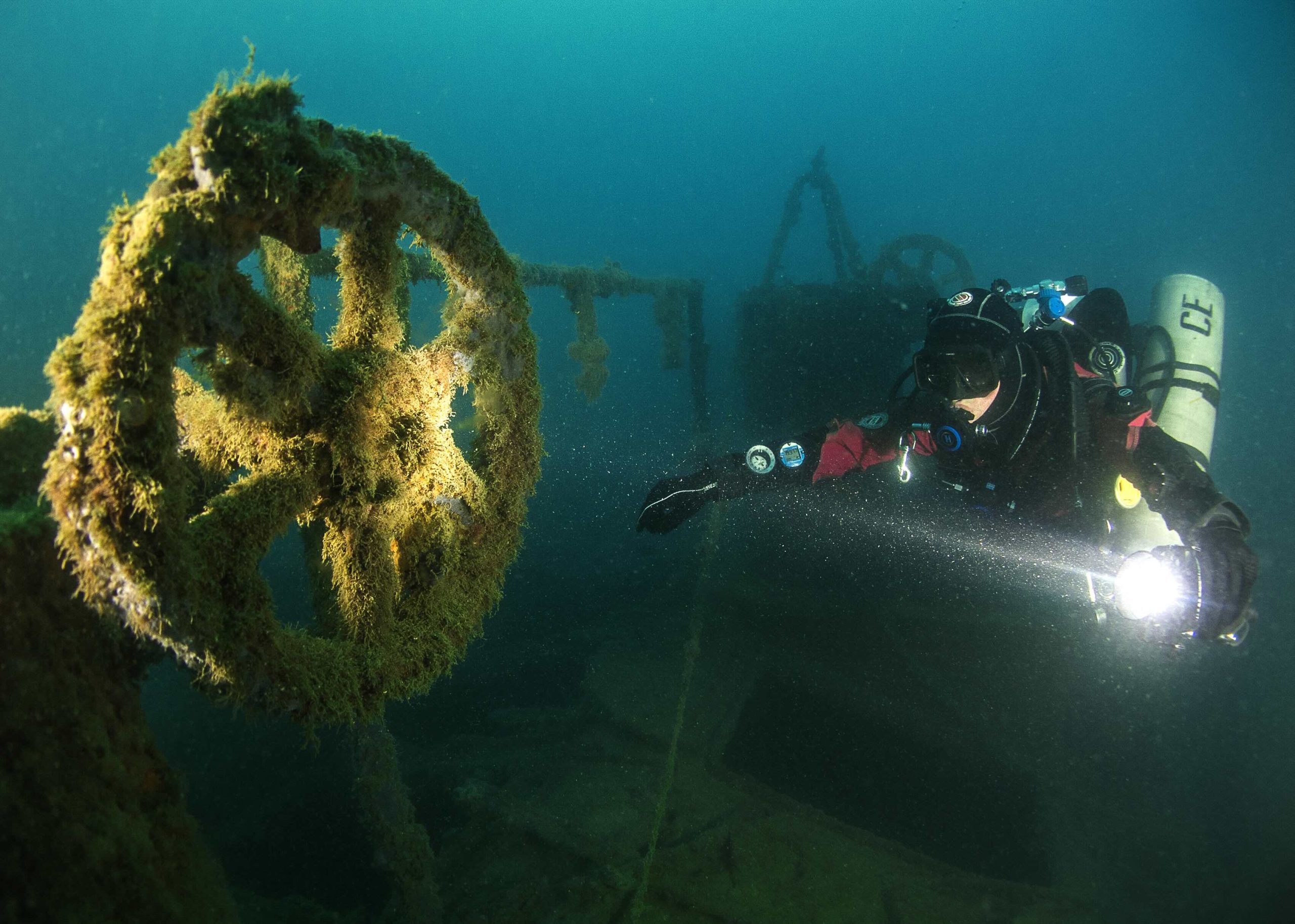
Eighty-five years ago, a World War II hospital ship called Po sank off the Albanian coast. Now, its rusting remains have transformed into an artificial reef, teeming with creatures ranging from sponges and sea squirts to lionfish, squid and one of the Mediterranean’s rarest mammals.
On 14 March 1941, a British bomber torpedoed the Po in the Bay of Vlora, killing 23 people. The 135m-long ship came to rest on the seabed, about a mile offshore and 35m below the surface, where it remained largely undisturbed until divers located it in 2005. Since then, it has become a draw for archaeological tourism – and a subject of scientific study.
Italian researchers wanted to find out how the hull had shaped the local marine ecosystem. So, between 2022 and 2024, they made 32 dives and used high-resolution sonar surveys and 3D photography to document the wreck and its environment.
The findings, published in Frontiers in Ocean Sustainability, revealed a diverse range of life, incorporating 151 species.
- This giant ship sank off the Egyptian coast in 1941. Now an animal that looks like a crocodile hides in its shadows
- This haunting shipwreck in North Carolina has its own 'shark ballroom'
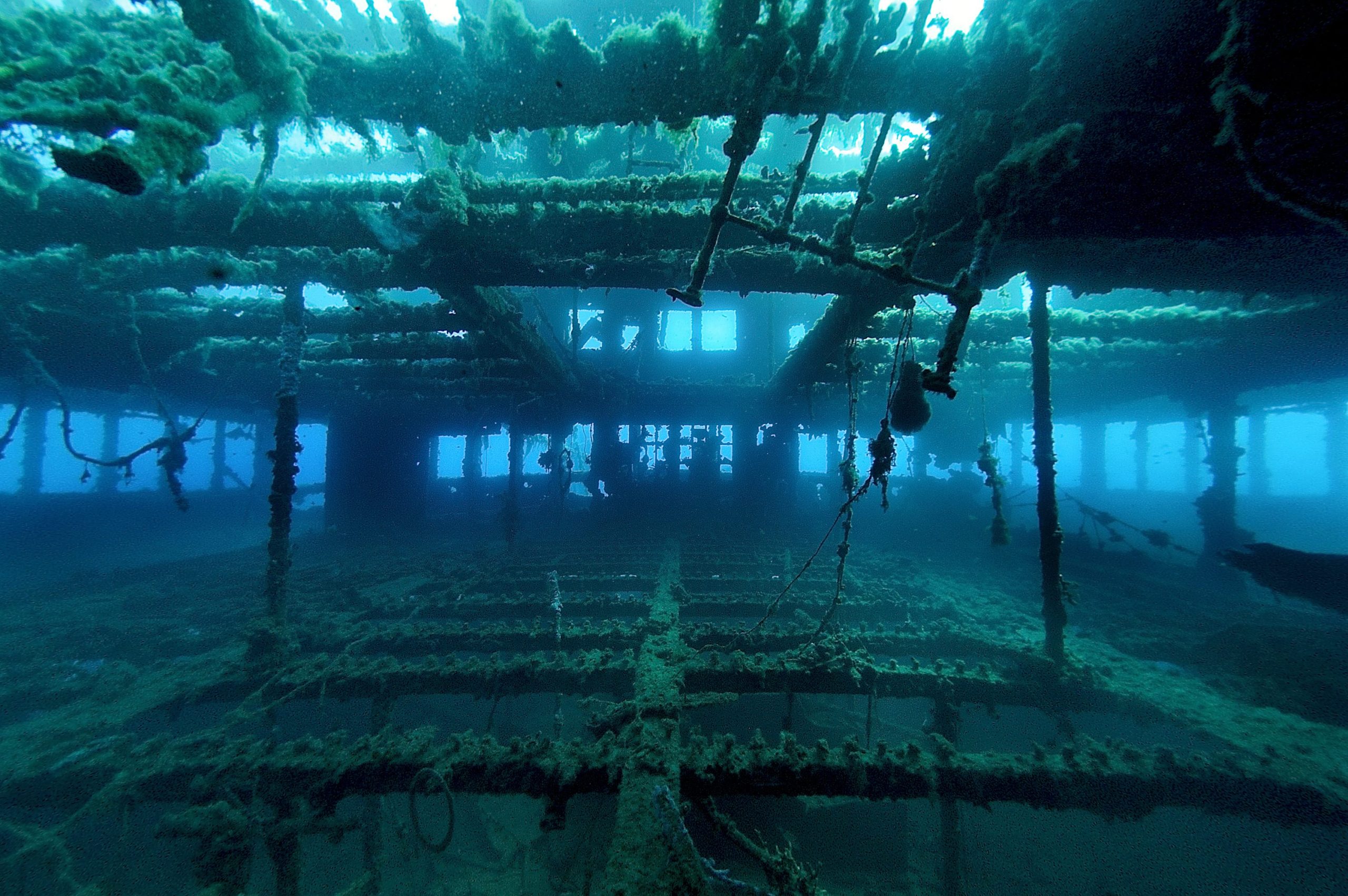
More than 80 per cent of the ship’s surface has been colonised by sponges, sea squirts, mussels, oysters and other invertebrates. “The metal sheets provide a hard substrate for marine life to grow on and shelter for larger animals too,” says Simone Modugno from the Italian environmental research institute IRSSAT.
Dozens of familiar Mediterranean fish species were spotted, including groupers, sea bream, mullet and wrasse. Clusters of squid eggs were found attached to the wreck, providing evidence that it is being used as a nursery.
Flamboyant lionfish were also recorded. More usually found in the Red Sea, the species is expanding northwards through the Mediterranean, suggesting that the shipwreck could be assisting them by acting like a stepping stone.
There were mammals too. A few years earlier, Modugno had photographed a Mediterranean monk seal in the area. Then, in 2023, another was seen near the Po – the first confirmed sighting in Vlora Bay since 1996. It’s thought the critically endangered seal may be using the wreck as a temporary resting or feeding site.
The Po lies within the Karaburun-Sazan Marine Protected Area. Modugno, who is creating a 3D model of the wreck that can be explored in virtual reality, hopes the wider project will help to inform conservation, showcase the wreck’s history and make it accessible to more people. “These projects are essential for promoting tourism and the enjoyment of underwater nature,” he says.
Find out more about the study.
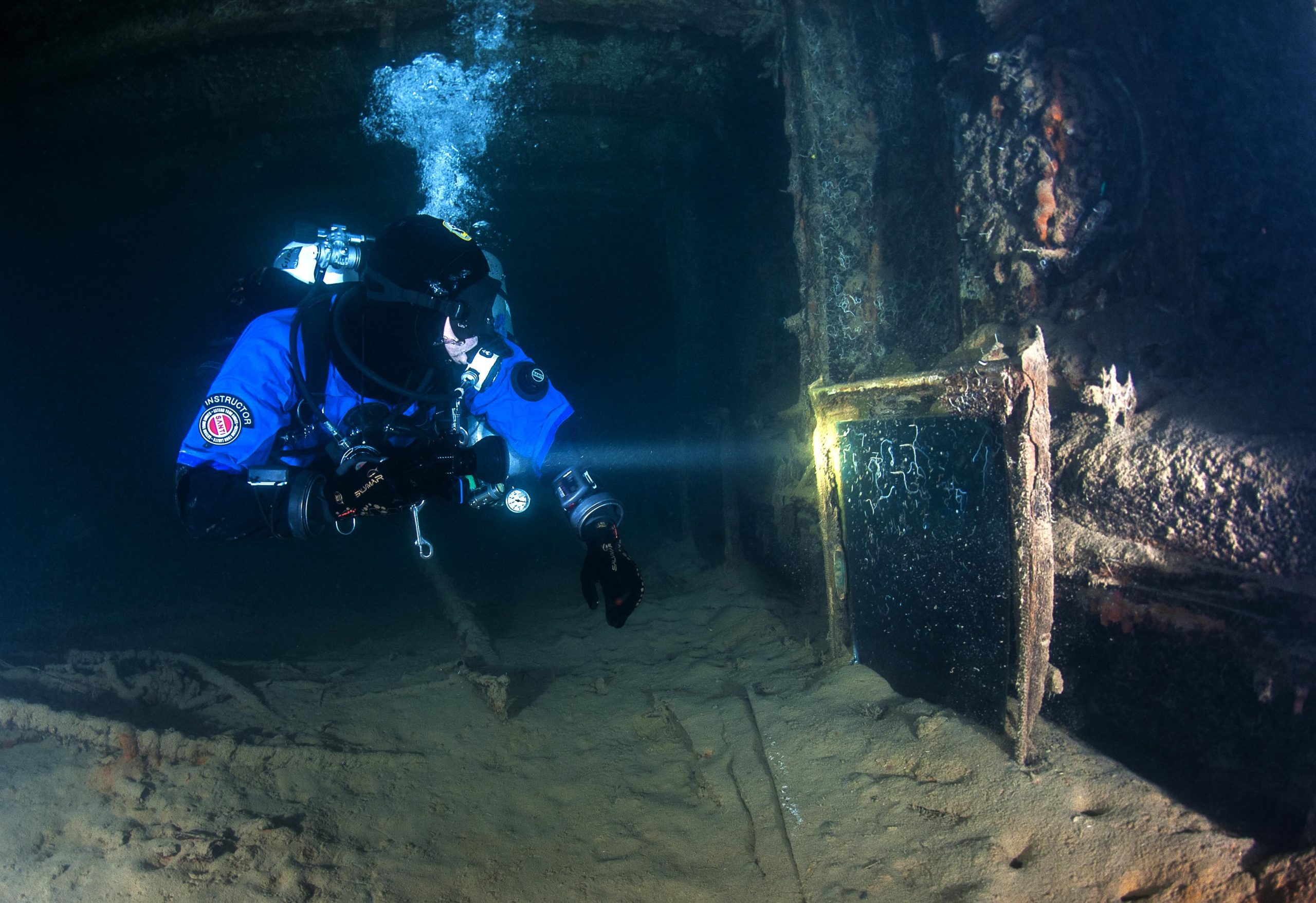
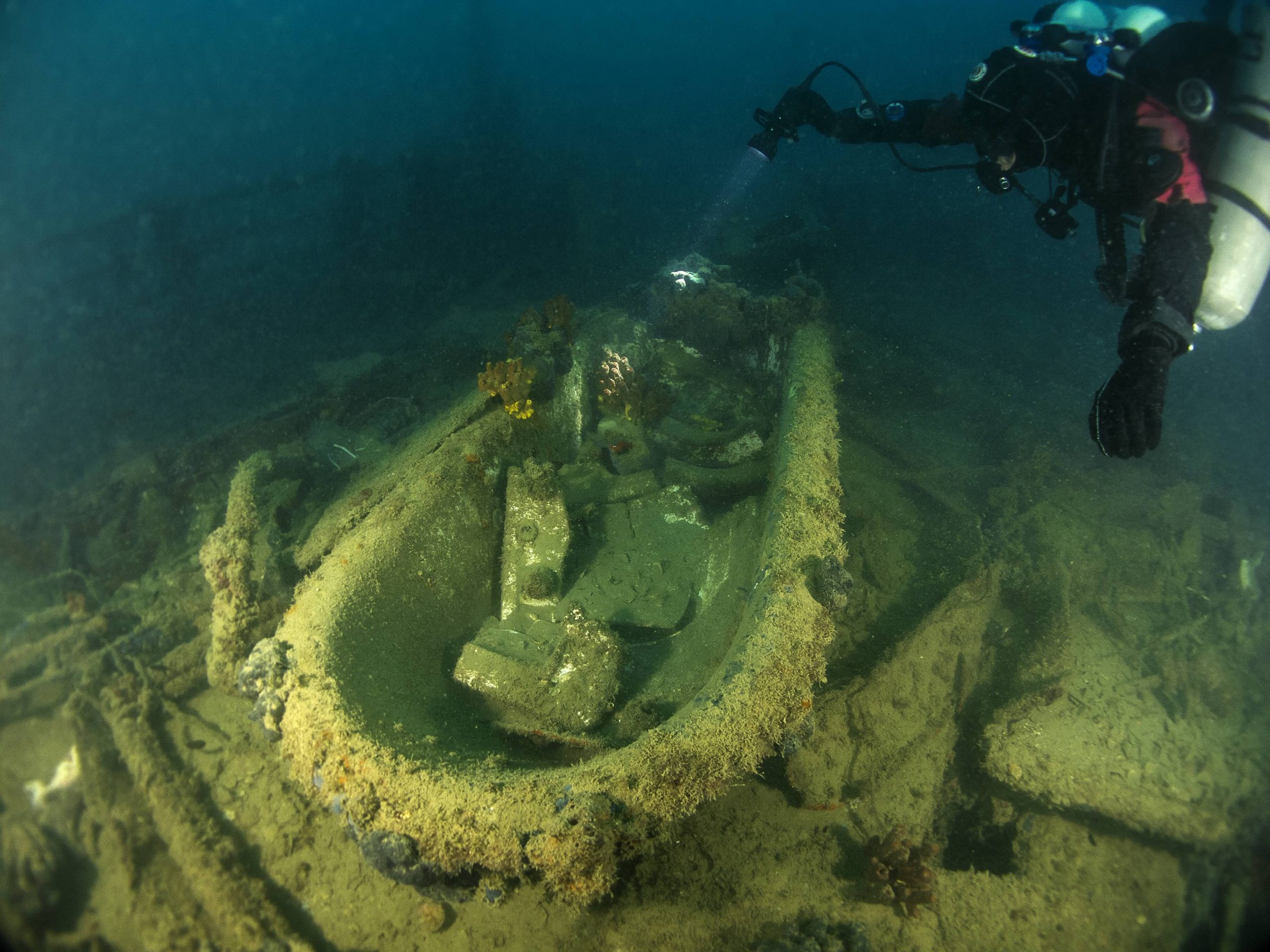
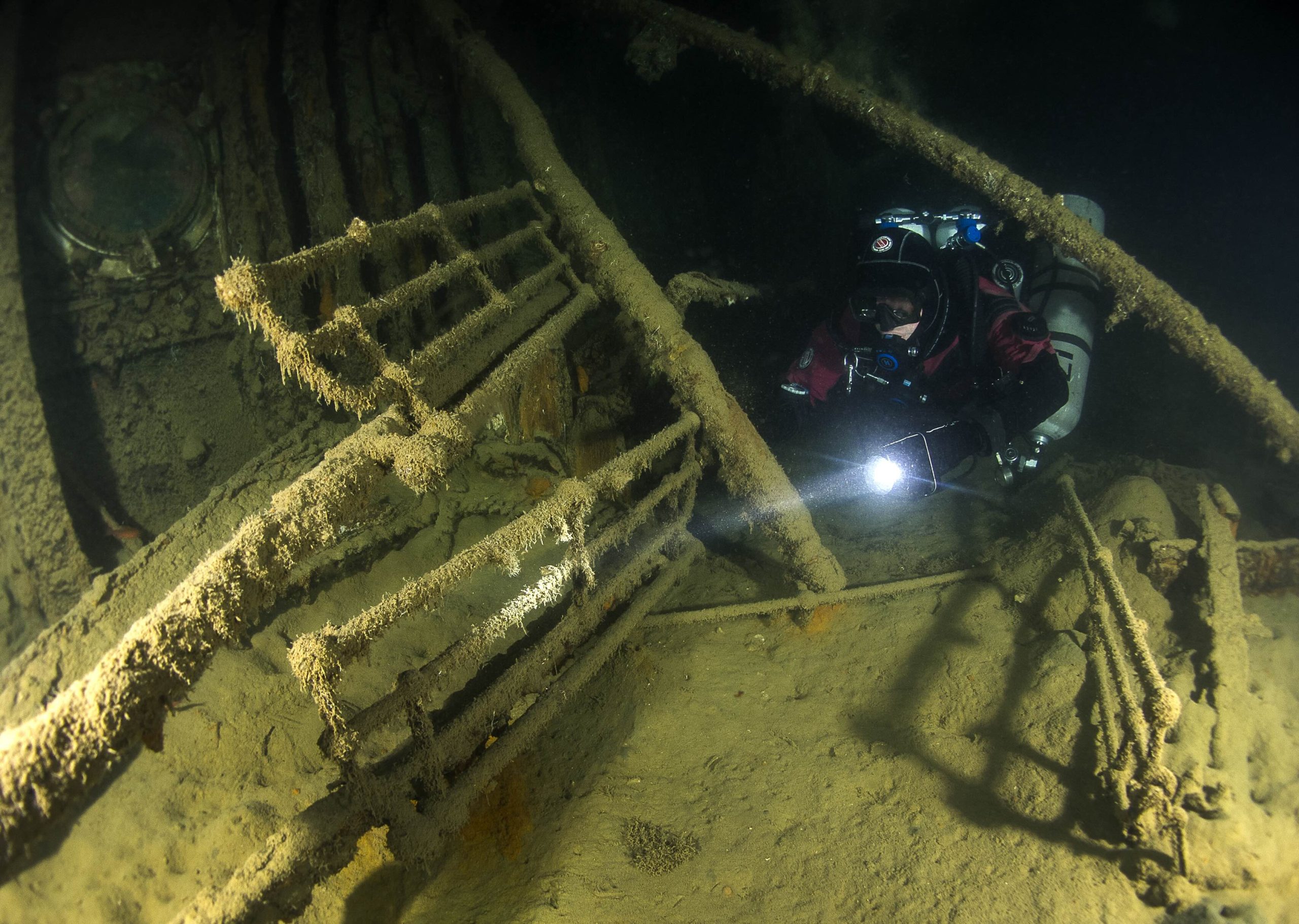
In pictures: exploring the Po wreck
More amazing wildlife stories from around the world
- Scientists tagged 6 narwhals and followed them 1,500m into the deep – to places humans can’t go
- It looks like spaghetti, doesn’t have a gut or mouth – and has been feeding on bioplastics for millions of years
- 80 years ago, a cargo ship sank to the bottom of the Mediterranean Sea. Then something staggering happened
- When this WWII seaplane was discovered by a fisherman in 1994, dazzling animals were found hiding in the wreck
Top image credit: Mauro Pazzi