
Scientists in Costa Rica were astounded when an olive ridley sea turtle came onto land to nest, carrying a hitchhiker with it. A remora had stuck fast onto the turtle’s shell and survived for nearly 20 minutes out of the water.
The rarely seen behaviour has been described in a new study in Frontiers in Marine Science.
Also known as suckerfish, remoras are the hitchhikers of the sea. They save energy by catching a free ride, attaching themselves to larger animals, including turtles, rays, sharks and whales using a suction disk on the top of their heads. They’ve even been known to stick onto scuba divers’ tanks.
Researchers were monitoring nesting turtles in Pejeperro beach, Costa Rica, in September 2025 when they realised a female had left the water with a hanger-on gripping onto her shell. Although the turtle had left the water, the suckerfish was still holding on tight.
“My coworkers and I were certainly surprised and slightly bewildered that [the remora] was still attached and breathing,” says the study’s author Megan Bullock of the University of West Florida and the conservation project Comunidad Protectora de Tortugas de Osa (COPROT).
The suckerfish was glued onto the turtle’s shell and out of the water for a staggering 19 minutes. According to the study, “during the 19 minutes of observation, the remora remained relatively still except for periodically flexing its opercula” (gill coverings).
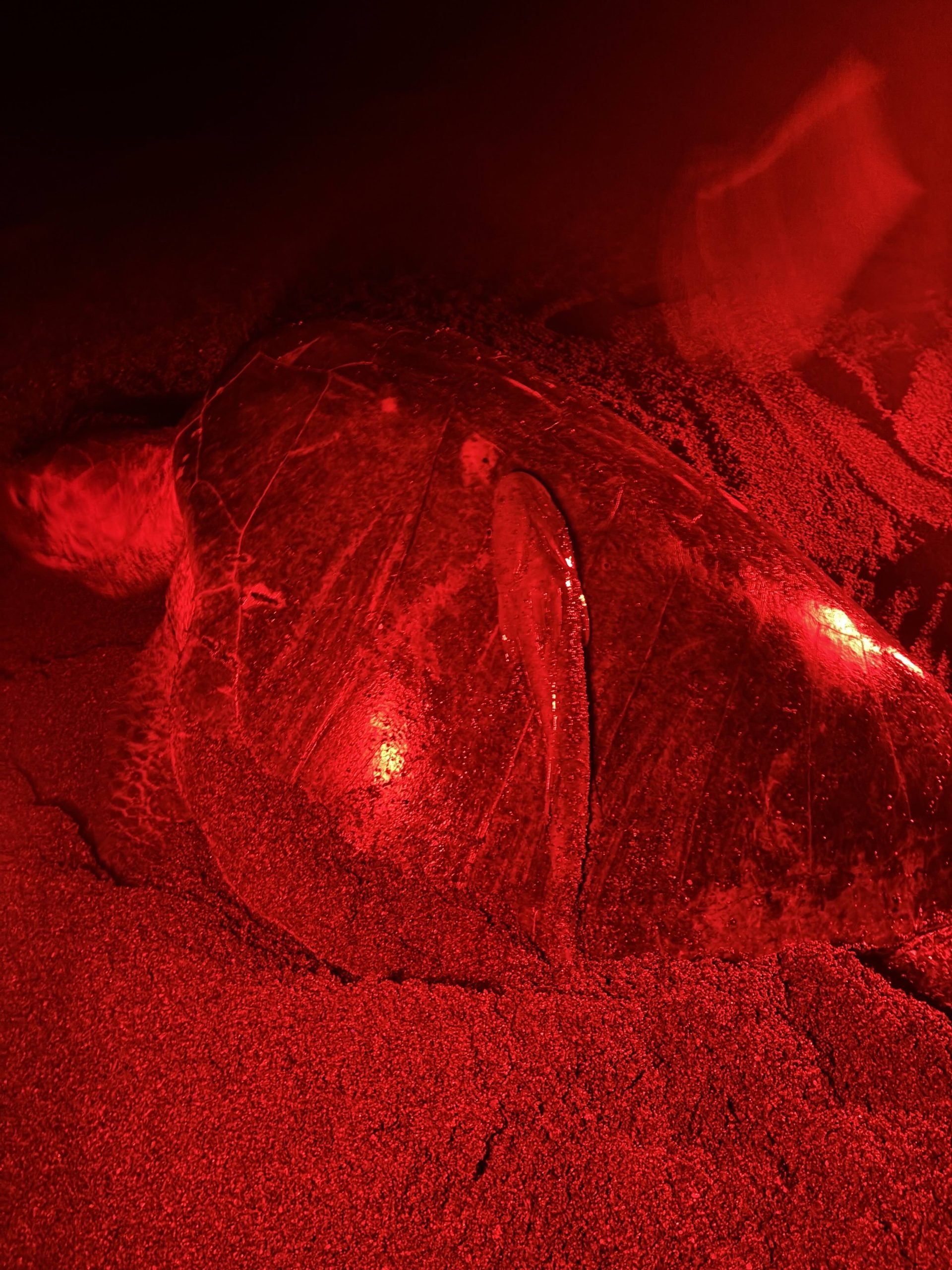
When the researchers needed to measure the turtle’s carapace (shell), they removed the fish and plopped it back in the water. “The remora began to writhe and quickly moved away from the researcher once it was returned to the ocean,” write the authors in the study, “indicating that it was still alive despite being removed from the water for an extensive period.”
Surviving for so long out of the water is no mean feat. “19 minutes is certainly a long time for most fish to be out of the water so I was definitely surprised,” says Bullock, who collaborated with COPROT’s Vicente Peña Eisele and the University of Miami’s Emily Yeager on the study.
“Until I connected with Emily and began researching this topic, I’d never heard of remoras leaving the water with their host, much less seemingly by its own choice,” says Bullock.
I’d never heard of remoras leaving the water with their host, much less seemingly by its own choice.
And not only did the remora survive but it was still seemingly full of beans after almost 20 minutes on land. “I was even more so surprised that the remora was still so energetic when we removed it from the turtle,” she says. “It thrashed a lot for an animal that hadn't been in the water for so long.”
Although remoras are commonly seen stuck onto turtles’ shells in the water, the researchers think it’s rare for them to leave the sea with their hosts. “The lack of accounts of remoras exiting the water with them, despite the hundreds of thousands of sea turtles that nest each year, makes it quite unusual,” says Bullock.
And it’s not just because she hasn’t seen it personally – in her research, she’s only come across a handful of scientific papers describing something similar, and none of her colleagues on the turtle nesting project had ever seen anything like this. “You get to hear about a lot of the strange things that your coworkers encounter,” she says, “and yet this was something I’d never even heard rumours of.”
How did the fish survive above the waves for so long? “We’re honestly not too sure,” says Bullock. “Like most fish, remoras need flowing water over their gills and will suffocate without it over time.”
She wonders whether the suckerfish are better able to survive without oxygen than other species and hopes further research might help to answer this question.
Getting to the bottom of the mysterious relationship between remoras and their hosts helps marine researchers better understand the complex lives of these animals and how different species interact with each other, says Bullock: “This, in turn, can help us better protect them.”
Top image credit: Olive ridley sea turtle with remora clinging to shell
More wildlife stories from around the world
- Epic footage shows the "largest great hammerhead ever filmed in the Bahamas"
- When marine scientists found a plastic bottle floating in the ocean, they were shocked to see this large creature living inside, unable to escape…
- Researchers tag 42 sleeping giants in Arctic Circle – and make breathtaking discovery
- Massive iceberg hits Antarctic island. Here's what happened to the penguins that live there


