Spain’s coastal caves could offer a lifeline to coral threatened by climate change. Corals growing inside the submarine structures fare better than those living outside them, a study in Frontiers in Marine Science has found. But the benefits could be short-lived if the caves aren’t properly protected.
Ocean warming and increasingly frequent marine heatwaves threaten many marine species. Long-lived, slow-growing organisms, such as coral, are particularly vulnerable, but pockets of sanctuary – known as ‘climate refugia’ – do exist.
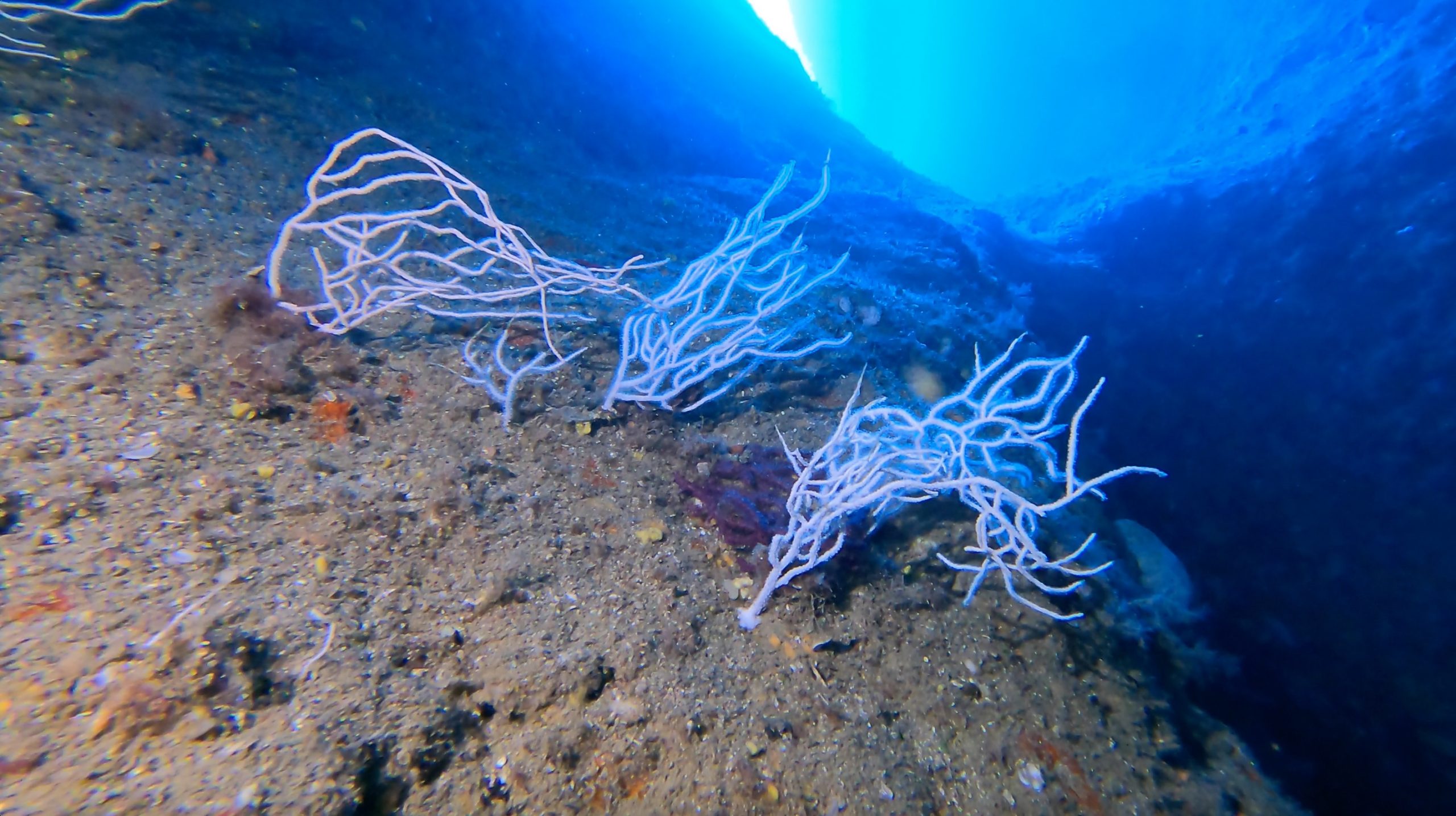
With their darker, cooler waters, underwater caves could offer respite for coral. To find out how much protection they offer, researchers studied white gorgonian coral (Eunicella singularis) growing in and around the Cova de la Vaca, a tunnel-like cave in the Medes Islands, in Spain’s Costa Brava.
Julia Sarda and colleagues dived down to the cave, 20 metres below the surface, where they took measurements and collected samples from colonies growing inside and outside it.
Outside the cave, corals faced brighter light and slightly warmer water. Mortality was high, with 61% of colonies dead, and reproduction was reduced. Inside, mortality was 17 times lower, reproductive output was higher and the coral showed signs of adapting to the cave’s dim light, including changes in chlorophyll content and the balance of photosynthetic pigments.
“We have seen that conditions inside the cave can provide some protection for corals against the effects of warming and marine heatwaves,” says Sarda, from the University of Barcelona.
- Galápagos deep-sea corals vanished for more than 1,000 years. Scientists think they know why
- Scientists record world's longest underwater timelapse. What is reveals is astonishing
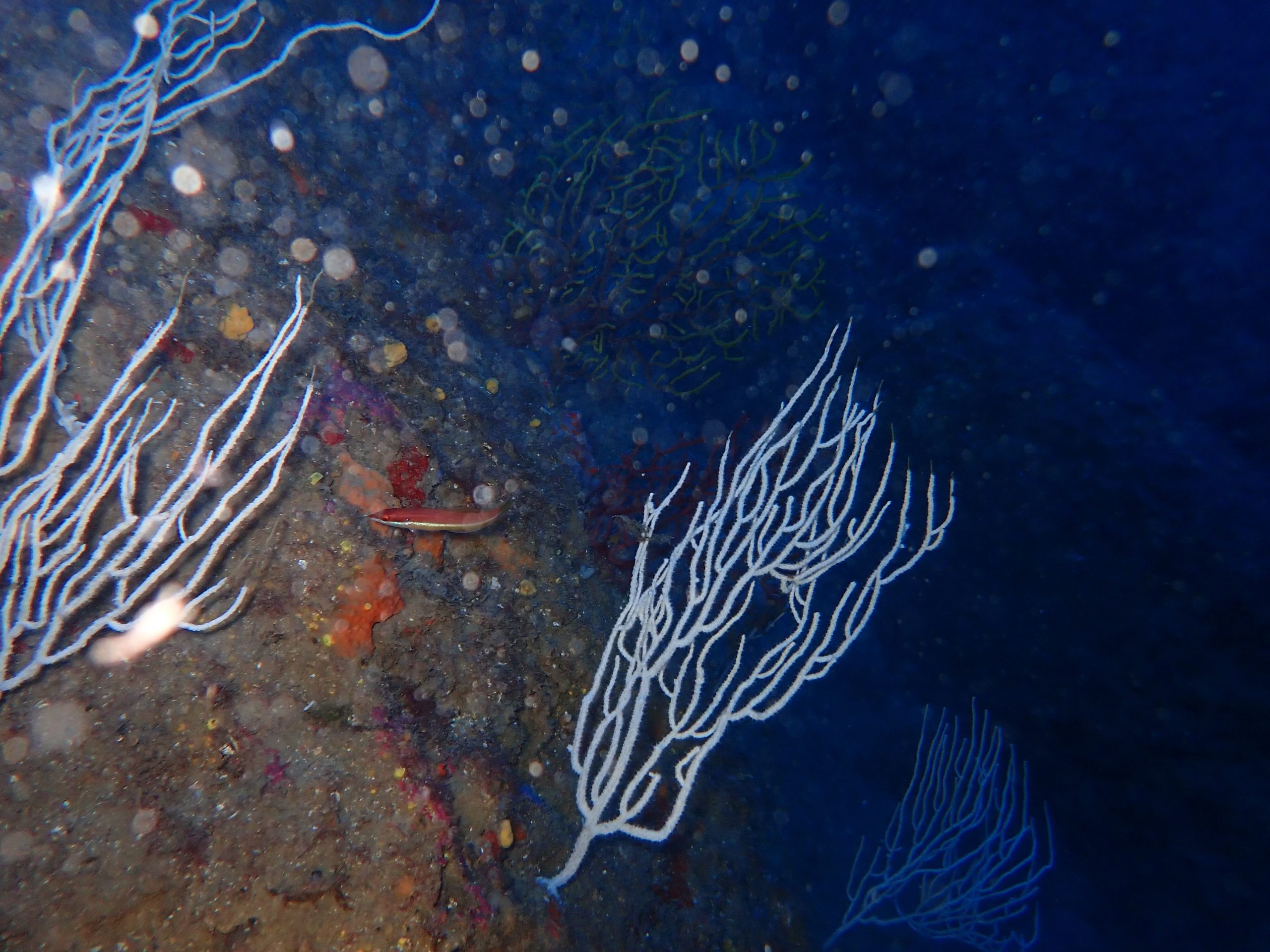
The Mediterranean is one of the fastest-warming regions on the planet, with sea surface temperatures rising more than three times the global average over the last 40 years. White gorgonian coral, a soft-bodied species found in the Mediterranean, Adriatic and Ionian Seas, was thought to be relatively hardy because it has two ways of feeding. It gets energy from photosynthetic algae living in its tissues and uses its tentacles to capture passing plankton. But recent mass-mortality events have deeply impacted white gorgonian populations, highlighting its vulnerability to warming seas.
Submarine caves are found throughout the Mediterranean. Now, Sarda and her team say semi-dark, tunnel-like caves, such as the Cova de la Vaca, should be prioritised for conservation. The caves are popular with recreational divers, so one measure will be to regulate their numbers. Climate change, however, provides a bigger threat.
“If temperatures continue to increase, there will probably be a point at which even this protection will no longer be sufficient,” says Sarda. “This makes it particularly important to protect these habitats and reduce the pressures contributing to global change.”
More amazing wildlife stories from around the world
- Huge concrete-like cubes were submerged off the coast of Britain. One year later, they’re teeming with creatures
- Camera traps film predators descending on cave filled with 40,000 bats. What happens next is staggering
- "We found 20 pairs of wings in an hour.” Secret cameras reveal cause of Jamaica's dismembered bats
- Researchers dropped a baited camera into the Pacific Ocean, then this secretive creature came to investigate
Top image: Cova de la Vaca cave. Credit: UndResCoral