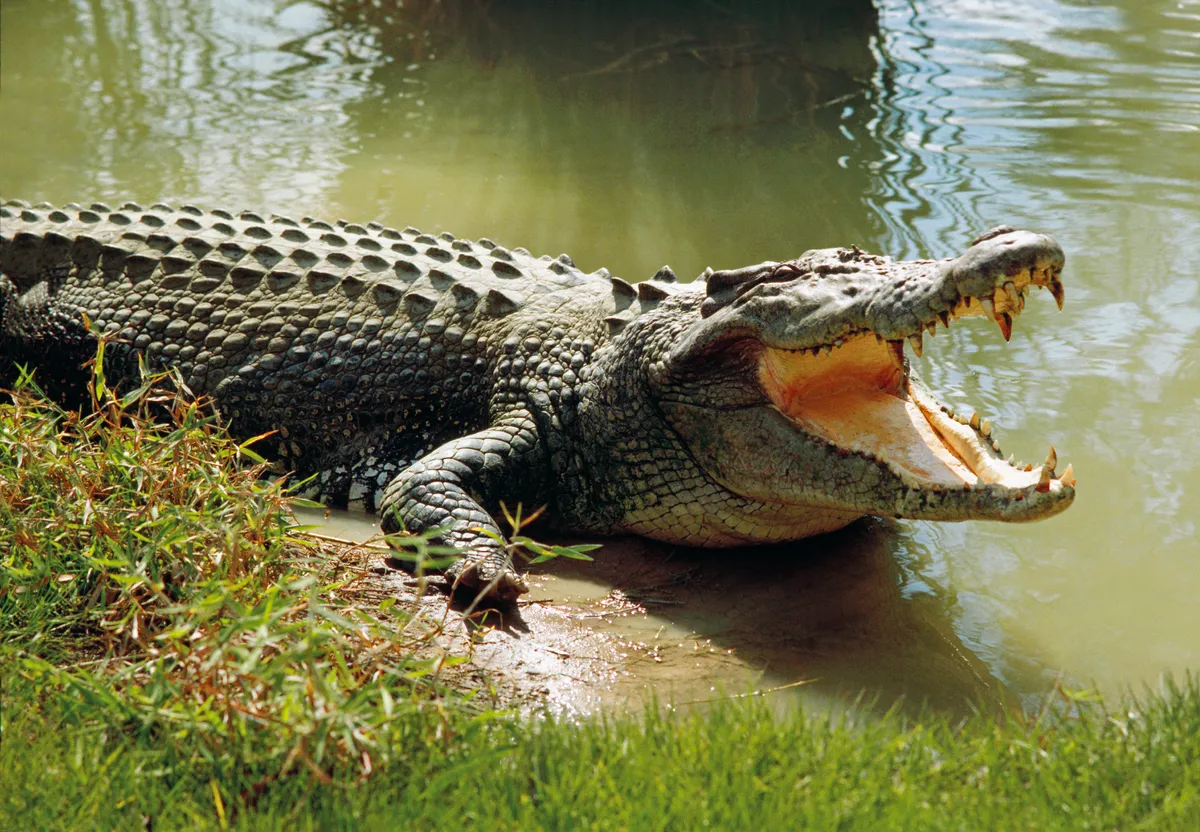
Elton John wasn’t thinking of reptilian digestive strategies when he wrote Crocodile Rock but as it turns out, crocodilians do indeed have an affinity for stones.
Alligators, crocodiles, caimans and gharials ingest small rocks to aid with digestion. These pebbles, called gastroliths, remain in their first stomach.
- Staggering crocodile photos reveal just how ferocious these apex predators can be
- What's the smallest crocodile?
They help grind food material, a function retained by some species of bird, their closest living relatives.
Crocodilians don’t chew their food, so these stones serve the same function as molars in other animals. Once macerated by the contractions of the gizzard and the rocks rattling around inside, the food then passes on to a second stomach for further digestion.
The stones appear to serve another purpose. A 2019 study of American alligators found that ingestion of stones amounting to 2.5 per cent of their body weight helped increase their dive times by more than 88 per cent.
The stones helped the animals to remain submerged, while keeping air in their lungs, in the same way that human divers use weighted belts to stay underwater.