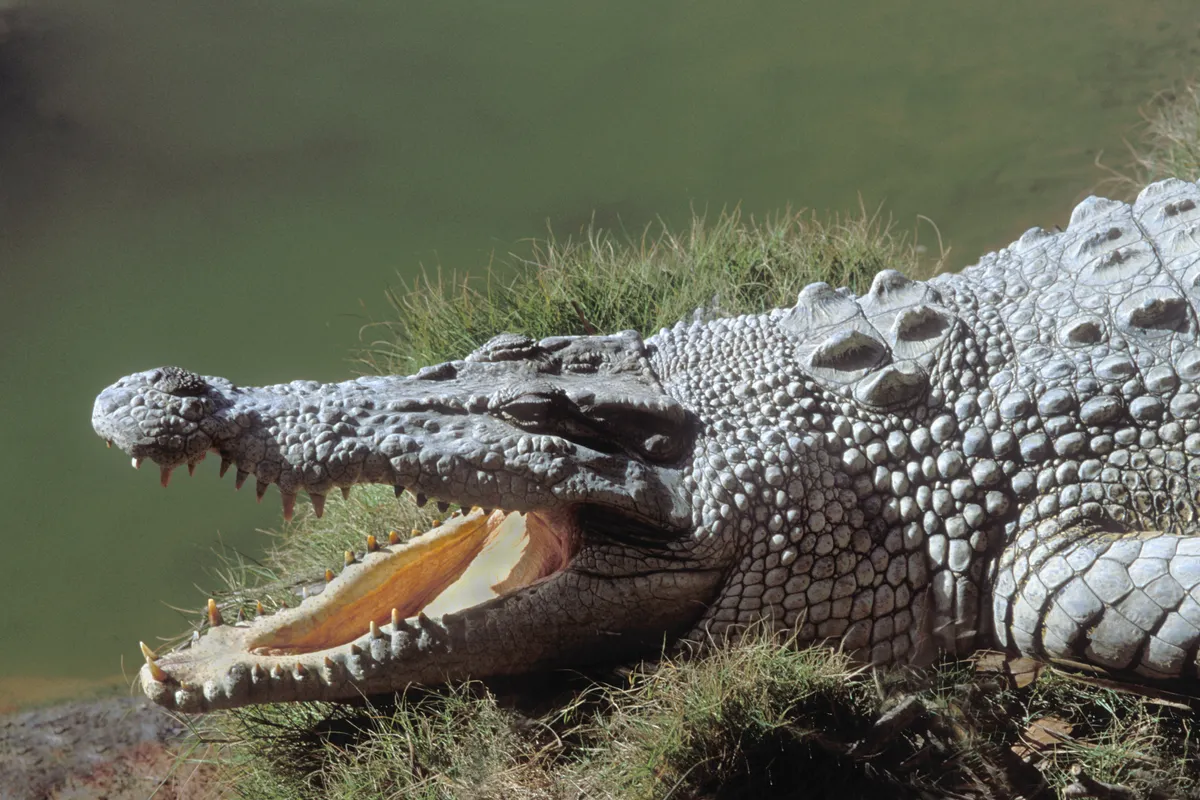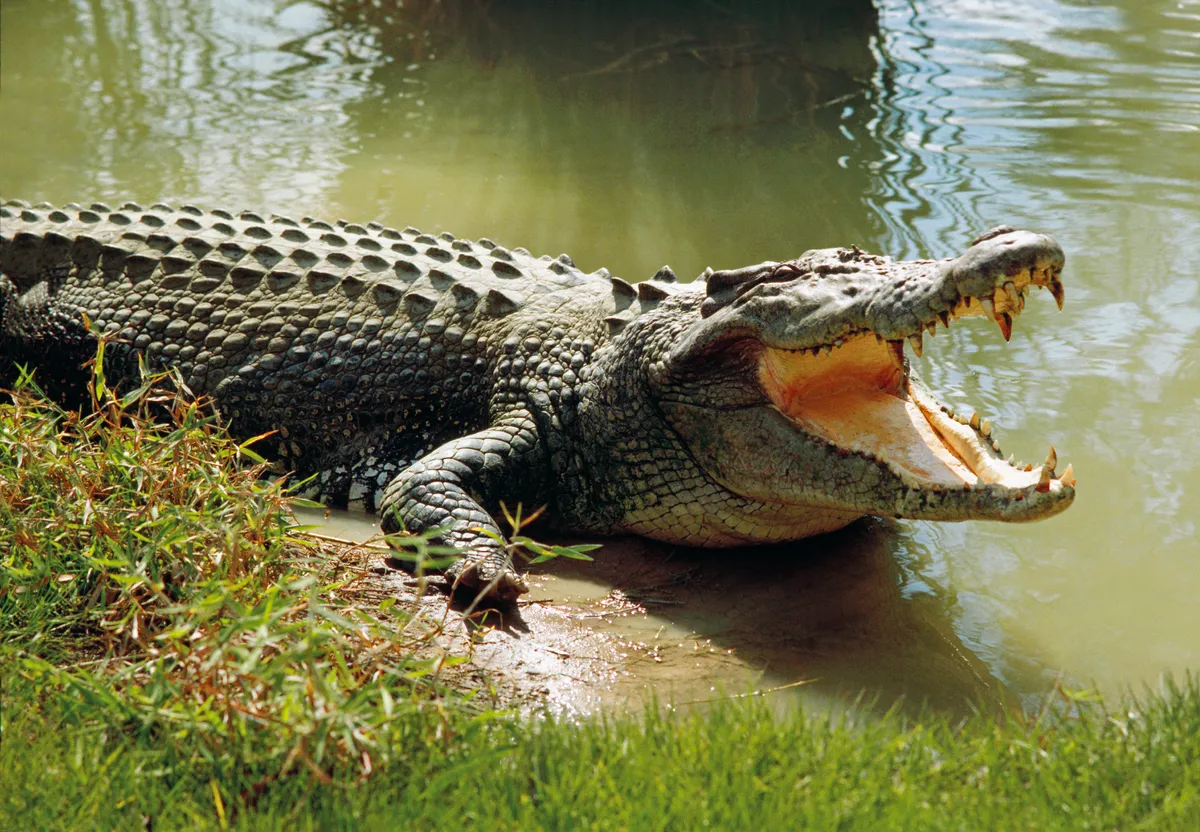
I believe it was the renowned biologist, Charles Darwin who once said, “Never smile at a crocodile. Never tip your hat and stop to talk a while. Don’t be taken in by his welcome grin. He’s imagining how well you’d fit within his skin.”
How do crocodiles run on land?
This, it turns out, is a pretty good summary of modern research into crocodile locomotion. Modern crocodilians, which include crocodiles, alligators and caimans, have a variety of ways to move on land, such as walking, trotting, running, galloping and bounding.
- Staggering crocodile photos reveal just how ferocious these apex predators can be
- Watch slow-motion BBC footage of how alligators use the gruesome ‘death roll’ to kill their prey
Each comes with its own biomechanically distinct pattern of limb movement, and generally speaking, bigger-bodied crocodilians are less athletic than smaller ones.
How fast are crocodiles
The fastest gait is a “belly run”, where the body stays low and horizontal, and moves in a snake-like fashion. Limbs are extended sideways to push against the ground, while the tail whips to and fro. When it runs in this way, Australian freshwater crocodiles can reach speeds of up to 11 miles per hour. This pattern of movement is good for lunging at prey or escaping threats, but it’s energy intensive and can’t be sustained over long time periods or distances. A typical belly run lasts just a few seconds over distances of up to 20 metres.
- Crocodile vs alligator: what's the difference between these two fearsome predators?
- Could you have outrun tyrannosaurus rex?
Can a human outrun a crocodile
At the height of his athletics career, Jamaican sprinter Usain Bolt reached speeds of up to 27.5 miles per hour. The average running speed for a healthy adult is 12 to 15 miles per hour over short distances, but don’t think about getting into the starting blocks next to a crocodile just yet.
Think about the distance between you and the croc when the race begins. Even elite human sprinters take around five to seven seconds to reach their maximum running speed. Crocs, on the other hand, achieve theirs almost instantly. They’ve also got more than 60 sharp, pointy teeth, which are used for gripping and swallowing prey, and have evolved a serious taste for living flesh. So, as Darwin once said, “never run, walk away, say good-night, not good-day, clear the aisle but never smile at Mister Crocodile.”