
While pythons and vipers are both elite predators at the top of their game, they have evolved completely opposing evolutionary toolkits to survive, hunt and reproduce, in their respective habitats across the globe.
Pythons are a family of non-venomous snakes – its members are among the largest snakes in the world. There are currently around 39 recognised species of python, including the reticulated python and the green tree python (one of the most beautiful snake species in the world).
There are between 300 and 400 recognised species of vipers in the world, with new varieties continually discovered and named. Pit vipers comprise the largest group, with over 150 species.
- 8 animals that can kill the enormous, deadly reticulated python
- 7 animals brave enough to take on – and kill – the deadly king cobra
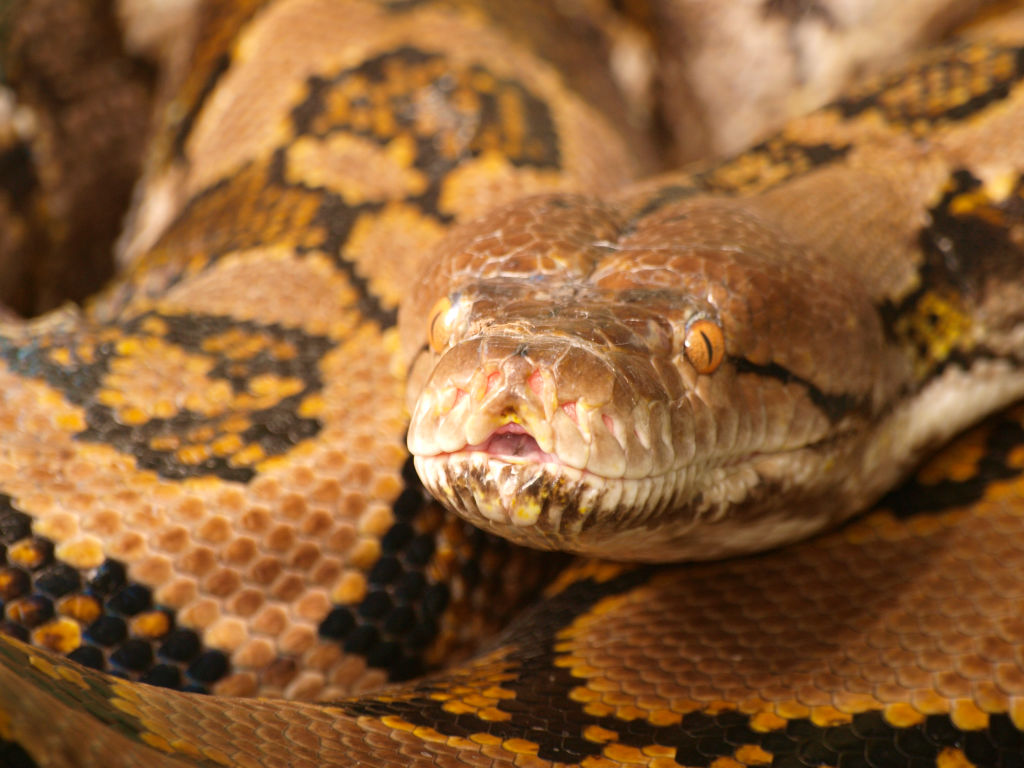
Differences between pythons and vipers
Hunting techniques
Pythons are non-venomous, and rely on their abilities to constrict their prey to induce cardiac arrest, which then allows them to consume their prey. Vipers, meanwhile, attack their prey using their long, hollow fangs, which inject venom from glands located at the back of the upper jaws.
Appearance
Pythons are significantly bigger than vipers, both in terms of length and weight. They have long, powerful bodies. They are among the largest snakes on Earth, whereas vipers are comparatively stout in stature, with a more distinct narrow neck and a wide, triangular head.
Location
The two snake families have different native ranges too. Pythons are found in Africa, Asia and Australia, while vipers exist in most parts of the world: across the Americas, Africa, Eurasia and South Asia, although they don’t exist in Australia or Antarctica.
Reproduction
The two families of snake even reproduce differently. Pythons lay eggs and incubate them, while most vipers give birth to live young – although there are a few primitive viper species which are known to lay eggs.
- 9 weirdest snakes on the planet, from one that can fly to one that looks like a spider. There's even a spiky species that looks more like a dragon...
- Saw-scaled viper: Inconspicuous, quick to anger and armed with potent venom
Top image: a fer-de-lance (Bothrops asper) in Costa Rica. The fer-de-lance is a large, highly venomous pit viper found in a range of habitats, from lowland rainforests to agricultural areas and is known for its aggressive defensive behavior when disturbed. (Photo by Ronen Tivony/NurPhoto via Getty Images)


