
A new species of snake has been discovered in the dense tropical forests of New Guinea.
Slash’s groundsnake (Lielaphis slashi) is reddish-brown in colour and measures 71cm long (28 inches). Researchers found it on the island of New Guinea, which is just north of Australia and divided between the countries Indonesia and Papua New Guinea.
The large tropical island has the third-largest remaining rainforest globally and high biodiversity – containing over five per cent of Earth’s terrestrial animal and plant species.
- Remote camera catches bobcat attacking biggest rattlesnake species on Earth
- “We would find piles of rattlesnakes.” Scientists witness undocumented snake behaviour in Wyoming's mountains
In 2006, Chris Austin, a professor and curator of herpetology at the Louisiana State University Museum of Natural Science, noticed an unfamiliar snake while conducting fieldwork in New Guinea.
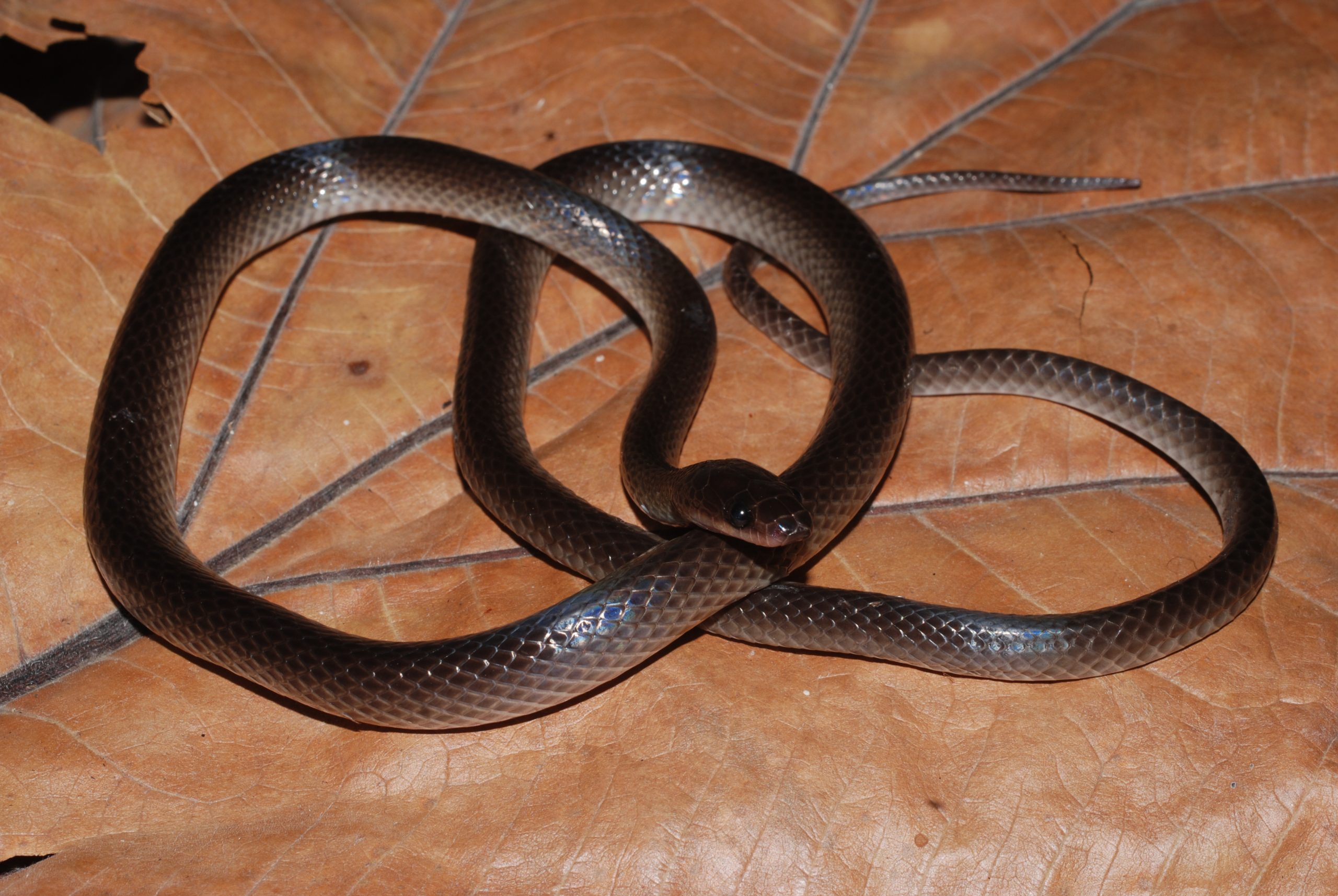
“These New Guinea groundsnakes are nocturnal, so the best way to find them is at night. They’re typically found just after sunset at the base of large trees where they’re looking for something to eat,” says Austin, a co-author of the paper, published in Zootaxa, describing the new species.
“When working at night in New Guinea you need to be very careful as there are several highly venomous species that look very similar to the non-venomous groundsnakes.”
Austin continued to study these snakes, then, in 2016, Sara Ruane, associate curator of herpetology for the Field Museum in Chicago, US, began to collaborate with him.
While they were unsure whether Slash’s groundsnake was a new species based on appearance alone, genetic testing confirmed this was the case.
“L. slashi is genetically distinct from other similar snakes in the same genus,” explains Tianqi Huang, the study’s first author and a post-doctoral researcher at the Field Museum with Ruane.
“The combination of physical characteristics, like differences in numbers of scales when compared with other species, and the genetic evidence led us to realise that it’s an entirely new species. We also used ecological modelling to show that L. slashi’s preferred habitat is different from similar snakes.”
But there’s still a lot to be uncovered about the species. “It’s incredibly hard to observe snakes in the wild before they slither away, so our knowledge about L. slashi is limited,” says Ruane.
“Snakes in this genus often have large teeth in the back of their mouths, which New Guinea groundsnakes may use to grab on to and eat small, slippery-scaled lizards and the eggs of other reptiles; this snake isn’t grasping and squeezing its prey like a boa constrictor,” she continues.
L. slashi doesn’t produce any venom that could seriously harm or kill a human, however.
The species was named after the guitarist in the American rock band Guns N’ Roses, whose stage name is Slash. And it turns out he’s a fan of snakes.
“As a long time herpephile, I am extremely honoured and humbled to have Lielaphis slashi from New Guinea named after me. It is really exciting, I never would have imagined this moment would arrive,” he says.
Ruane named the species in honour of the legendary musician after she remembered seeing him on the cover of an issue of Reptiles Magazine, which she received when she was younger.
Top image: Chris Austin with colleagues Jim Anamiato (standing) and Ilaiah Bigilale from the Papua New Guinea National Museum and Art Gallery, Sandaun Province, Papua New Guinea in 2026. Credit: Chris Austin


