
Predators tend to be bigger, faster and more powerful than the prey they hunt, yet across much of the animal kingdom, most attacks fail.
Even cheetahs, whose hunts can look so frenetic on screen, are only successful in around three-fifths of their pursuits. Why? For decades, the answer was thought to lie chiefly in manoeuvrability.
A model known as the ‘turning gambit’ proposed that, because prey are generally smaller, they can turn more sharply, slipping out of a predator’s path courtesy of a timely pivot. But a 2026 study from researchers at the University of Amsterdam has tested that idea and found that, while manoeuvrability matters, it isn’t the whole story.
- Meet the animals brave enough to hunt and devour the world’s deadliest, most venomous snakes
- Remote cameras in Yellowstone capture cougars and wolves on the hunt. The footage reveals something important
The scientists compiled data on body mass, speed and turning ability across land, air and water, and observed that prey are generally not nimble enough to compensate for their speed disadvantage through fleet-footedness alone.
What the original model overlooked, the researchers noted, is reaction time. No predator can respond instantly when prey suddenly veers – seeing, processing and reacting all take time. These delays are tiny, often a mere fraction of a second. But crucially, it’s the prey that dictates the moment, turning and swerving when it chooses, while the predator can only respond to what has already happened.
The margins can be exquisitely fine. The study suggests some aquatic prey need to time their evasive turns within a window of just 100 milliseconds, waiting until the predator is almost within striking distance before acting.
Water gives prey more to work with: because it is around 800 times denser than air, animals can push hard against it to execute sharp turns, meaning prey can slip behind, above or below a pursuing predator before it has even registered the change of direction.
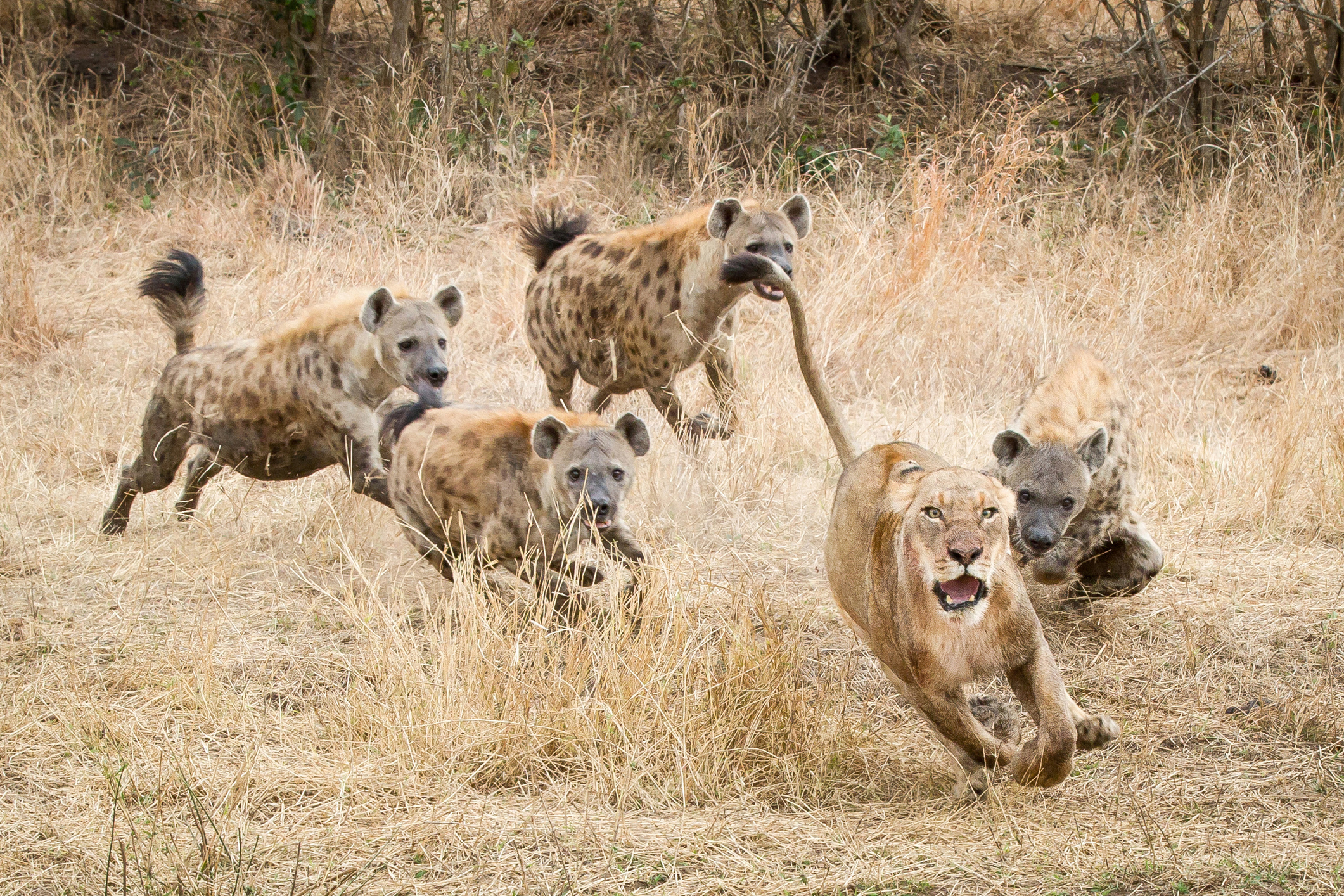
- "Prey is disembowelled and rapidly consumed, often still conscious." 10 deadly species that form ruthless gangs to hunt and kill prey
- Villagers in Mozambique talk to birds to help them hunt. How they do it is amazing
That said, plenty of predators are still incredibly adept. African wild dogs are among the most successful hunters on the planet, with kill rates above 85 per cent on chases, while the diminutive black-footed cat has been observed making a hunting attempt every 30 minutes and is thought to succeed around 60 per cent of the time, racking up as many as 14 kills a night.
However, even for the most accomplished hunters, the underlying dynamic applies. Once the element of surprise is gone, control of the chase shifts somewhat to the prey, which can effectively choose the direction, duration and, to some extent, terrain. And with the predator’s reaction time always lagging a fraction of a second behind, a series of well-judged turns can be enough to send a hungry animal home empty-handed.
Discover more wildlife stories from around the world:
- Climbers descend 60m vertical shaft in Greece – and find bear scratch marks at the bottom
- "Its deadly poison contains heart-toxins, which are potent enough to kill elephants." The 10 deadliest rodents on the planets – including a poisonous rat
- Remember Cecil the lion, shot 11 years ago by a trophy hunter? This is what happened next – and it’s good news
