
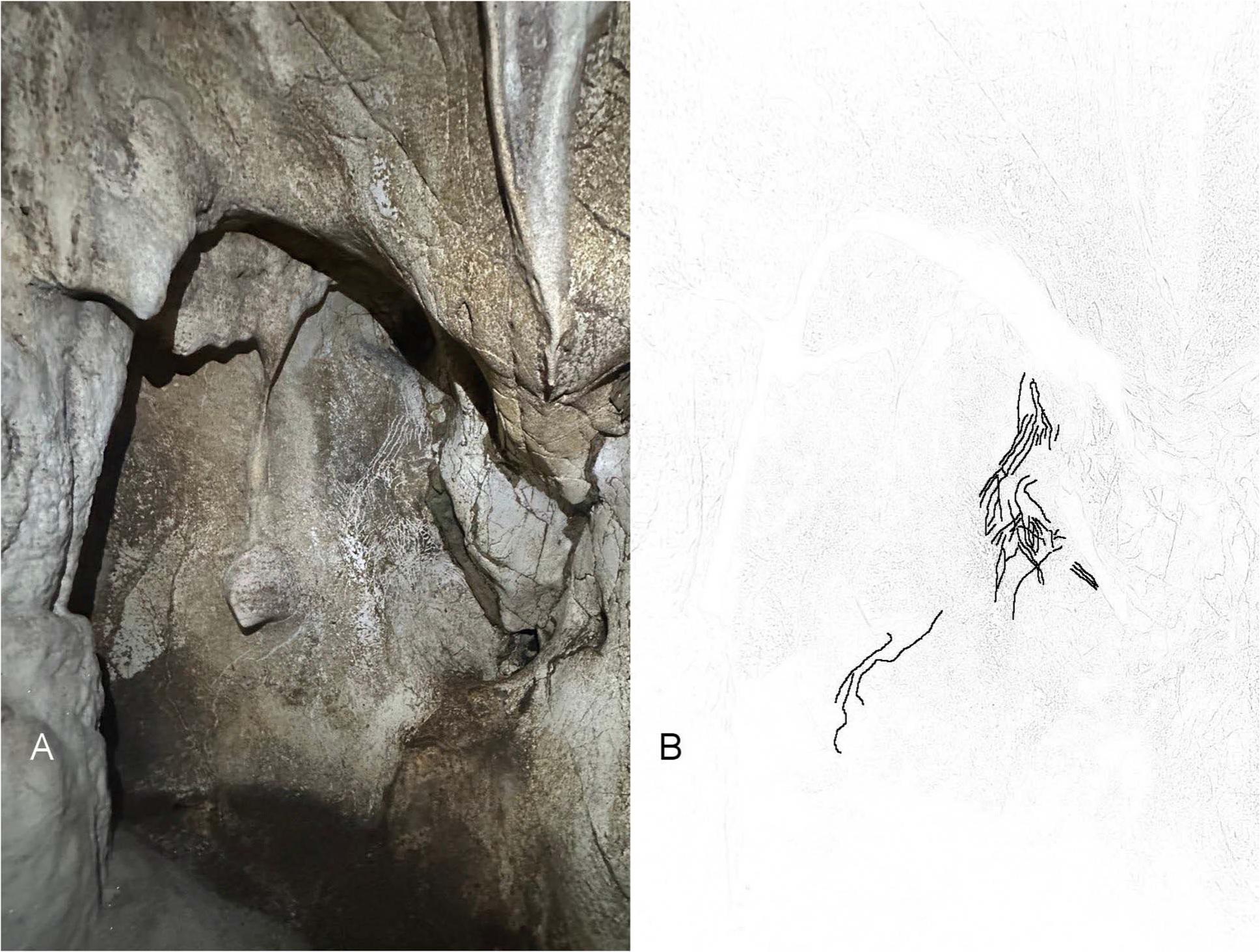
When researchers lowered themselves down the 60m vertical passage of the Stefou Pothole in Greece, they discovered multiple sets of bear scratch marks at the bottom.
Evidence has been found in the past of bears having inhabited Greek caves with vertical passages of between 4m and 10m. However, this 60m shaft has demonstrated that some bears have not only been prepared to plumb much greater depths than was previously believed but have had the dexterity necessary to descend and ascend extremely long vertical passages.
- Can a human outrun a bear?
- What is the most numerous bear in the world? Clue – it's as tall as Michael Jordan
The discovery is part of a case study included in a recent paper (published in the journal Ursus) that shares 25 years of research by Georgios Lazaridis, Despoina Dora, Aikaterini Matakidou and Konstantinos-Prokopios Trimmis from the Aristotle University of Thessaloniki in Greece.
The four academics have examined fossilised claw scratches, footprints, hair traces, skeletons, rock surfaces smoothed by rubbing and denning pits in Greek caves. They’ve attributed most of these signs of cave occupation to the brown bear (Ursus arctos) rather than the extinct cave bear (Ursus spelaeus).
"Remarkably," the paper declares, "the first 60m of the [Stefou Pothole] cave forms a completely vertical shaft lacking any horizontal passages or ledges that would facilitate movement or access from the surface…The presence of bear activity at such depths raises intriguing questions regarding the behavioural adaptability and spatial use of cave environments by bears in the region."
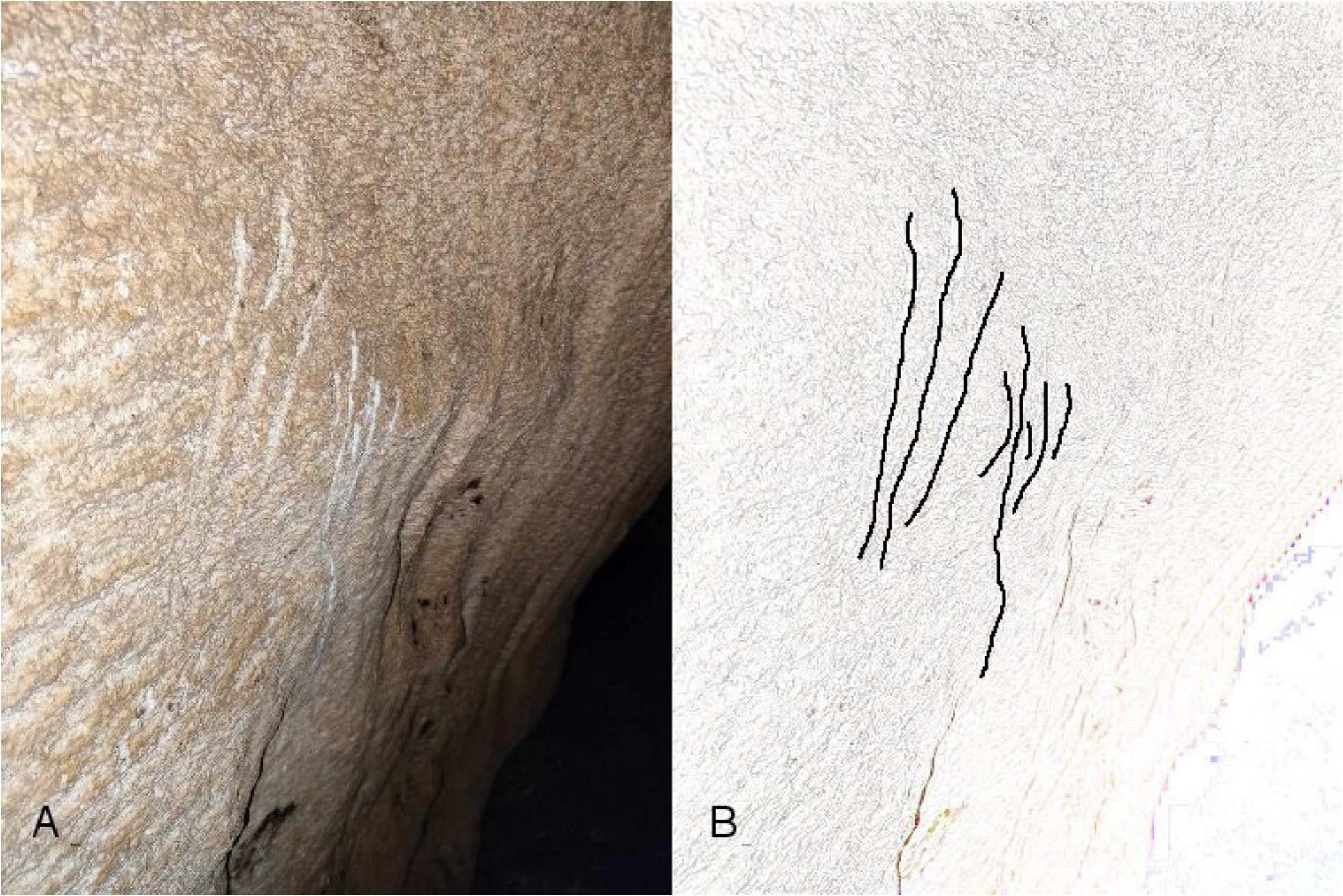
The pothole in question is located on Mount Vermio near Fyteia in the region of Macedonia, Greece, and was explored to a depth of 80m. The scratch marks were discovered on the walls of the pothole’s deepest chamber. The authors observe, ’These locations, although more dangerous, are less accessible by humans or other animals, providing safe shelters for the bears.’
Evidence of the presence of bears has been found in only 1 in 200 caves explored in Greece, making this discovery all the more remarkable.
The Aristotle University team consider that their wide-ranging research will provide ‘valuable insights into the behaviours and environmental interactions of both modern and ancient bear species, particularly the brown bear (U. arctos)’. Their findings also back up those made by similar research in other European caves.
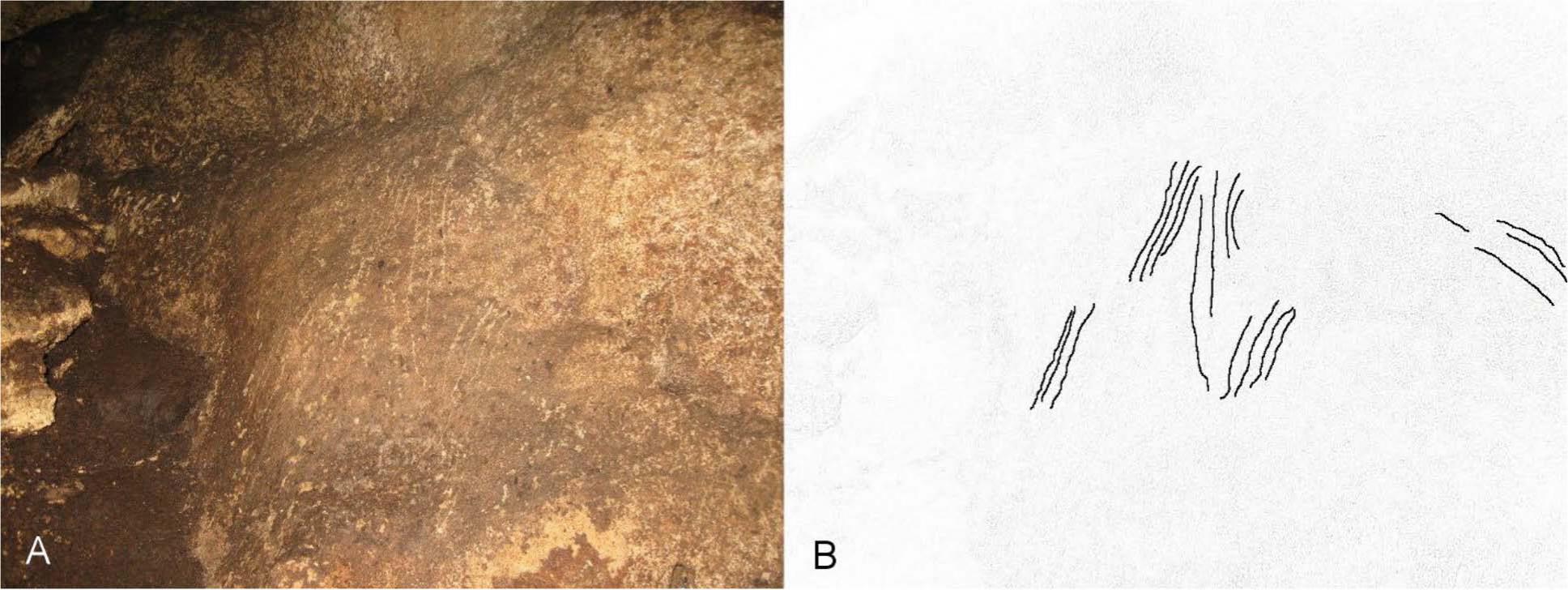
One particular challenge facing researchers is a lack of certainty over the dating of scratch marks. Furthermore, where such marks appear to overlap one another, it raises questions as to whether they have been made by one individual or several, potentially over a long period of time.
To overcome this difficulty, the Aristotle University team suggests that ’future research should focus on the integration of advanced dating techniques, high-resolution imaging, and interdisciplinary collaboration to resolve outstanding questions about the origin and chronology of these traces.’
What is certain is that, at some point in the past, at least one bear climbed down – and perhaps more importantly, climbed back up – a 60m vertical shaft.
Find out more about the study.
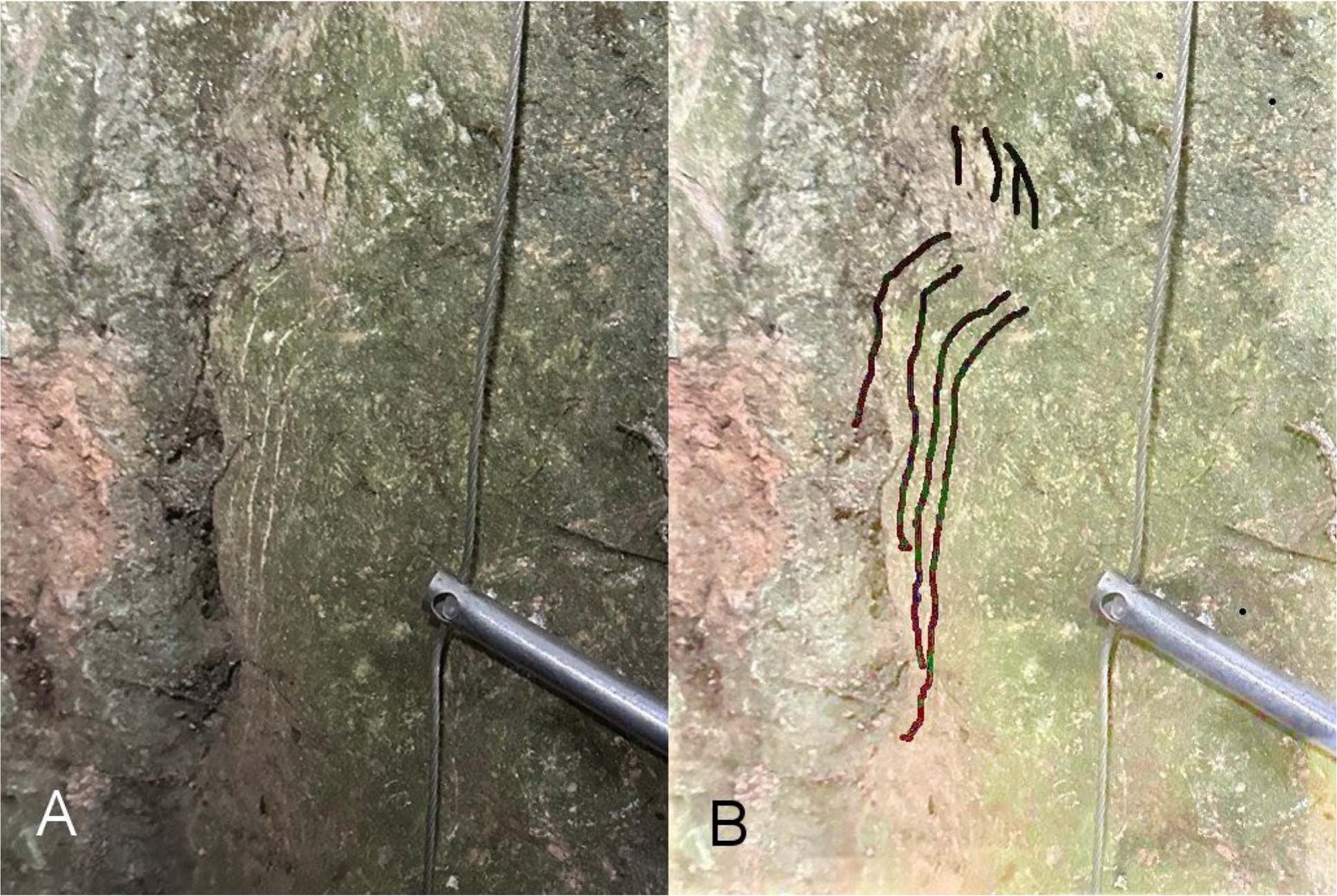
Top image: Bear scratch marks in the deepest section of the Stefou Pothole, Greece, located within a Natura 2000 protected area. Credit: Tasos Polychroniadis, via Georgios Lazaridis et al. Ursus 2026. CC BY-NC-ND 4.0 license.
More amazing wildlife stories from around the world
- Camera traps film predators descending on cave filled with 40,000 bats. What happens next is staggering
- “I spent a week in the Great Bear Rainforest with First Nations and it transformed my view of nature”
- Polar bear destroys almost entire colony of seabird nests in Alaska. This is why it did it
- He was a ‘wrestler’, went to the pub and starred in a James Bond movie. Oh, and he was a 65-stone grizzly bear


