
Hungry polar bears in northern Alaska are increasingly plundering seabird colonies for eggs. A new study, co-led by the Wildlife Conservation Society and published in the journal Polar Research, shows that the region’s most imposing land predator is adapting its age-old hunting practices.
It’s a change borne from necessity. Polar bears have long depended on sea ice as a platform from which to hunt the seals that traditionally dominate their diet. But as the sea ice around the coastline continues to shrink, more bears are having to spend their time ashore, on Alaska’s barrier islands and mainland coastline.
Without ready access to their usual pinniped prey, the bears are turning to devouring the eggs, nestlings – and sometimes even breeding adults – of seabird colonies.
- What is the biggest bear in the world?
- We finally know why polar bears don't freeze in Arctic waters
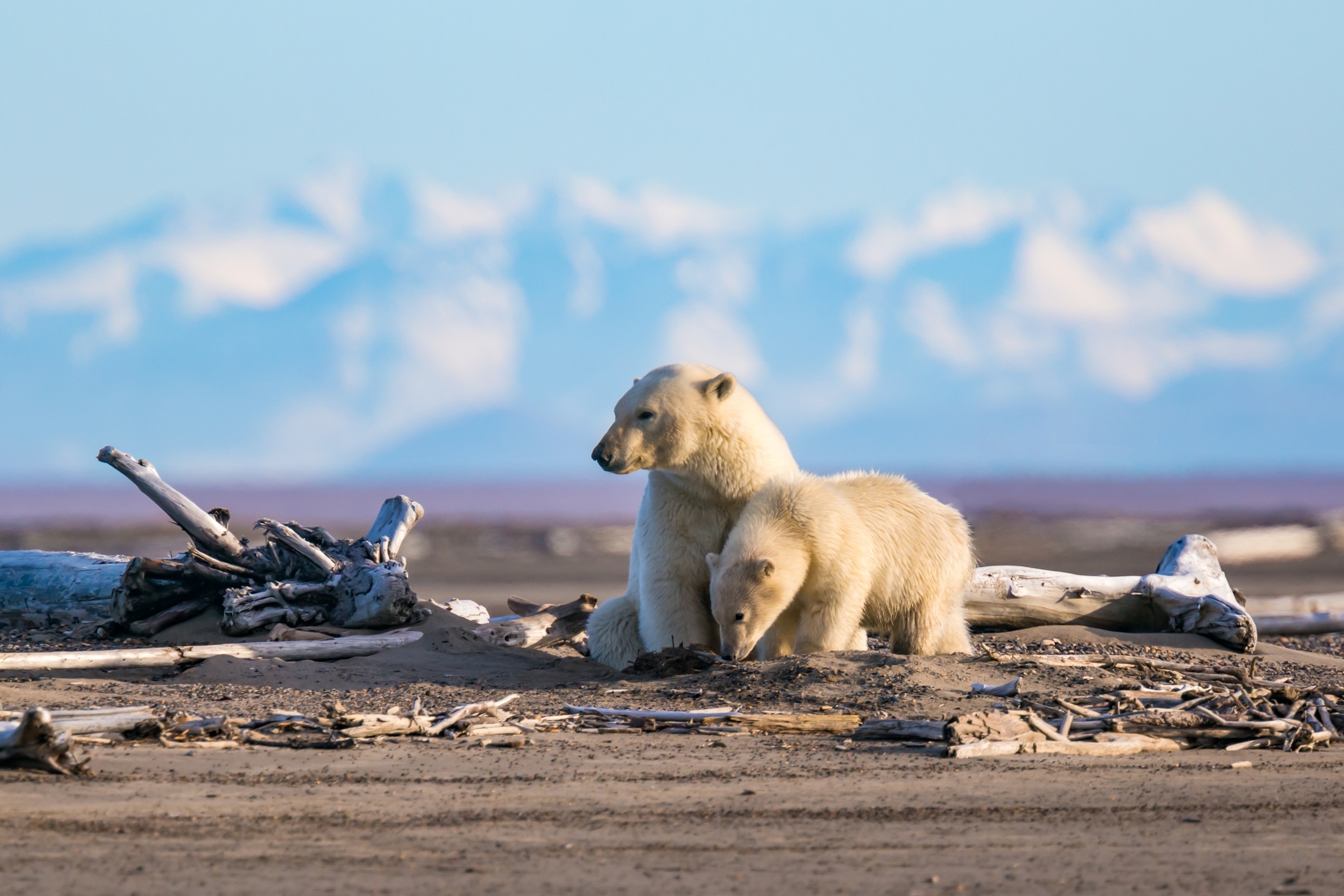
This worrying behaviour had been reported elsewhere in the Arctic, but was until recently a rarity in Alaska.
The consequences are serious, not least because polar bears with an appetite can be extraordinarily destructive, consuming hundreds of eggs in a short period. In July 2024 a lone bear took a single day to destroy 89 per cent of nests in a common eider colony, while polar bear predation forced a black guillemot colony into complete reproductive failure in both 2024 and 2025. Black guillemots in Alaska are already suffering due to a shortage of Atlantic cod in the warming seas.
But the study highlights more than the bleak fortunes of a few individual colonies. As the result of decades of monitoring on Cooper Island and other Alaskan barrier islands, it underlines the importance of long-term field research by showing that these attacks are down to clear behavioural and environmental shifts rather than isolated incidents.
“For decades these barrier islands served as places where seabirds could nest with relatively little pressure from large land predators,” explains Kayla Shively, the study’s lead author. “It’s another reminder that climate change isn’t affecting one species at a time – it is reshaping the connections between species across the Arctic.”
The study’s conclusion stresses that the impact on seabird colonies is a visible, measurable consequence of sea ice loss. “When a top predator like the polar bear changes how and where it hunts,” adds Dr Martin Robards, a co-author, “it’s telling us something fundamental about the ecosystem.”
Top image: mlharing/Getty Images
More wildlife stories from around the world


