
A fossil found on the Isle of Wight, UK, has been identified as a new species of dinosaur. Invictibellatrix amberina lived in the Early Cretaceous, about 120 million years ago and was about the size of a large tiger. The findings are published in the journal Royal Society Open Science.
- 10 deadliest dinosaurs on the planet: meet the ferocious prehistoric beasts that ruled Earth
- 10 weirdest dinosaurs ever, from a crazed two-legged hedgehog look-a-like to one that resembled a cross between a duck, camel and giant sloth
The new species belongs to a group of two-legged carnivores called megaraptorans, which was closely related to tyrannosaurs, including the famous T. rex. While tyrannosaurs had tiny arms and powerful jaws, magaraptorans went the opposite way – their heads were slender, but they evolved large arms with giant curved claws, which they used to attack prey.
Invictibellatrix amberina would have been 3–4m long and just over 1.5m in height – about as tall as a human and roughly the length of a tiger from nose tip to tail. It was likely covered in feathers, and its claws might have been about 10-20cm long.
While some species of megaraptorans grew to enormous sizes, this newly described species is one of the smallest and earliest of the group to be found, and the first to be unearthed in Europe.
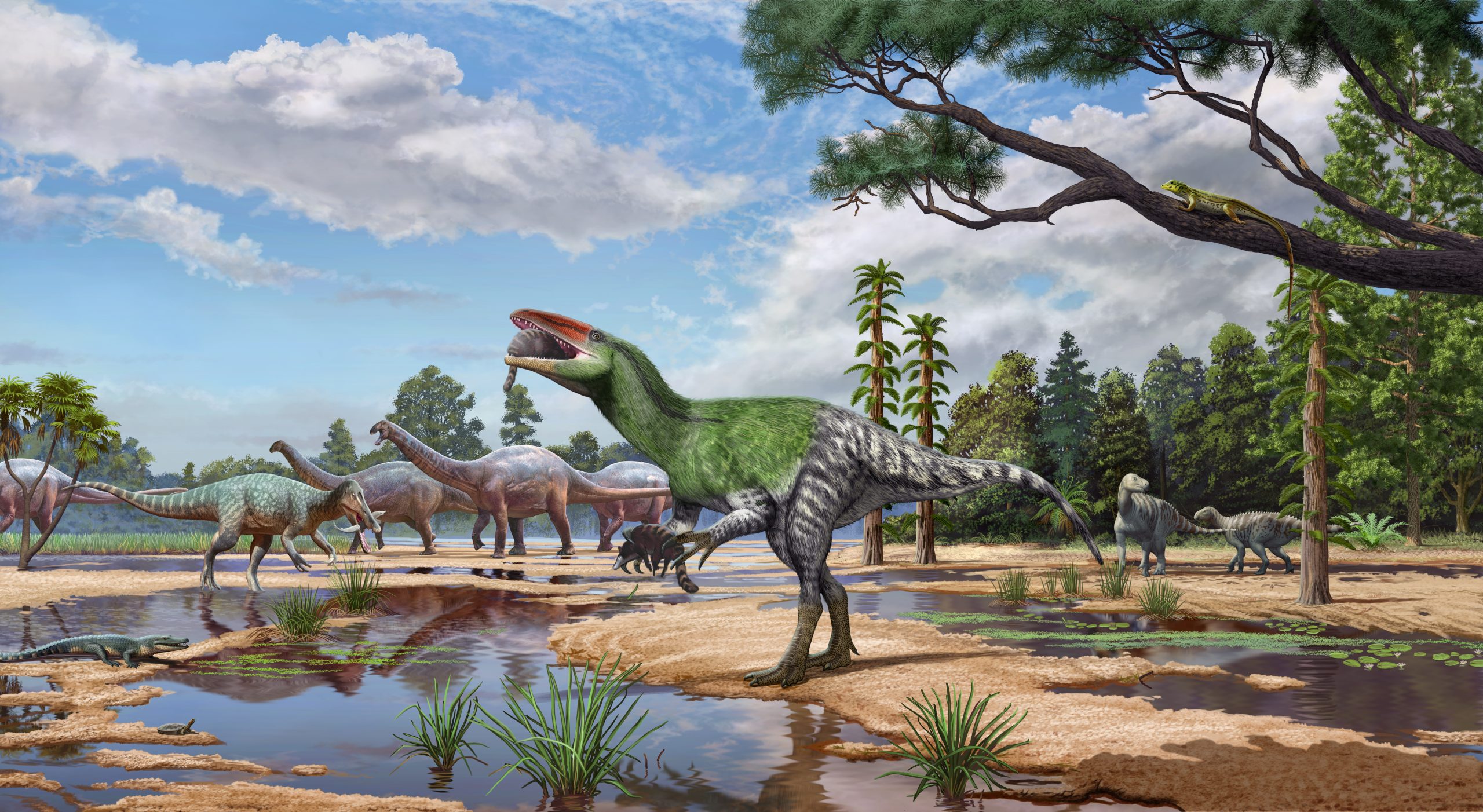
“It would have eaten small dinosaurs, lizards and mammals – occupying a similar role in the food chain to the hyena today,” said Dr Cassius Morrison, University College London (UCL) Earth Sciences, lead author of the study.
“It was not the apex predator of its time, but for humans this dinosaur would have been more dangerous than a T. rex. We would have been perfectly sized prey, about a third of their body weight. They definitely would have chased us. A T. rex would not have bothered, as we would have been too small.”
- Could you have outrun tyrannosaurus rex? Potentially, say experts
- It weighed less than 1kg yet remarkably could reach terrifying speeds of 65km/h: Meet 10 fastest, speediest dinosaurs on the planet
Part of the Wessex Formation, a geological formation that dates back to the Early Cretaceous, Isle of Wight is incredibly rich in fossils – but theropod dinosaur remains from the area are rare and often fragmentary, making this find particularly remarkable.
This specific fossil was first recovered from the foot of the cliff at Sudmoor Point on the southwest coast of the island by amateur palaeontologist Reginald Walter Hooley. He discovered more than 1,000 specimens, which were all acquired by the Natural History Museum after his death in 1924.
“Despite over 200 years of collecting, the Isle of Wight continues to surprise us with new dinosaur species, and finds of carnivorous dinosaurs, such as Invictibellatrix, have been particularly elusive,” said Professor Paul Barrett, the study’s senior author from the Natural History Museum.
“Work like this shows the exceptional value of working with historical museum collections where there are still many discoveries to be made.”
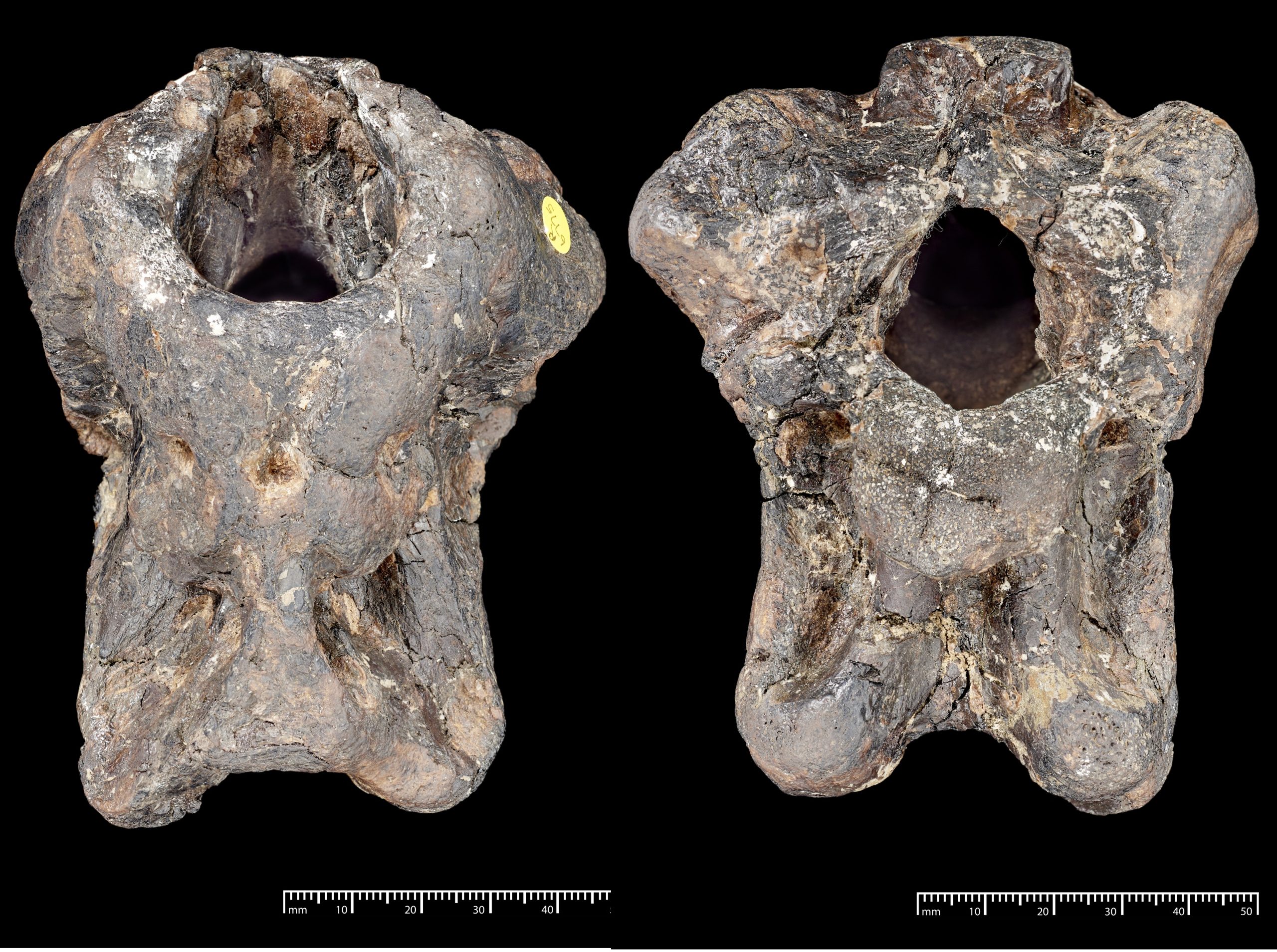
For nearly 100 years, the fossil – a chunk of the back of a skull – lay forgotten in a drawer at the museum, until recently when it was finally picked up for study. The researchers conducted CT scans of the fossil and created a 3D model of the skull and brain of the dinosaur.
What led the scientists to conclude the fossil represented a new species was a unique combination of skull features, including an oval hole where the spinal cord entered the brain and an hourglass-shaped crest.
- Prehistoric soft tissue from a 183-million-year-old dinosaur reveals what it really looked like - shocking scientists
- A tiny object preserved in dinosaur poop may unlock one of palaeontology’s biggest mysteries
Piece of the puzzle
Because fossils representing megaraptors are relatively rare, the group has remained somewhat of a mystery to scientists for decades – this new discovery finally fills in the gaps.
The leading theory among palaeontologists is that megaraptors originated in Asia, migrated through Europe and became apex predators in the south of Gondwana (ancient supercontinent including modern South America, Africa, Antarctica, Australia, Zealandia, Arabia and the Indian subcontinent). But because, until now, no megaraptor fossils have been found in Europe, this theory lacked concrete evidence.
“This new species is the first proof we have that megaraptorans were also present in Europe and that they reached Gondwana this way rather than island-hopping further south,” said Charlie Scherer, PhD student at UCL Earth Sciences and co-author of the study.
Using mathematical modelling to investigate how the megaraptors’ spread around the world changed over time, the researchers were able to conclude that they were globally widespread in the Early Cretaceous. But by the Late Cretaceous, they had most likely gone extinct in the giant northern landmass of Laurasia (which included modern day Europe).
Meanwhile, in the south of the globe, they became apex predators reaching gigantic sizes with claws up to 35cm long. But one mystery remains – scientists are not yet sure why megaraptors died out in the north. The hypothesis is that it may have been a result of climate and environment shifts, or the presence of competing predators like other tyrannosaurs.
Read the full findings here.
Top image: Not discovery site. Deserted beach on the Isle of Wight. Credit: Lemanieh/Getty Images


