The Atacama Desert in northern Chile is the driest non-polar desert and one of the driest places on the planet. But in August 2026, consecutive winter storms left parts of it enveloped in snow.
- Scientists started digging in one of the world’s driest deserts. What they eventually found was extraordinary
- “It’s so dry that NASA has used parts of it to test Mars rovers.” 6 extreme places on Earth where you can still find life
According to NASA, it’s not unprecedented to see snow or rain in this usually extremely arid region, with notable instances observed in 2025 and 2011. But what sets this most recent event apart is its range – it spread all the way from the Andes to near the Pacific coast.
The OLI (Operational Land Imager) on the NASA-USGS Landsat 8 and Landsat 9 satellites captured several images showing this astonishing snowfall.
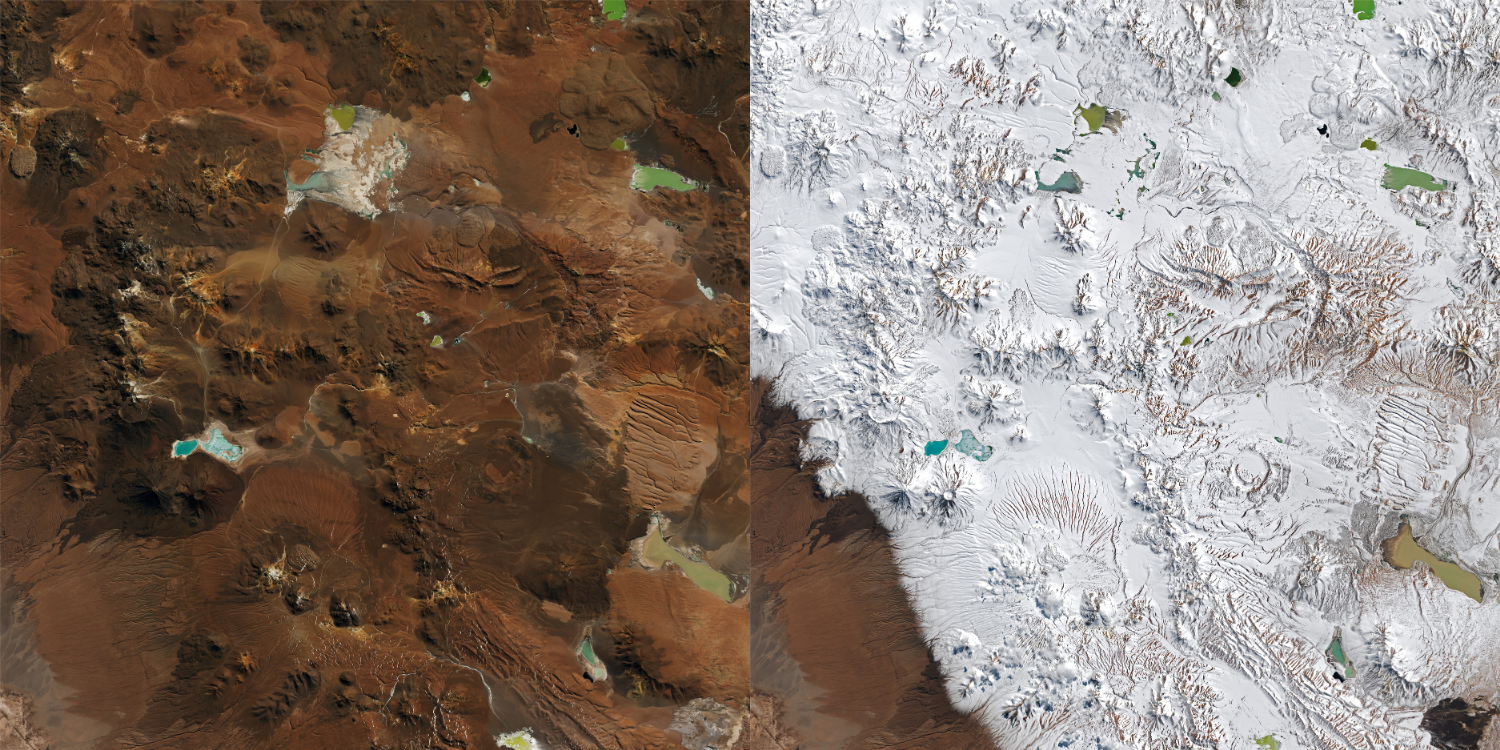
An image taken on 6 August shows a detailed view of the Chajnantor plateau within the Altiplano-Puna volcanic complex, before the severe weather swept through the area. Then an image of the same area was captured on 14 August, after snow and high winds set in, forcing the Atacama Large Millimeter/submillimeter Array (ALMA), one of the planet’s most powerful radio telescopes, to suspend operations.
This wasn’t the end of weather anomalies in the Atacama Desert: later in the month, another storm passed through, leaving an even wider area blanketed with snow.
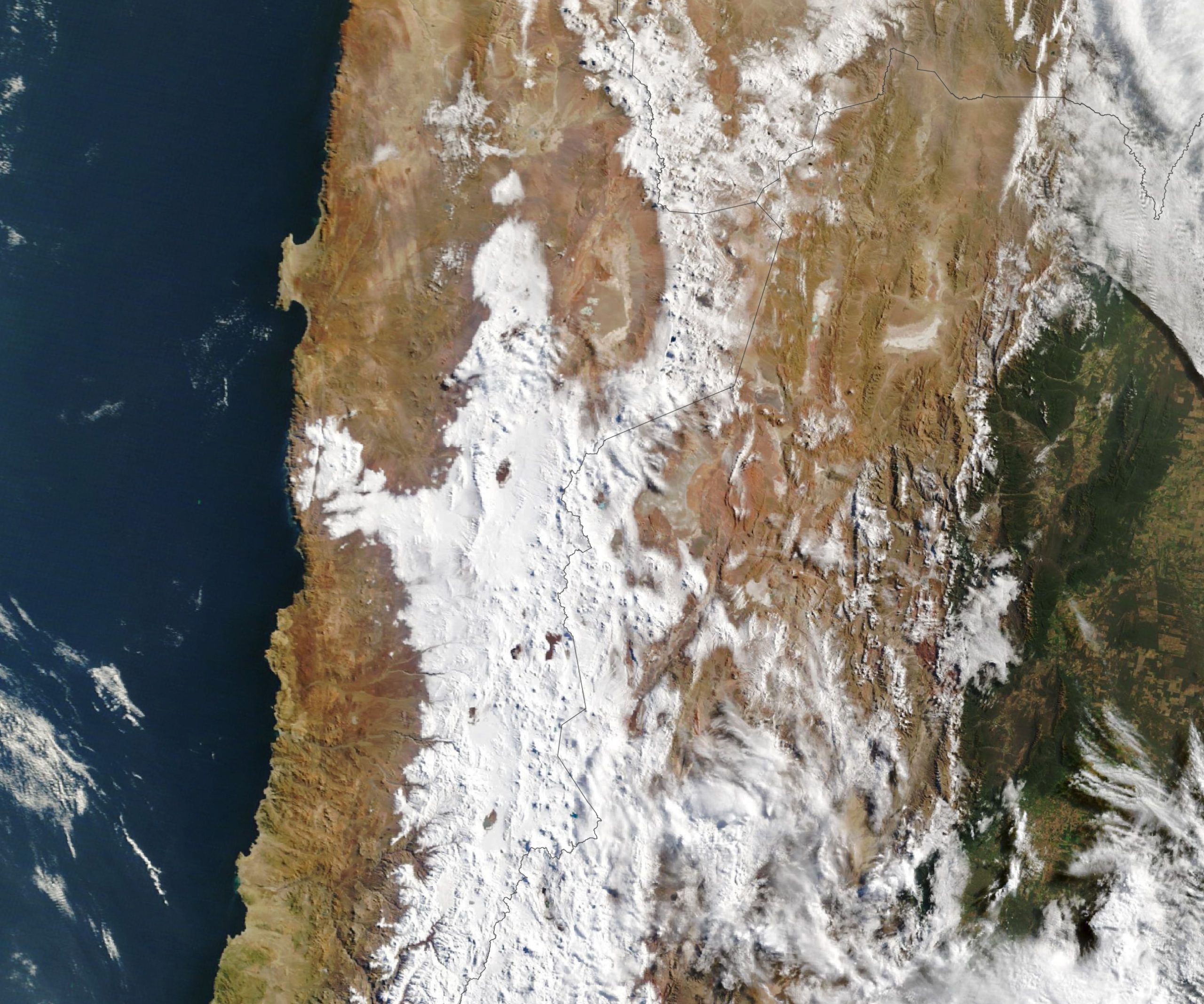
An image captured by the MODIS (Moderate Resolution Imaging Spectroradiometer) on NASA’s Terra satellite on 19 August shows snow over an area stretching westward from the Andes, across the desert’s core, and close to the Pacific coast, south of the Chilean port city of Antofagasta. This coastal city is home to several big astronomical observatories which also had to suspend operations during the storms.
How did the storm form?
According to the National Weather Service’s Climate Prediction Center, El Niño is strengthening, presenting a greater than 90 per cent chance of a very strong event during the Northern Hemisphere autumn and winter 2026-2027. It is also the backdrop for the unusually wet winter in north-central Chile, as noted by René Garreaud, an atmospheric scientist at the University of Chile.
Most of the time, winter precipitation in the region comes from cutoff lows – low-pressure systems that get cut off from the jet stream, which can sometimes reach northern Chile. This was also true in the case of the 2025 snowfall, according to Garreaud.
The late-August 2026 storm also stemmed from a cutoff low, but it spun off from an uncommonly large trough (an elongated region of relatively low atmospheric pressure). This trough spanned an exceptionally big stretch of the hemisphere, all the way from the tip of South America up into the subtropics.
This disruption, combined with coastal moisture, resulted in precipitation that spanned an unusually wide part of the region, sweeping across the coast, the core of the Atacama Desert, and over the Andes. Total levels of precipitation reached magnitudes “rarely seen in the otherwise extremely arid region,” said Garreaud.
Some areas saw rain instead of snow: Taltal on the northern coast of Chile accumulated nearly 40mm of rain in three days, which is about 10 times its annual mean.
“We see these kinds of events only a few times, if any, per decade,” said Garreaud.
The impact
Despite being one of the driest places on Earth, over a million people live in the Atacama Desert, mostly concentrated in large coastal cities, mining towns and small oasis settlements. The extreme weather caused mudflows and flash flooding in parts of northern Chile.
On 18 August, the Chilean president Jose Antonio Kast announced a state of catastrophe in the Antofagasta region. The intense rainfall left streets severely flooded and The National Disaster Prevention and Response Service (SENAPRED) deployed full emergency resources. The agency reported thousands of people were affected and hundreds of homes experienced major damage.
Top image: Atacama Desert canyon at golden hour in Chile. Credit: Nikada/Getty Images