
Sinkholes are dramatic depressions in the Earth’s surface, and can be some of the most remarkable wonders of the natural world.
But their captivating beauty can be tinged with danger, as many of them have claimed lives – both in their formation but also in their ongoing appeal for climbers and divers, keen to explore their shadowy depths.
Are some sinkholes more dangerous than others?
There are several different types of sinkhole. Dissolution sinkholes are formed by acidic rainwater seeping into the cracks in soluble bedrock, while cover subsidence sinkholes occur in areas where a layer of loose sediment covers the soluble bedrock, with water causing the sediment to filter through its cracks.
Then there are cover-collapse sinkholes – considered to be the most dangerous type of sinkhole. These underground cavities grow larger over time as water erodes the rock or sediment. Unlike the other two forms of sinkholes, cover-collapse sinkholes can occur very suddenly, so can be extremely dangerous.
What’s the deadliest sinkhole event?
Guatemala City’s sinkhole collapse (top image) is believed to have claimed the most lives, with 15 people killed when the 300-foot-deep vertical pit opened up at an intersection in the city, destroying a three-story building. The sinkhole was created during Tropical Storm Agatha in 2010. Three years earlier, in 2007, a similar sinkhole disaster took place in the city, killing three people.
What’s the deadliest sinkhole?
Beyond the initial sinkhole formation, some sinkholes hold more risk than others on an ongoing basis – especially underwater sinkholes, which can prove an irresistible lure for divers.
The Blue Hole in the Red Sea, north of Egypt on the Sinai Peninsula, is generally considered to be the deadliest sinkhole in the world, with an estimated number of diver fatalities of somewhere between 130 to 200.
This dive site is known for its vibrant coral gardens and colourful reef fish, as well as its moray eels, barracudas and the occasional tuna.
The underwater sinkhole descends 100 metres (dropping to 1,000 metres just outside the reef), but the most dangerous part of the dive site is the Arch, a submerged tunnel which experienced divers can travel through.
- 5 breathtaking photos of sinkholes from around the world
- There's a gigantic marine sinkhole off the coast of Belize. And scientists are using it to predict hurricanes
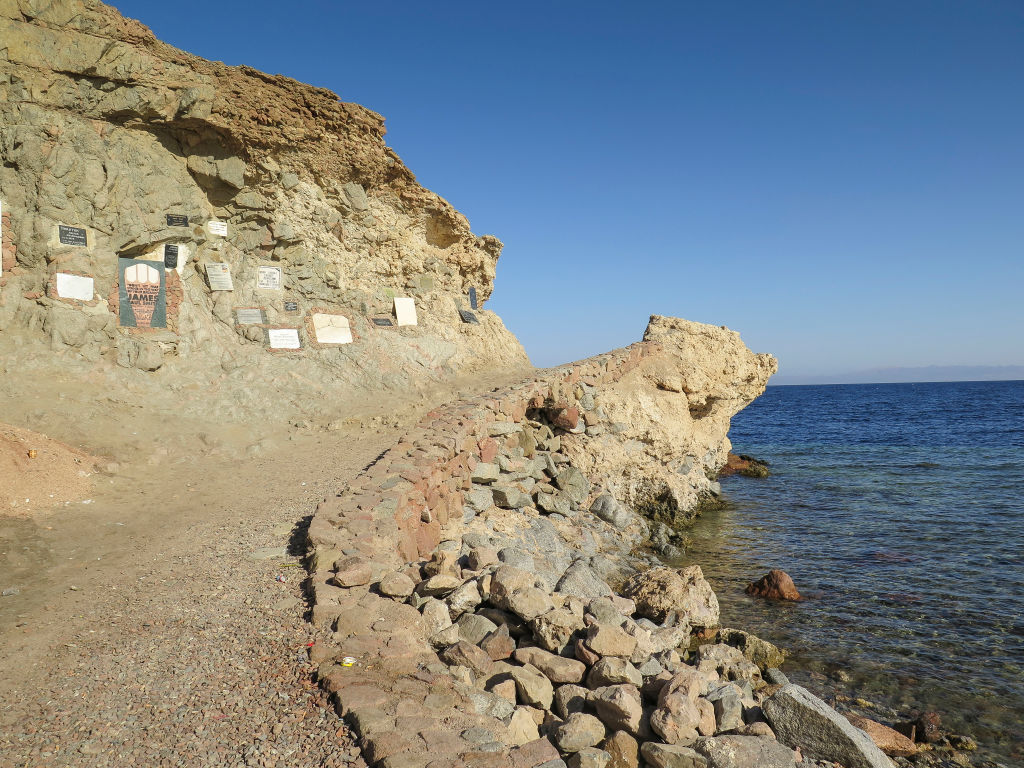
Gas management is the main challenge at these depths, with less experienced divers underestimating the dangers it poses. The Arch is difficult to find, takes time to navigate through, and requires careful management of decompression on the ascent to avoid decompression sickness.
It is also used by freedivers, as significant depths are accessible straight from the shore, plus there is no current.
- This giant underwater 'cloud' lies at the bottom of a 60m-deep sinkhole. It's concealing something ghostly
- "Sand pours off and disappears below like an underwater waterfall. This eerie phenomenon looks like a monstrous plume of smoke being dragged down into the darkness"
What’s the biggest sinkhole on Earth?
The biggest and deepest sinkhole on Earth is Xiaozhai Tiankeng in China. It's 660 metres deep, with a volume of 130 million cubic metres, making it the deepest and largest sinkhole in the world.
Top image: Huge crater caused by tropical storm Agatha, in Guatemala City, in June 2010. Credit: Getty Images


