
The Hawaiian Islands form an archipelago of around 132 islands, stretching out from the island of Hawaiʻi over 1,500 miles. But the way they were formed is a little unusual – and in fact, the hotspot that created them is still responsible for so much of the dramatic volcanic activity on many of the islands today.
How was Hawaiʻi formed?
Where tectonic plates collide, volcanoes can form – but that’s not the only way they are created. Volcanoes can also form in the middle of a tectonic plate, where magma rises upwards until it erupts on the seafloor. This is what’s known as a ‘hot spot’. The lava then cools and hardens, creating new land formations.
The Hawaiian Islands were formed by one such hot spot occurring in the centre of the Pacific Plate. The Pacific Plate is one of about 20 tectonic plates that exist across the Earth.
As the Pacific Plate moved over the hot spot, the string of islands that now make up the Hawaiian Island chain were formed. Put simply, the Hawaiian Islands were created from a series of volcanic eruptions.
When did this happen?
The hot spot has likely been active for around 70 million years, but the islands have gradually formed over the years since.
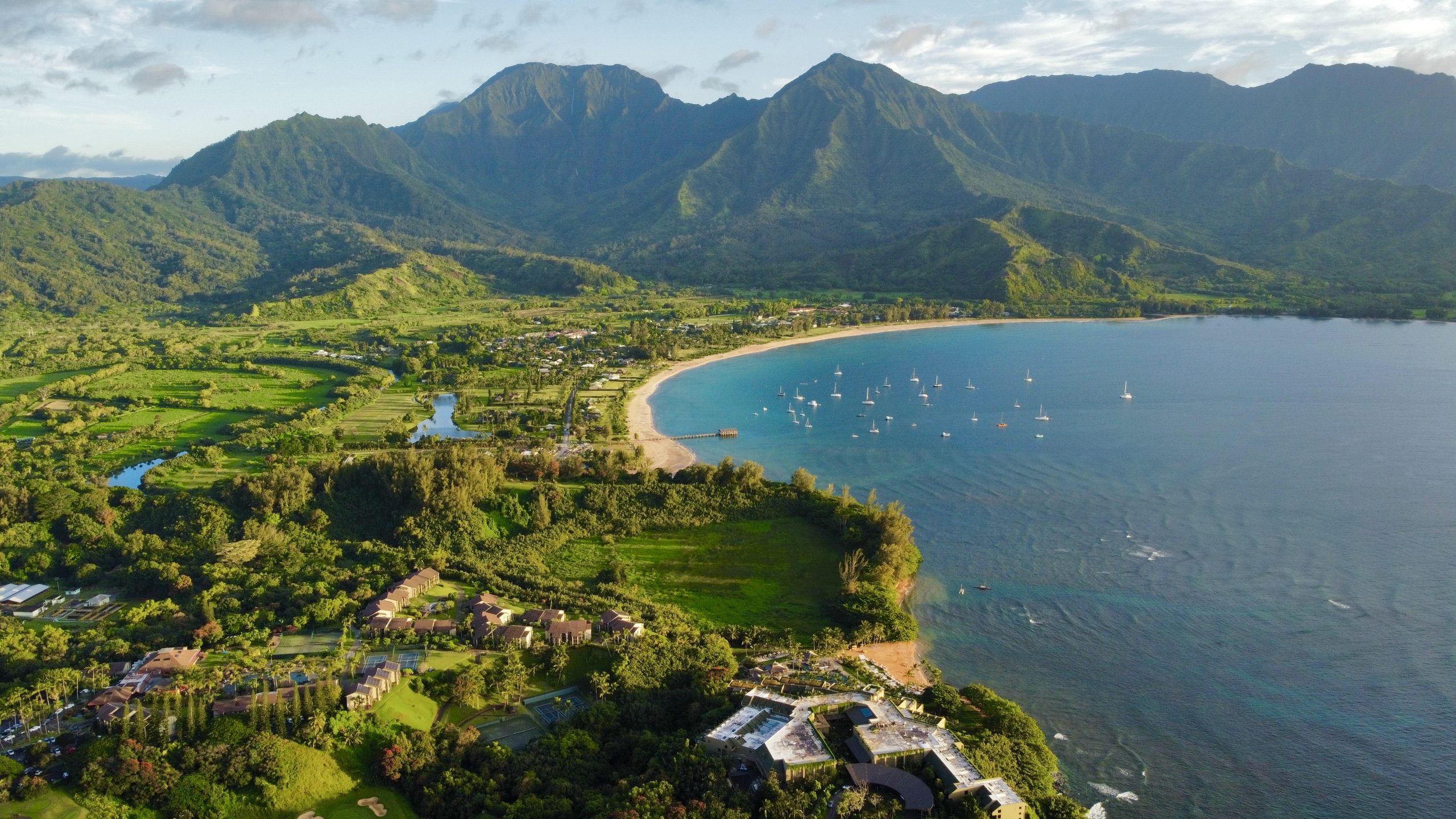
Of the six largest islands (Big Island, Maui, Lanai, Molokaʻi, Oʻahu and Kauai), the oldest is Kauai, formed around five million years ago. The youngest is the Big Island of Hawaiʻi, estimated to have formed between 400,000 and 800,000 years ago. It continues to grow today.
Is the hot spot still creating islands?
Yes, although many are still submerged under water – as are many of the volcanic formations in the area. There are still active volcanos on the Big Island of Hawaiʻi, but the oldest island Kauai is no longer over the Hawaiian hot spot, so there are no active volcanoes there anymore.
What animals can you see in Hawaiʻi?
Due to Hawaiʻi’s remote location in the Pacific Ocean, the archipelago has a range of native animals, which have evolved in complete isolation from the rest of the world.
The marine wildlife in Hawaiʻi is particularly impressive, with humpback whales, green sea turtles, dolphins and giant manta rays spotted in the nearby waters. Hawaiian monk seals are native only to the Hawaiian archipelago, a species which is now threatened by extinction.
On land, the Hawaiian hoary bat is the archipelago’s only native land mammal. But you’ll also come across birdlife, including the nēnē, a rare, endangered Hawaiian goose, and the honeycreeper, a colourful forest bird mainly found in Hawaiʻi’s mountain rainforests.
Top image: view over Kaʻaʻawa, a small community on the island of Oʻahu (credit: Warren Ishii / 500px / Getty Images)


