
When Jacques Cousteau embarked on an epic mission to the Sea of Cortez in 1987, nothing could prepare him for what awaited beneath the surface.
Stretching 700 miles between mainland Mexico and Baja California, this narrow strip of water in the Pacific Ocean hosts over a third of the world's marine animals. Dazzled by its unmatched natural beauty, Cousteau famously dubbed the Sea of Cortez the 'aquarium of the world'.
A staggering landscape
Formed just five million years ago when tectonic forces split Baja away from mainland Mexico, the Sea of Cortez is one of the youngest seas on Earth. Also known as the Gulf of California, it harbours a beautifully complex landscape. Rugged volcanic islands meet pale sandy coastlines, enveloped by brilliant blue waters, a striking contrast that earned the region UNESCO World Heritage status in 2005.
- A remarkable creature lurks in this flooded sinkhole in Mexico. Scientists went in to find it
- Orcas filmed paralysing and eating great white sharks in the Gulf of California
Its deepest point plunges 3,000 metres below the surface, deep enough to submerge nearly four Burj Khalifas (the world’s tallest building) stacked end-to-end. At these kinds of depths, only specially adapted creatures can survive because of the immense water pressure. However, the mysteries of the Sea of Cortez invite its very own Loch Ness-style legend. The 'Black Demon' (or El Demonio Negro) is said to be a 20-to-60-foot, jet-black cryptid shark roaming its deep waters.
Teeming with life
The roughly 900 islands and islets in the Sea of Cortez provide important sanctuaries for nesting seabirds like the double-crested cormorant and the Gila woodpecker. You’ll also find incredible reptiles such as the swollen-nosed side-blotched lizard, endemic to Isla Coloradito.
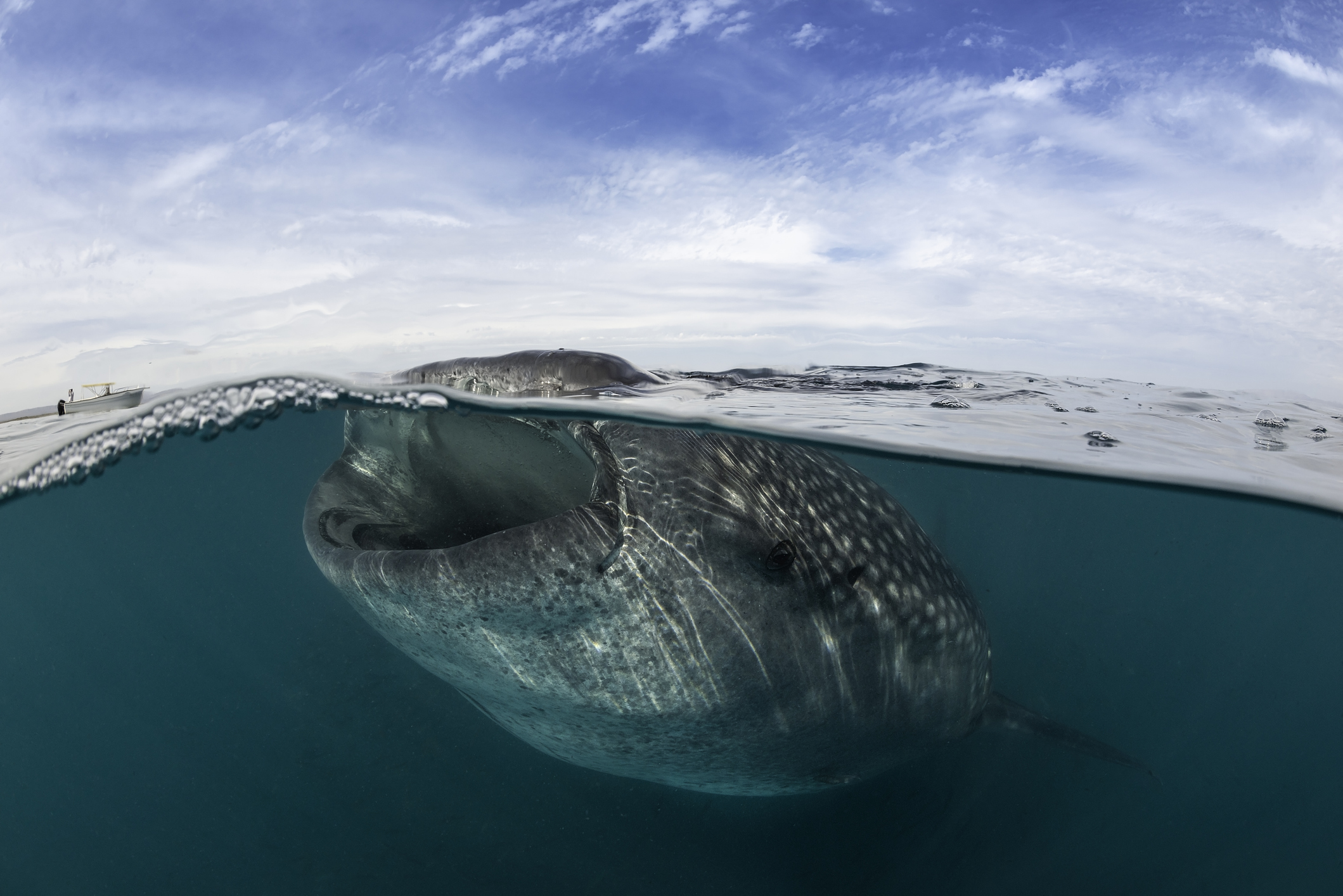
This extraordinary habitat draws wildlife enthusiasts from around the globe. A voyage across the gulf brings frequent encounters with playful sea lions and vast pods of dolphins. Beneath the waves, more than 900 species of fish share the waters with gentle giants. Each winter, grey whales complete a 10,000-mile migration from the Arctic to nurse their calves in Baja’s sheltered lagoons, joining blue, humpback and fin whales. Near La Paz, nutrient-rich plankton blooms attract the world’s largest fish, the whale shark.
- “The sea lions were curious but also cautious, letting the team know whose waters they were diving in”
- Is it ever ok to swim with dolphins?
Conservation is key
Yet this vibrant aquatic sanctuary is remarkably fragile. Mounting threats from illegal fishing, habitat destruction and unsustainable tourism led UNESCO to place the region on the World Heritage on the Danger list in 2019. The sea is also the final refuge of the critically endangered vaquita porpoise, the world’s smallest and rarest marine mammal, with only a handful remaining.
Cousteau’s voyage was more than an epic mission of discovery; it was critical for exposing the fragility of the ecosystem. Preserving this natural laboratory ensures that future generations can still witness one of the planet's ultimate wild frontiers, a place where the Earth still feels utterly alive.
Top image: Black cormorant feeding on bait fish in the Sea of Cortez. Credit: wildestanimal/ Getty Images
More wildlife stories from around the world:
- The jumbo squid population has crashed in the Gulf of California – and the consequences could be huge, say experts
- “Oh my goodness. I was holding my breath.” Speeding boat nearly collides with humpback whales in Australia
- "When threatened it slips into a crevice and inflates its body like a rubber raft. Within seconds, it's twice its original size and wedged in place."


