
A new study published in Nature Cities has investigated sinking cities worldwide and identified several hotspots where urgent action is needed to protect the people and wildlife that call these urban areas home.
Around the world, cities are experiencing varying degrees of land subsidence - a process in which the ground beneath them gradually compresses or, in some cases, suddenly collapses. This can be caused by a variety of different factors, including building, mining, tectonic shifts, earthquakes and natural soil consolidation.
The biggest contributor, however, is groundwater extraction, say the authors of a similar study published in Nature Sustainability in 2022. As cities grow and put freshwater supplies under strain, they’re forced to extract more and more water from underground. Over time, this compresses the soil, eventually causing the surface - and everything built on it - to sink.
According to the authors of the latest study published in Nature Cities, coastal cities in the US, such as New York, Boston and San Francisco, are sinking at a concerning rate of 2-6mm per year. In China, the situation is even more dire: approximately 16% of the land area of 82 major cities is sinking at a velocity faster than 10mm per year.
Sinking land not only damages buildings, foundations, drainage and sewage systems, it also makes cities more vulnerable to flooding, putting communities at even greater risk.

This risk is particularly heightened in coastal cities where the combination of sinking land and sea level rise driven by climate change compounds the danger, resulting in severe, long-lasting floods.
In spite of the dangers posed by land subsidence, an understanding of the dynamics that drive this geological process remain limited, making it difficult for policymakers to identify where risks are intensifying and where urgent intervention may be needed.
Using high-resolution satellite data collected over a nine-year period, Shengli Tao, Xie Hu and colleagues were able to measure land movement across 465 cities in 107 countries, and what they found was astonishing, as well as alarming.
“Notably, among the top ten cities experiencing the most severe subsidence, the majority remain concentrated in Asia and North America, including Bandung and Medan in Indonesia, Mashhad in Iran, and Torreón, Mexico City and Toluca in Mexico,” wrote the authors in their latest study.
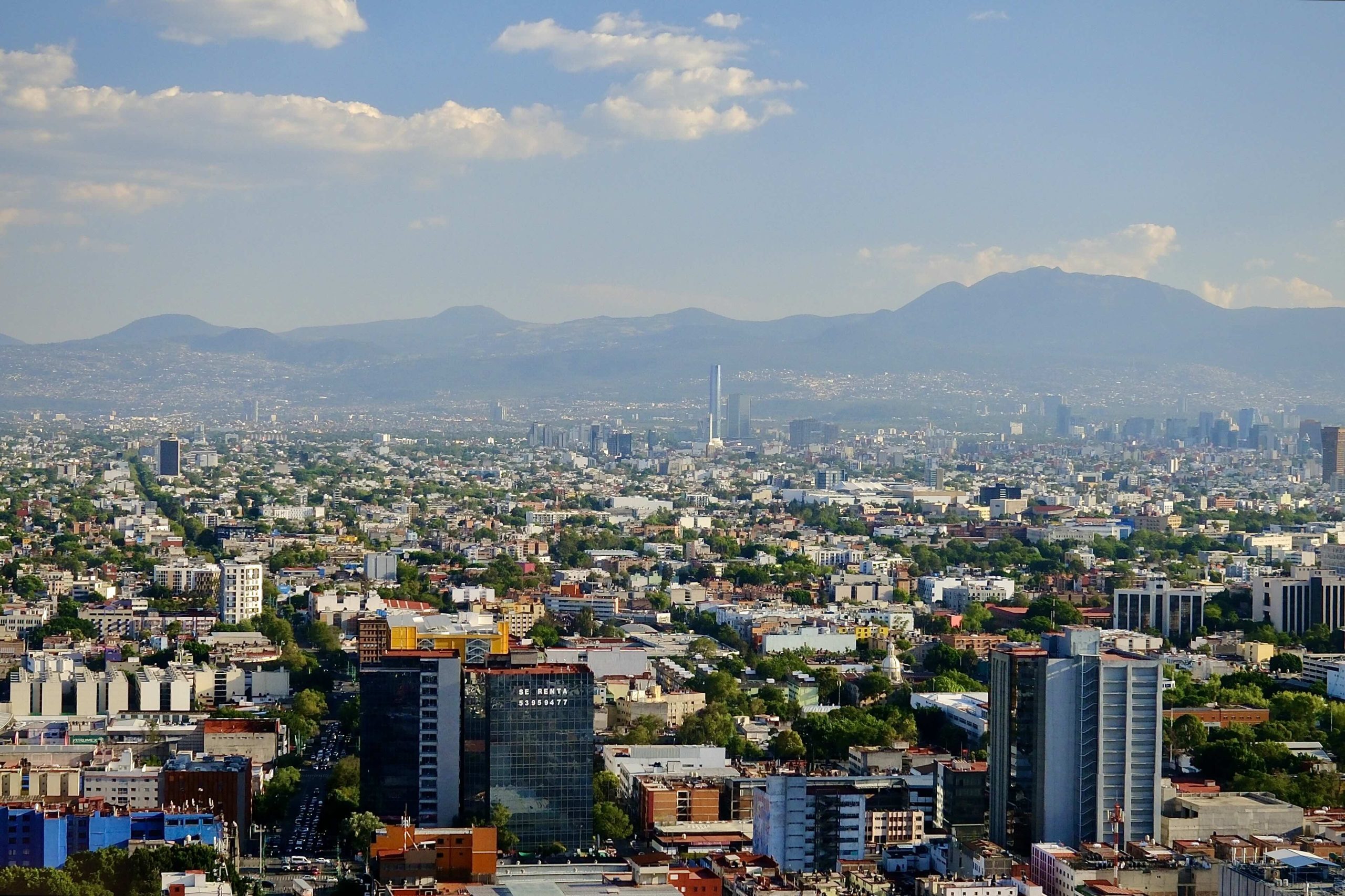
Of these cities, Mexico City recorded the fastest localised sinking: approximately 217mm per year in some places - that’s the equivalent of a toothbrush’s length in lost ground height, every single year. The rest of the city isn’t sinking quite as fast, recording a median sinking rate of 8mm per year.
At a regional level, the most severe sinking rates were recorded in Asia. Medan (approximately 33m per year), Bandung (22mm per year), and Mashhad (16.5mm per year), experienced the highest citywide median sinking rates.
These alarming rates highlight the urgency of the problem, and the authors hope their identification of subsidence hotspots will help policymakers, “prioritise actions to reduce subsidence-related hazards.”
It’s not just the people that live in these cities that are in danger, but the wildlife too.
Mexico City, despite being one of the largest metropolitan regions in the world, hosts more than 2,200 species of wildlife across its urban ecosystems. This includes the critically endangered axolotl, a unique salamander that spends its entire life underwater and is endemic to Lake Xochimilco in southern Mexico City. The city also supports 13 species of urban-adapted hummingbirds, alongside more than 20 species of migratory birds that overwinter in the city’s urban canopy and pollinator gardens.
Medan, Bandung and Mashhad are also home to unique communities of urban-adapted wildlife that, like those in Mexico City, could be threatened by land subsidence.
Tao, Hu and colleagues caution that their nine-year-long study focussed on relative land subsidence within major cities, meaning areas beyond administrative boundaries may have been excluded. They also highlight greater uncertainty in areas with sparse ground-station coverage.
Given these limitations, the authors emphasise the need for continued monitoring, noting that their study provides a consistent baseline for future research to determine whether these trends persist and inform targeted responses.
You can read more about the latest study on sinking cities here.
More stories from around the world
- Oregon’s biggest city was drowning in crow poop. Then a new predator came to town
- “They simply moved in.” Thousands of tiny falcons are taking over this ancient Italian city
- In this Ethiopian city, people feed one of Africa’s deadliest predators mouth-to-mouth
- 10 US sewer dwellers: alligators, sea cows, snakes and are living in the country's sewers


