
Robbie Schmittner has spent the better part of three decades unlocking the secrets of one of the vastest subterranean worlds. The cave diver and explorer keeps getting drawn back to Sistema Sac Actun, a mesmerising, water-filled cave system flowing beneath the thick jungles of Mexico’s Yucatán Peninsula.
- "Stop, prevent your death! Go no further." 9 deadliest, most terrifying caves on the planet
- Deep in the New Mexico desert lies a hidden kingdom of 119 ancient caves – home to aerial hunters that catch prey at 60mph
Meaning ‘White Cave’ in Mayan, Sac Actun was first surveyed back in the 1980s. But the true scale of the system remained hidden until 2018, when the Great Maya Aquifer Project (GAM) confirmed a colossal connection between Sac Actun and the neighbouring Dos Ojos system, revealing a continuous 346 kilometre subterranean waterway.
For Schmittner, that breakthrough was the culmination of 14 years of research. To prove the connection between the two systems, he detailed how he had to strip away his secondary gear, wearing little more than a wetsuit to squeeze his body through a tight limestone fissure.
"From the moment I slipped into those passages, I knew I had found the place where I belonged. The latest breakthrough – connecting the cenote known as the Mother of All Cenotes with the Koox Baal system – wasn’t just another line on the map. For me, it was personal," he writes for In Depth magazine.
That discovery briefly crowned Sac Actun as the world’s longest explored underwater cave system, a title that has since passed to the Sistema Ox Bel Ha (435 km) in 2023. Yet in this dynamic subterranean realm, records are fleeting; mapping teams continuously discover new passages and hidden aquatic connections.
- Camera traps film predators descending on cave filled with 40,000 bats. What happens next is staggering
- The prehistoric ‘graffiti’ cave where teenagers spray-painted their hands 9,000 years ago – and no one knows why...
Portal to the underworld
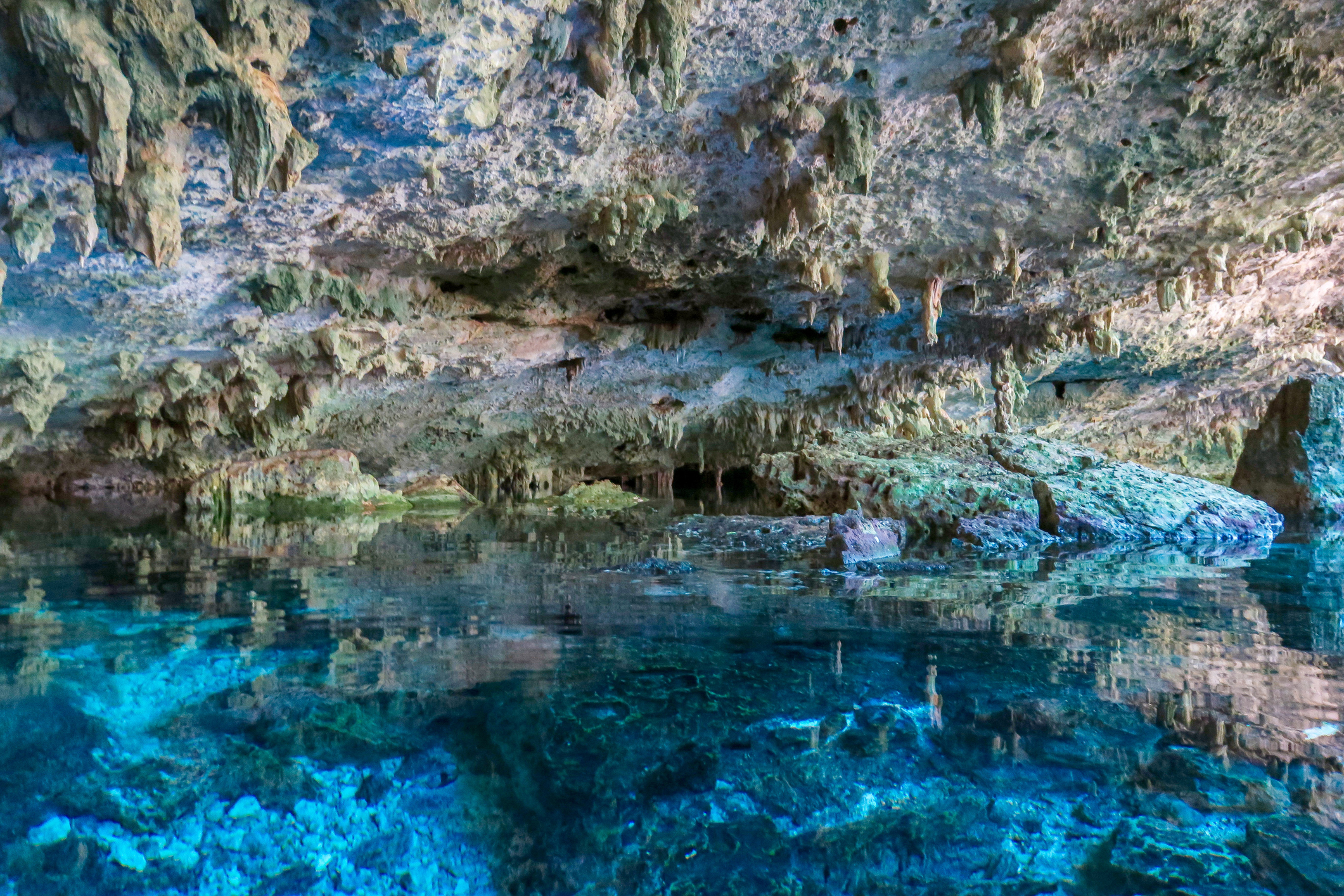
Plunging to depths of 100 metres, Sac Actun’s passages were carved over thousands of years as acidic water dissolved the porous limestone. Today, towering stalactites and frozen mineral columns frame submerged vaults, creating one of the most spectacular underwater cave systems on Earth.
You’ll also find a dramatic halocline, which occurs where freshwater floating on top meets dense saltwater from the ocean below. When divers swim through this layer, the water distorts into a shimmering illusion.
In 2008, divers inside a massive chamber called Hoyo Negro (‘Black Hole’) discovered the remains of an Ice Age mastodon (an extinct, elephant-like mammal) alongside ‘Naia’, the 13,000-year-old skeleton of a teenage girl, widely considered the oldest intact human remains found in the Americas. To the ancient Maya, these flooded sinkholes (cenotes) were sacred portals to Xibalba, the underworld, where priests cast valuable pottery, jade and human sacrifices into the abyss.
Life adapted to the shadows
Beyond its historic treasures, Sac Actun forms a vital freshwater reserve harbouring a unique ecosystem. In the lightless depths, evolution has taken a radical turn. Translucent blind cave fish navigate the pitch-black channels using sensory organs, while vibrant cichlids dart through the illuminated cenote entrances.
Above the water's surface, the cave walls ring with life. Cave swallows nest in limestone crevices while bats roost in dry cavern vaults. Where the caves break open to the jungle canopy, green iguanas bake on the rocks, black howler monkeys echo through the trees, and curious coatis, relatives of racoons, forage along the forest floor.
Today, advanced cave divers can explore selected veins of this subterranean marvel. As ongoing expeditions continue to map new passages, researchers are expanding their focus. Analysing water purity and studying native species will help protect the fragile archaeological legacy resting beneath the jungle floor.
- “Once they descend into the cave, they trudge 150m in the pitch black, feeling around with their trunks.” 9 weird animals found in caves
- "Standing at a whopping 3.7m and weighing 4 tonnes they were truly colossal." 10 extraordinary Ice Age, prehistoric, beasts that thrived in a frozen world
Top image: Sac Actun. Credit: cc-stock/Getty Images


