
Established as China’s first national forest park in 1982, Zhangjiajie National Forest Park has some of the most distinctive geographic features on the planet. It's also a biodiversity hotspot, with hundreds of animal species – many of which are rare – found within its boundaries.
With cable cars, bridges, a mountain elevator and dozens of walking and hiking trails, there are plenty of ways to get around this nearly 50km² park.
Where is Zhangjiajie National Forest Park?
Zhangjiajie National Forest Park is part of the larger Wulingyuan Scenic Area, which was included in UNESCO’s 1992 list of World Heritage sites, and was subsequently given Global Geopark status in 2001. It is located in central China, in the north-western corner of Hunan province.
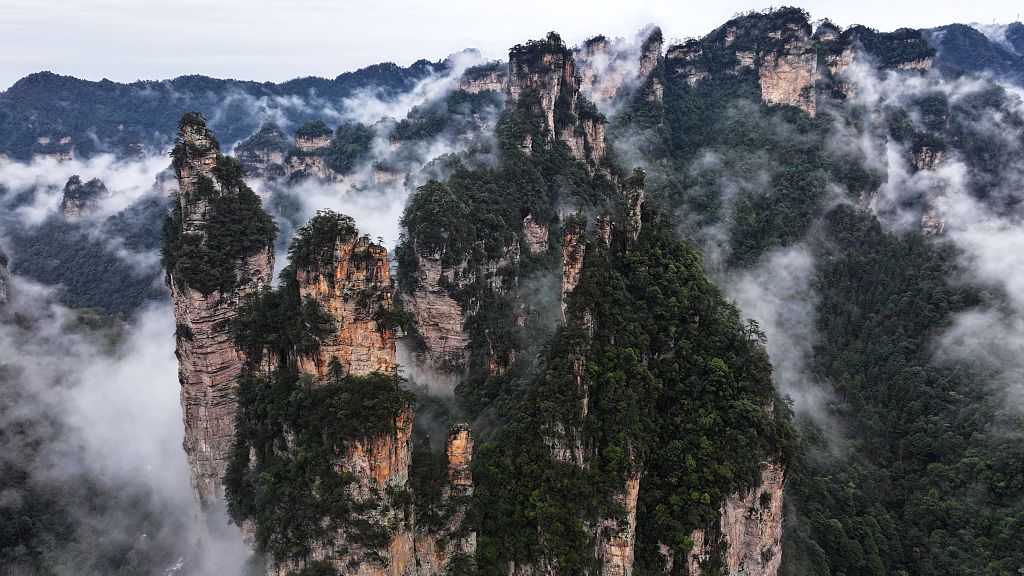
Zhangjiajie National Forest Park geological features
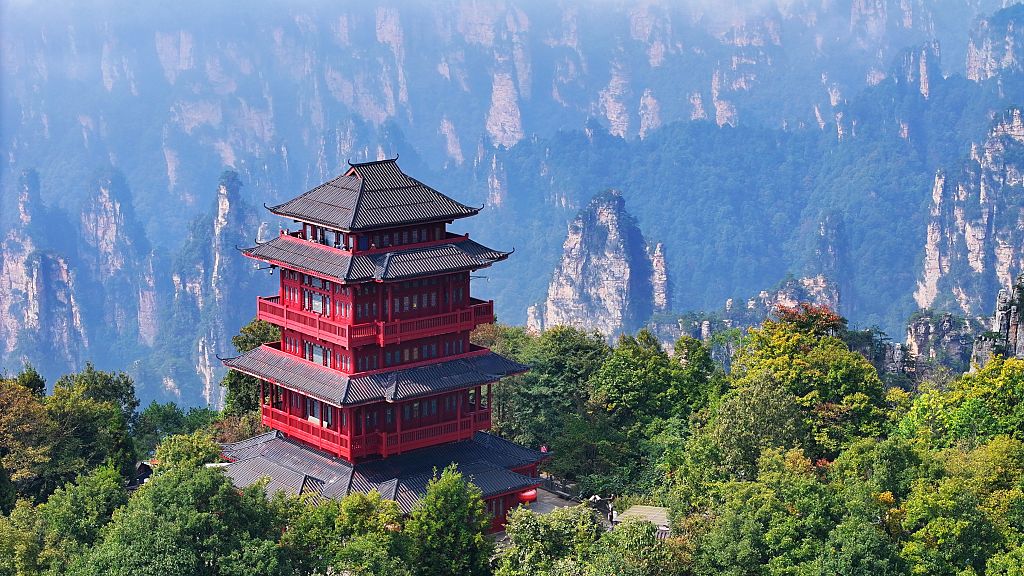
The most distinctive geological features of Zhangjiajie National Forest Park are the otherworldly sandstone quartz pillar-like formations, shaped by many years of physical erosion and weathering, due to the expanding ice that grows on them in winter. They have been captured in many ancient Chinese paintings.
The big attraction is the 1,080m-tall quartzite-sandstone pillar known as the Southern Sky Column, punctuated with clumps of dense foliage. It was the inspiration for the Hallelujah Mountains in the blockbuster film Avatar.
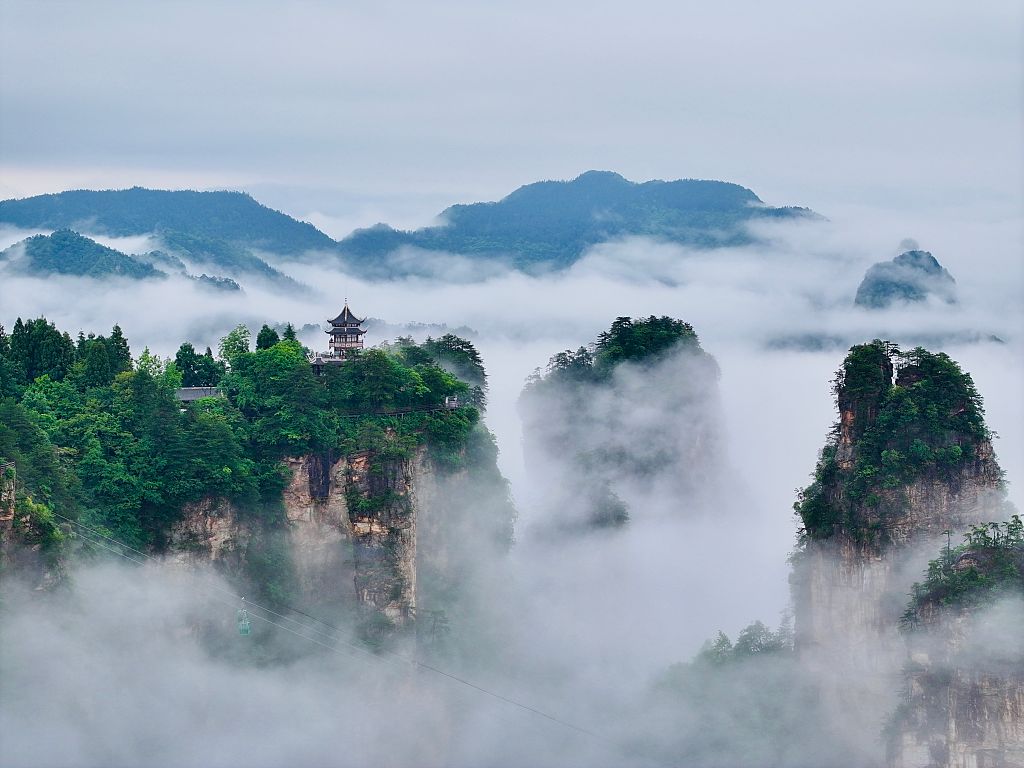
There are more than 3,000 similar rock pillars in the park, formed by the process of natural erosion and the movement of water cutting through the stone.
There are also karst caves scattered through the park. Karst caves are natural caves formed primarily by the chemical dissolution of bedrock, such as limestone, by acidic groundwater. Huanglong Cave (Yellow Dragon Cave) is a particularly impressive karst cave system in the park. Visitors can travel through the 7.6km-long cave on boats via its subterranean rivers.
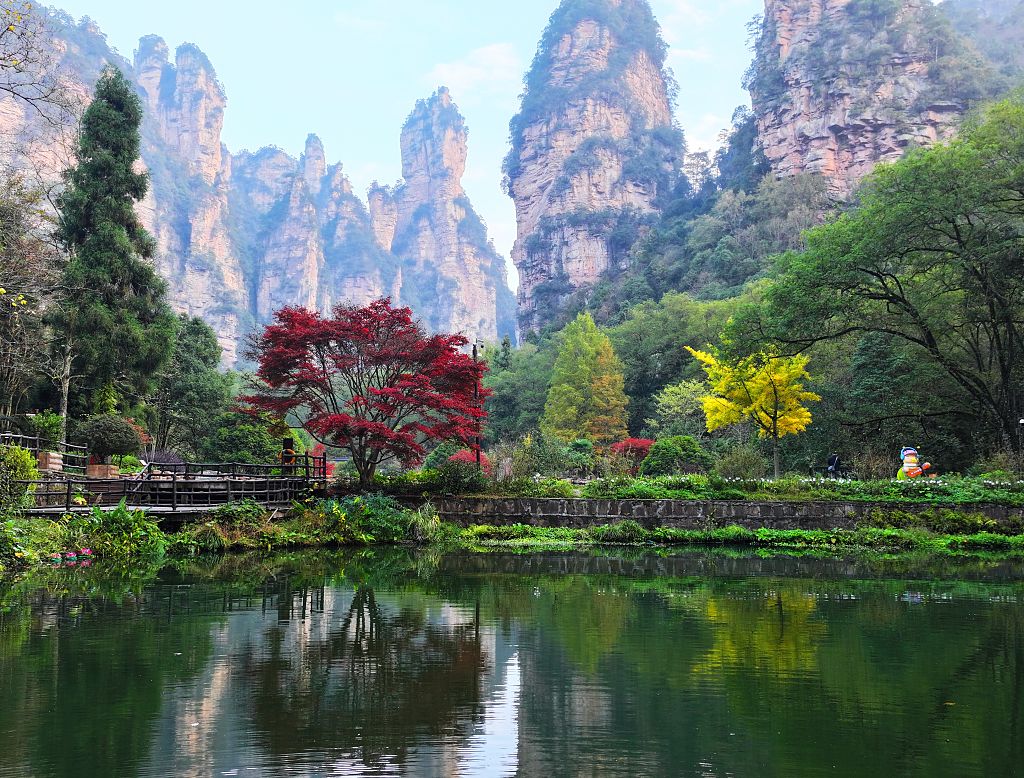
Zhangjiajie National Forest Park attractions
Zhangjiajie National Forest Park is one of the more accessible protected areas for visitors, thanks to the infrastructure that has been incorporated into the park since it opened in 1982.
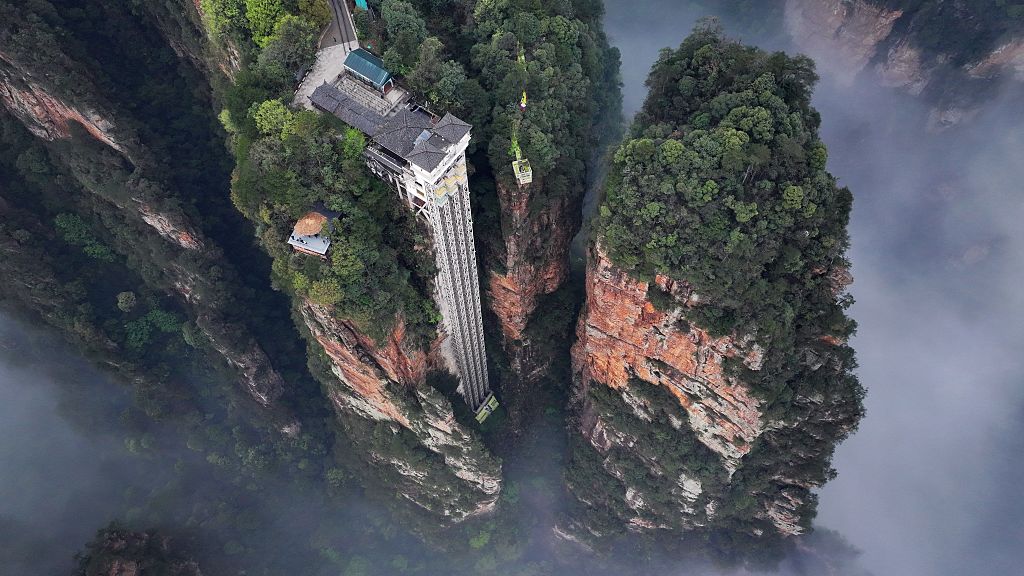
The Bailong Elevator rises 326m in under two minutes. Translating as ‘hundred dragons sky lift’, the elevator was opened to the public in 2002 and is one of the park’s most popular attractions, with people queuing for several hours in peak season for a ride.
There are three gondola lift systems within the park, enabling visitors to reach new areas via cable car. There is also a monorail to take visitors to visit Ten-Mile Gallery, a scenic valley within the park.
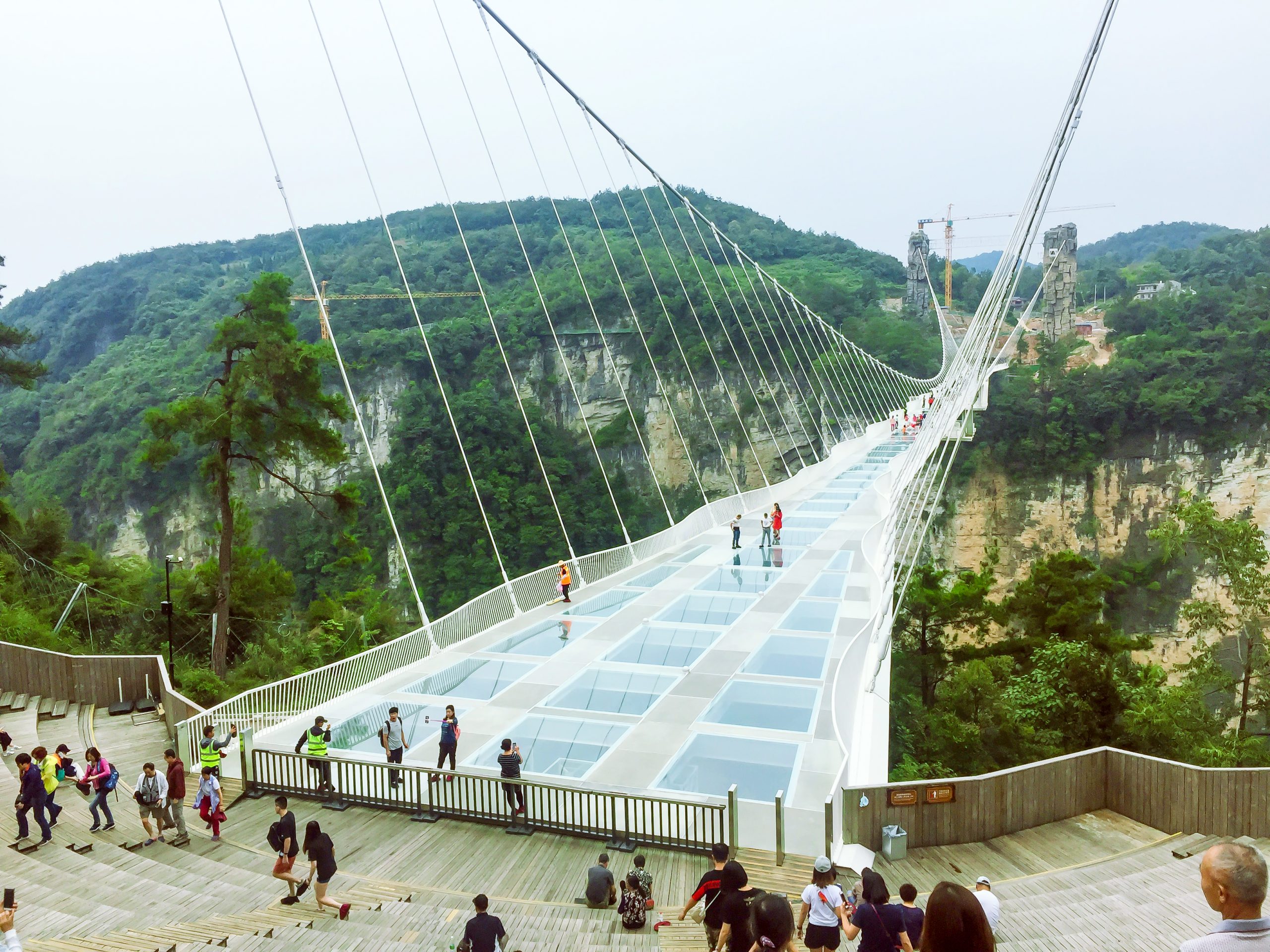
Visitors can cross glass-bottomed bridges, walk along cliff-edge trails and take in the view from spectacular lookout points, reached by the various walking and hiking trails around the park.
What wildlife can you see in Zhangjiajie National Forest Park?
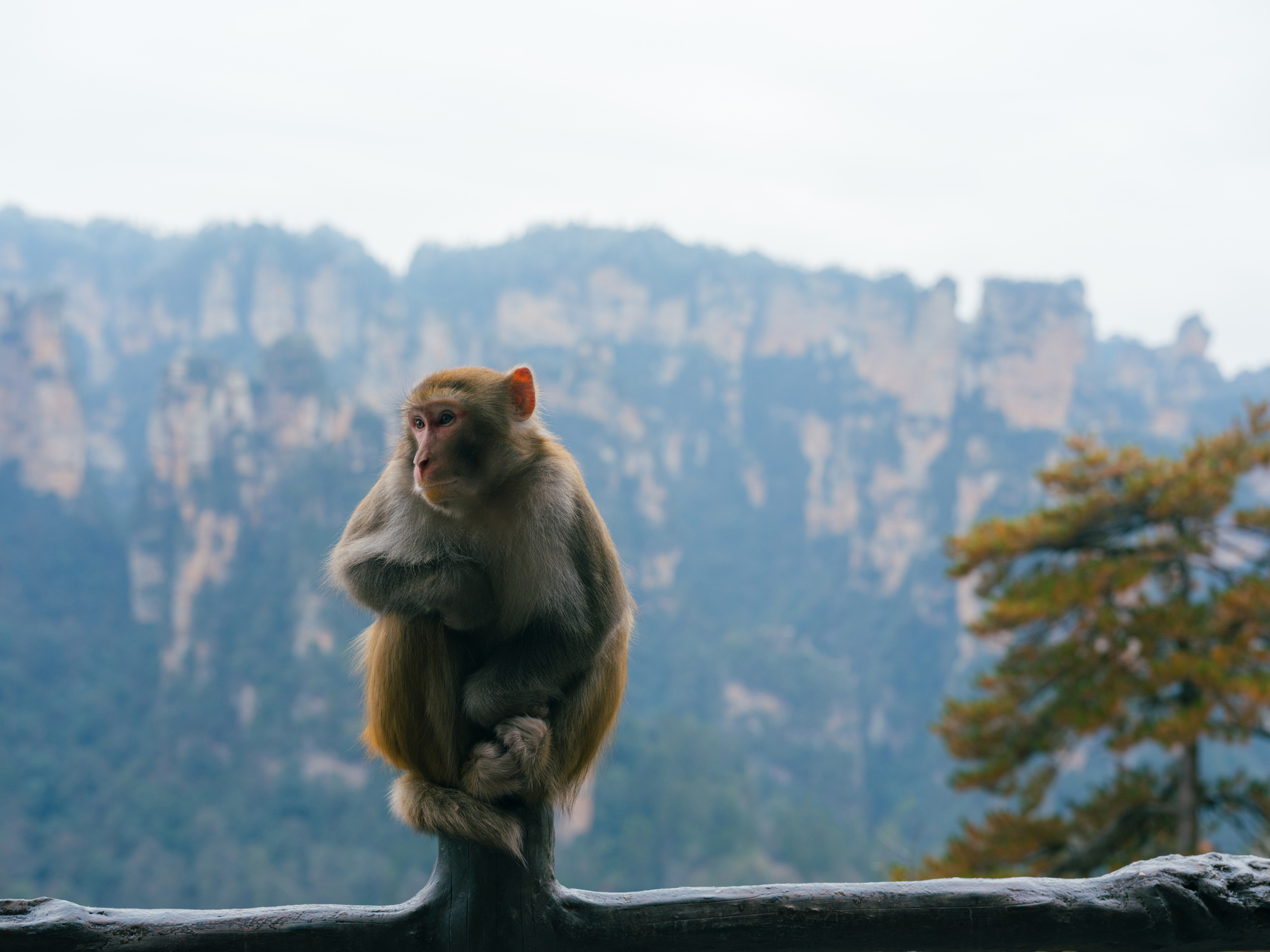
Zhangjiajie National Forest Park is rich in biodiversity, with over 150 species of animal, including more than 60 species of bird, many of which are rare and protected.
Among the land-dwelling species found in the park are the clouded leopard, giant salamander, macaque, skink, pygmy slow loris and various species of snake.
In the skies, you might to see the red-billed leiothrix (love bird), golden eagle and white cranes, among many other birds.
Top image credit: Galyna Lunina/Getty Images


