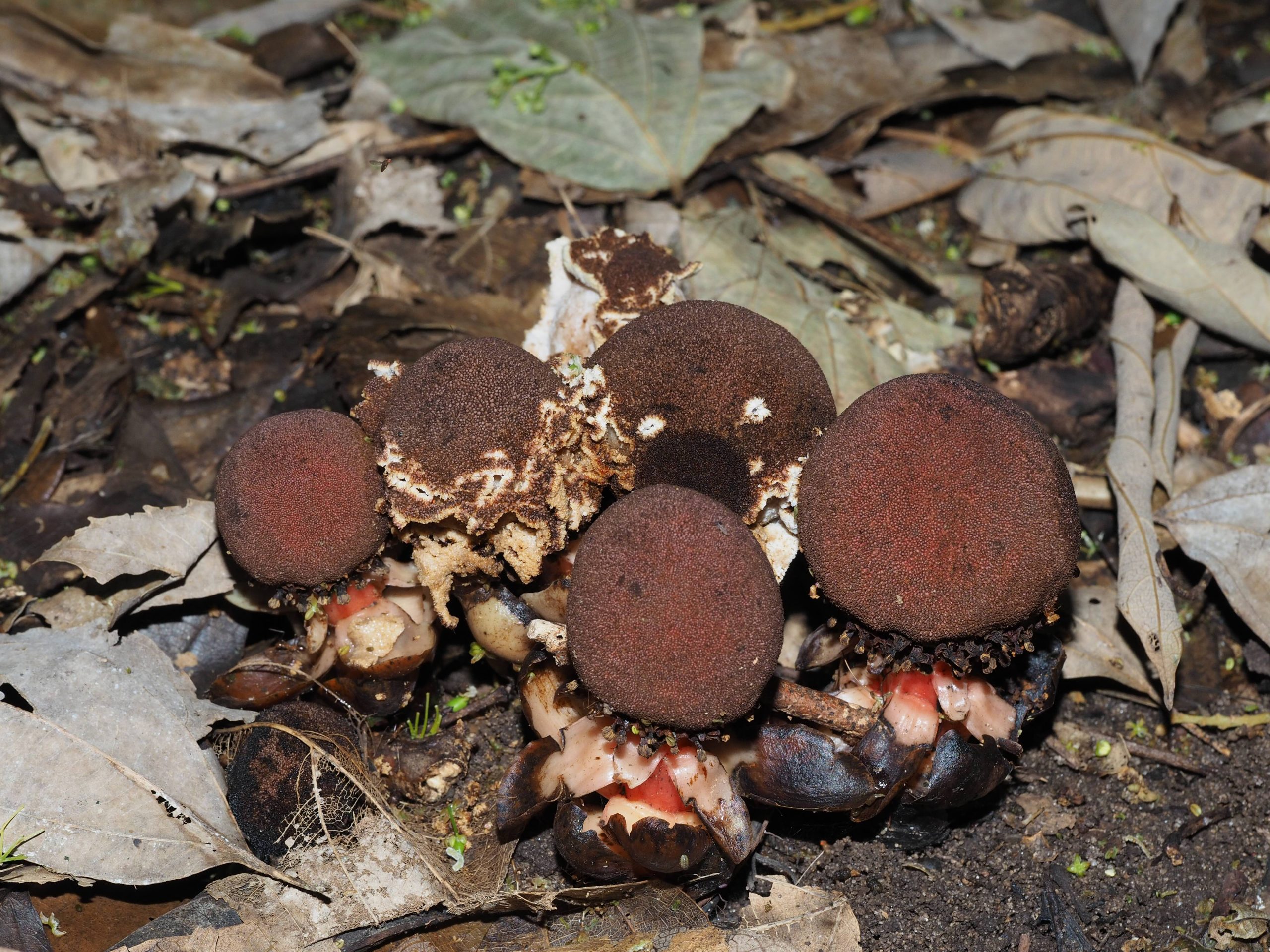
On the tropical Japanese island of Ishigaki, a mushroom-like plant grows on the forest floors. Balanophora fungosa is a non-photosynthesising parasite that feeds on the roots of other plants and produces tiny seeds that are covered in a dry fruit.
The seeds have been at the centre of a mystery that has long puzzled scientists: how do they get dispersed?
- "It looks like an extra-terrestrial being that fell to Earth and behaves like a subterranean vampire." 10 weirdest, wackiest plants on the planet...
- Strange parasitic 'fairy lantern' plant that preys on fungi found in tropical forests of Malaysia
“Many people assumed that they simply fall off and are carried away by the wind, but the humid and windless forest floor makes this seem rather implausible,” says Kenji Suetsugu, a professor at Kobe University in Honshu, on Japan’s largest island.
Suetsugu’s previous studies have shown that the fruits of plants in the Balanophora family are dispersed by ants, crickets and cockroaches. As Balanophora fungosa has traits typical of its family, such as a dull colour, yeasty smell and easily detachable fruits, Suetsugu suspected that ants dispersed its seeds.
But when he covered the plants with nets that allowed ants to pass through (but not larger animals), the fruits were no longer picked up. So, he decided to set up a time-lapse camera.
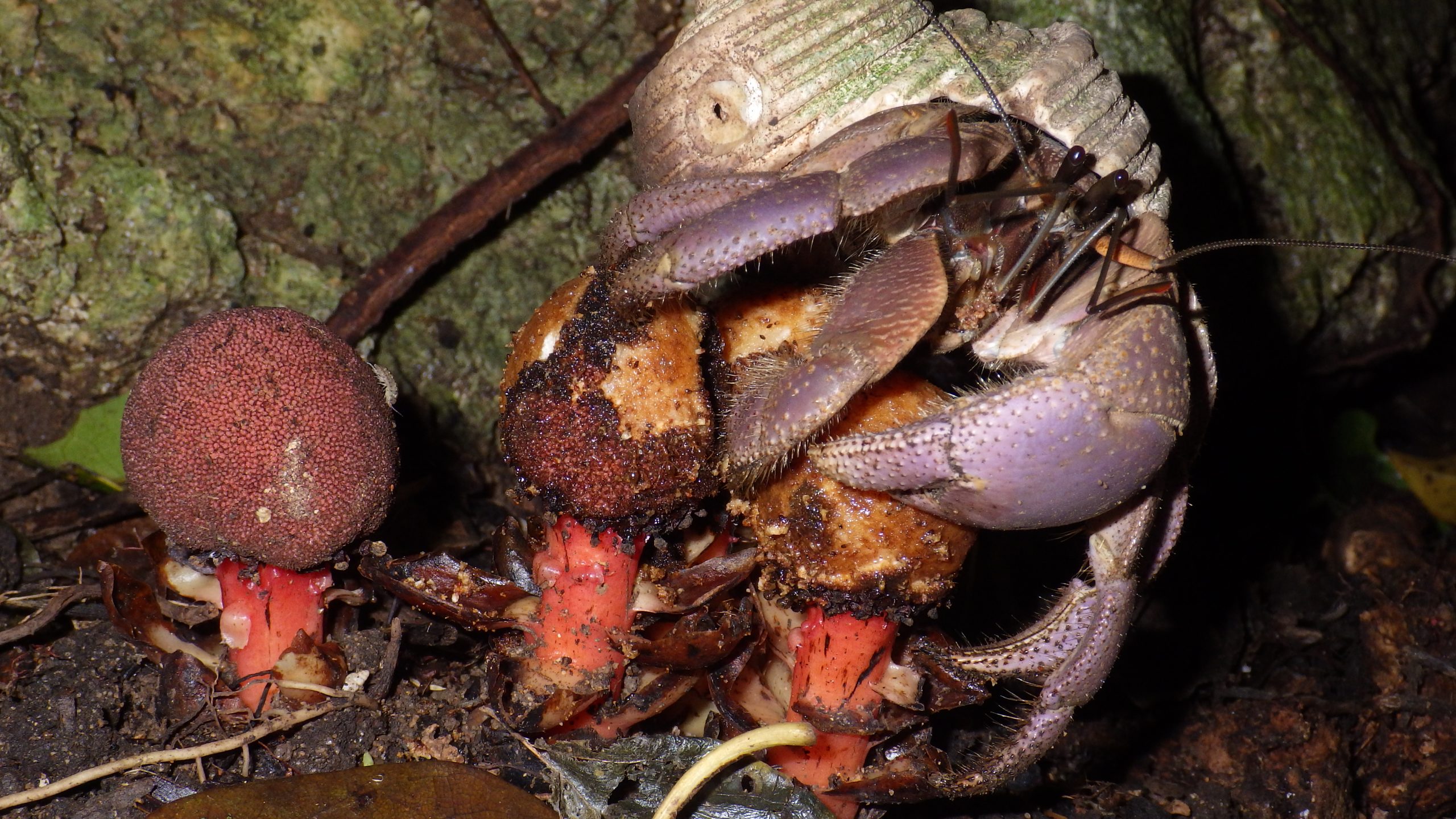
When he checked the images, he saw that Periplaneta australasiae cockroaches appeared to help seed dispersal. But he was surprised to see much bigger animals, too: crabs. More specifically, the land hermit crab Coenobita brevimanus.
His findings, published in the journal Ecology, reveal that the crabs scraped off the fruits with their pincers. Some almost removed a plant’s entire fruiting body (which appear on the surface) during the night, with fruits ending up attached to the crabs’ bodies and being moved several metres from the plants.
Suetsugu found that some of the seeds passed through the crabs’ digestive tract – and considering that land hermit crabs can travel up to 100 metres, it is likely that the seeds can be dispersed relatively far.
“I was excited to find this because these animals have usually been regarded as omnivores, scavengers or seed predators, rather than potential plant partners,” explains Suetsugu.
It was also observed that the crabs actively sought out mature plants, perhaps indicating that they were attracted by the scent given off by them.
Suetsugu states that his is the first paper to provide empirical evidence that hermit crabs can function as both external and internal seed dispersers, demonstrating how there is still more to be uncovered in how animals become important dispersers.
Top image: the tropical forests of Ishigaki Island. Credit: Ippei Naoi/Getty Images