Towering over the canopy of the Malaysian Borneo rainforest, dipterocarp trees have evolved some neat tricks to keep their uppermost leaves hydrated.
Dipterocarps are the tallest flowering trees in the world. They reach up to 100m in height, store vast amounts of carbon, and play a vital role in the surrounding ecosystem – home to hornbills, proboscis monkeys, Rajah Brooke’s birdwing butterflies and more.
According to conventional wisdom, as trees get taller, it becomes harder for them to transport water from roots to leaves – limiting growth and making them more vulnerable to drought. But a new study, published in Science, shows that’s not the case for dipterocarps.
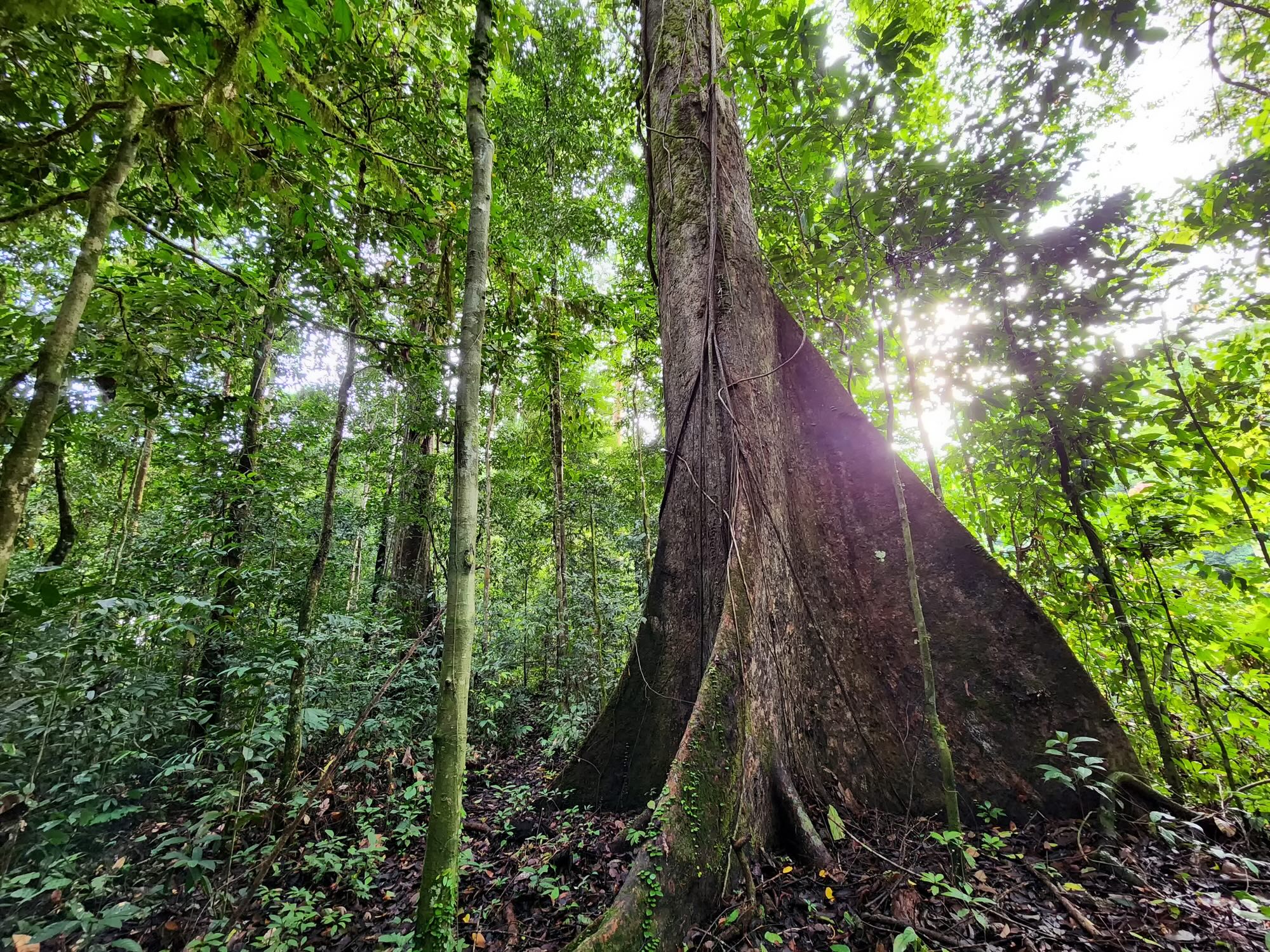
Researchers from the University of Exeter donned climbing gear to collect leaf, trunk and branch samples from 38 dipterocarps, ranging from 7 to 71m in height.
They found that taller trees had adaptations that help keep the water moving. These include water-carrying vessels that grow wider nearer to the ground and leaves adapted to withstand greater water stress before they wilt.
The team also measured trunk growth rates before, during and after the strong El Niño drought of 2023–2024. Taller trees were no worse affected than smaller ones. “Understanding tall trees is vital because the tallest 1 per cent of trees store more than half of above-ground carbon in forests,” says Paulo Bittencourt, now at Cardiff University.
Co-author Palasiah Jotan adds, “Showing that even the tallest of these trees are hydraulically resistant to drought is a finding I hope will strengthen the case for protecting these forests under a changing climate.”
More amazing stories from around the world
- 1,900 giant sequoia trees saved from death in California. This is how
- It's taller than Big Ben and can live for thousands of years – this is the tallest tree on Earth
- What's the oldest tree on the planet? Clue – it's older than Stonehenge
- What's the world's most poisonous tree?
Top image: rainforest in Danum Valley, Borneo. Credit: Cn0ra/Getty Images