
In northern Tanzania, in the eastern Serengeti Plains there is a place of remarkable archeological discovery that changed our understanding of human evolution.
The Olduvai Gorge is a site of dreams to palaeontologists, who have made multiple significant discoveries in the area that tell us about our human ancestors and human evolution. Many people speculate that the gorge could have been a settlement for humanity's earliest civilisation, which is why it is often called the 'Cradle of Humanity'.
- "He may have had his leg grabbed by a crocodile and his head pulled by a leopard" 10 gruesome deaths and brutal moments preserved forever as fossils
- 10 petrifying prehistoric beasts that would have terrified early Brits
Where is Olduvai Gorge?
In East Africa, the thirty mile Olduvai Gorge is situated within the Ngorongoro Conservation Area - a UNESCO World Heritage Site - and the Serengeti Plains in northern Tanzania. Measuring around 90 metres deep it is thought that the Olduvai Gorge was formed around 30,000 years ago following intense geological activity.
What was found in Olduvai Gorge?
Over millions of years there has been a slow accumulation of sediment, volcanic ash and lava in the gorge that has created perfect conditions for preserving fossils. The site was first considered of archeological merit in the early 1900s after German palaeontologist Wilhelm Kattwinkel discovered fossil bones of an extinct three-toed horse. Later, teams of geologists visited the area and a complete fossilised early modern human skeleton was discovered by Hans Reck. In the 1930s archaeologists Mary and Louis Leakey visited the site and quickly discovered stone tools. They began visiting the area regularly to conduct archeological excavations.
Human ancestors
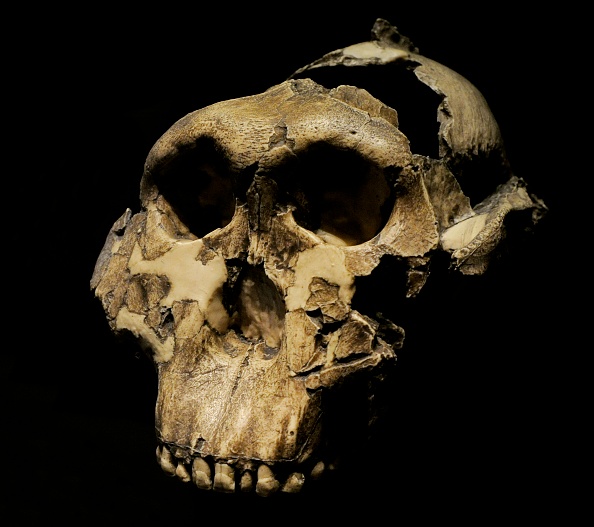
Excavations by the Leakeys continued over many years and in 1951 Mary Leakey found the skull of a Paranthropus boisei which was called OH 5. Generally considered to be a species of australopithecines - not direct descendants of humans - Paranthropus boisei lived around 2.5-1.15 million years ago and OH5 was thought to be alive in the gorge about 1.8 million years ago.
Homo habilis, one of the earliest ancient humans which lived around 2-1.6 million years ago was first discovered in Olduvai Gorge by the Leakeys in the 1960s. It is thought that the specimen they discovered occupied the gorge around 1.75 million years ago. Parts of the skull and a lower part of the jaw of a skeleton was found as well as a left foot that researchers think could be from the same individual. Named as OH 7, there were marks in the bone fragments that indicate two different predators may have munched down on them - that of a crocodile and a leopard. Some theories suggest OH 7 was attacked by both predators at the same time.
Homo erectus a direct ancestor of modern humans and one of the first human species to leave Africa - was also discovered in the gorge. The fossilised remains of a skull was thought to be around 1.4 million years old.
Tools and other mammals
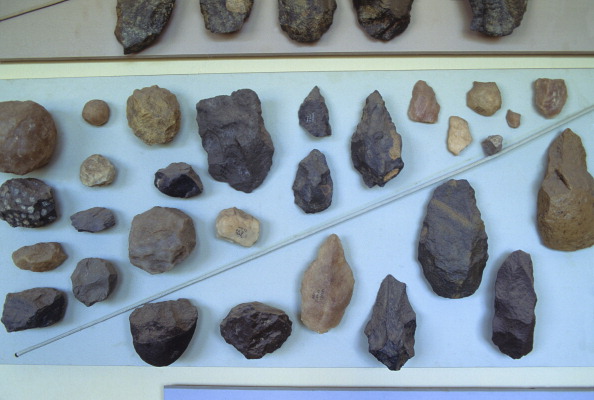
Evidence suggests that stone tools were used by primates even before the appearance of the genus Homo - which eventually lead to modern humans. However evidence of the organised production of bone tools were also discovered at Olduvai Gorge. Previously, discoveries of this nature were found to be dated to around 400,000 years ago and mainly from sites in Europe. But the bone tools discovered at Olduvai Gorge were much earlier than this. The earliest ever elephant bone tools so far discovered were found at Olduvai Gorge and dated to around 1.5 million years ago.
- 10 petrifying prehistoric beasts that would have terrified early man
- Many prehistoric animals – especially dinosaurs – were absolutely enormous. A scientist explains why they were so darn big
The earliest evidence of people and mammoths interacting is also sourced from Olduvai Gorge. Discoveries suggest that 1.8 million years ago Homo erectus appears to have eaten African mammoths in the area, although it is not known whether this was from hunting or scavenging.
In the 1970s fossilised remains of over 150 extinct mammal species were also found, alongside 3.5 million year old footprints left by animals and early hominids.
- Just how many species of human have there been?
- Could there ever be a new species of human?
- What if hobbits were real? Meet the tiny human species that actually existed…


