In the waters off Robberg, South Africa, Cape fur seals benefit from powerful ocean currents that bring in plentiful amounts of fish.
The Robberg Peninsula is home to thousands of this seal species, which is endemic to South Africa, who don’t need to swim out too far for a meal.
- Why do seals lie like bananas?
- Despite weighing up to 4 tonnes, this mammal can dive to depths of 2000 metres, hold its breath for an incredible two hours and even control its heart rate
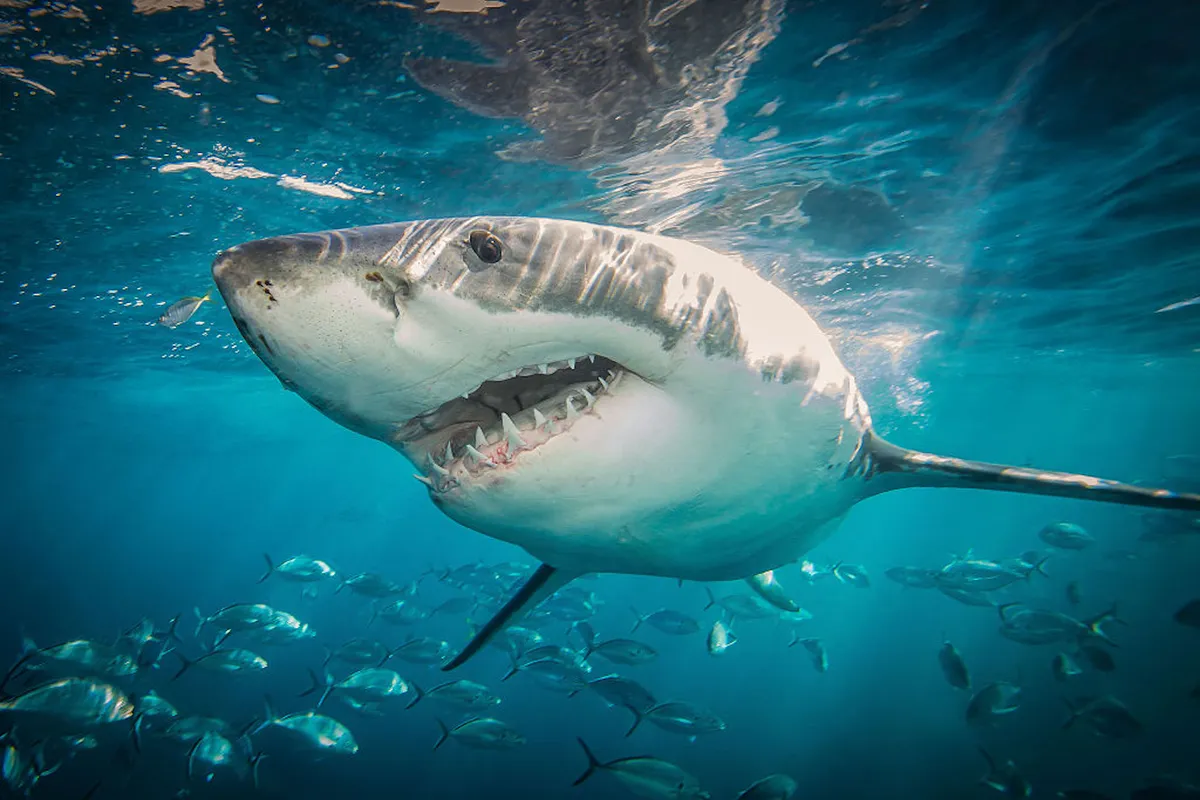
However, the huge shoals of fish also attract another animal to the waters: great white sharks.
- Explosive power of great white shark revealed in staggering slow-motion video
- Great white shark: your expert guide to the ocean's ultimate apex predator that can detect blood from 3 miles away
These apex predators are usually solitary hunters but have been gathering in larger, “unprecedented” numbers at Robberg.
And during filming for the BBC TV series Planet Earth III, the seals (and their pups) initially seem trapped. But the crew then capture the moment the seals engineer a remarkable manoeuvre in order to drive the sharks away and save themselves.
As David Attenborough narrates, “The tables are turning. By sheer force of numbers, these fur seals drive the world’s most notorious predator back out to sea.”
Top image: a great white shark near the surface off the coast of Gansbaai, South Africa. Credit: Education Images / Contributor / Getty Images