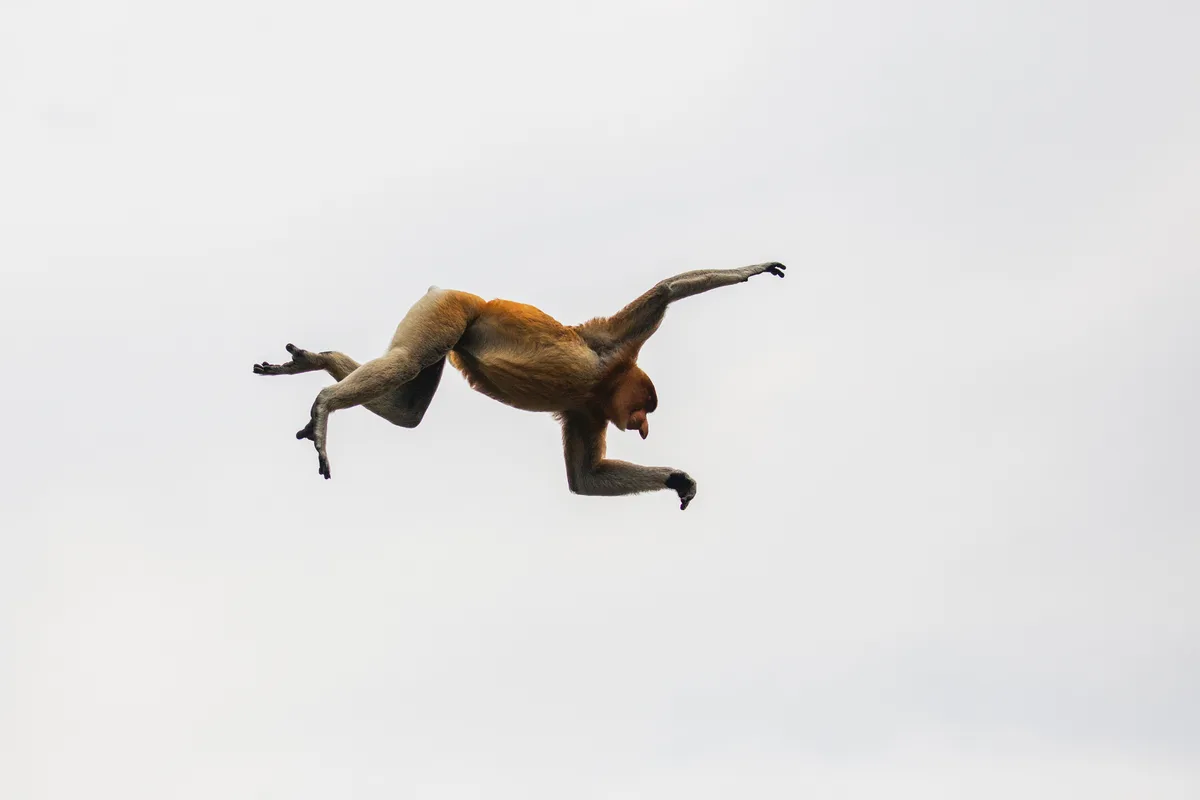
Proboscis monkeys, which are named after their unusually large noses, are found in Borneo’s coastal areas such as mangrove forests.
- Why do proboscis monkeys have such big noses?
- Extraordinarily weird animal noses: from tentacles to tubular snouts, here are nature’s most ingenious nasal designs
There, the tree-dwelling troops feed on the abundance of leaves. But when it’s time to move on to find a fresh supply, they have a riskier journey than other animals.
That’s because sometimes, they must leap from the trees and cross the water, often landing in the rivers with a loud belly flop.
But their splashes can draw unwanted attention from crocodiles, who can be alerted to the monkeys’ presence from 200 metres away.
And in a clip from the BBC’s Earth’s Tropical Islands, we follow one group who are faced with this danger.
One by one, they must make the leap – including a mother with her baby clinging underneath her.
Luckily, proboscis monkeys are good swimmers. In fact, they’re probably the most aquatic of the primate world. Once they hit the water, they use their webbed feet and hands to quickly paddle out of danger.
Top image: a proboscis monkey in mid-air in Tanjung Puting National Park. Credit: Jami Tarris/Getty Images


